


Use and experiences of galactagogues while breastfeeding among Australian women
- PMID: 34197558
- PMCID: PMC8248610
- DOI: 10.1371/journal.pone.0254049
Use and experiences of galactagogues while breastfeeding among Australian women
Abstract
Background: Galactagogues are substances thought to increase breast milk production, however evidence to support their efficacy and safety remain limited. We undertook a survey among Australian women to examine patterns of use of galactagogues and perceptions regarding their safety and effectiveness.
Methods: An online, cross-sectional survey was distributed between September and December 2019 via national breastfeeding and preterm birth support organisations, and networks of several research institutions in Australia. Women were eligible to participate if they lived in Australia and were currently/previously breastfeeding. The survey included questions about galactagogue use (including duration and timing), side effects and perceived effectiveness (on a scale of 1 [Not at all effective] to 5 [Extremely effective]).
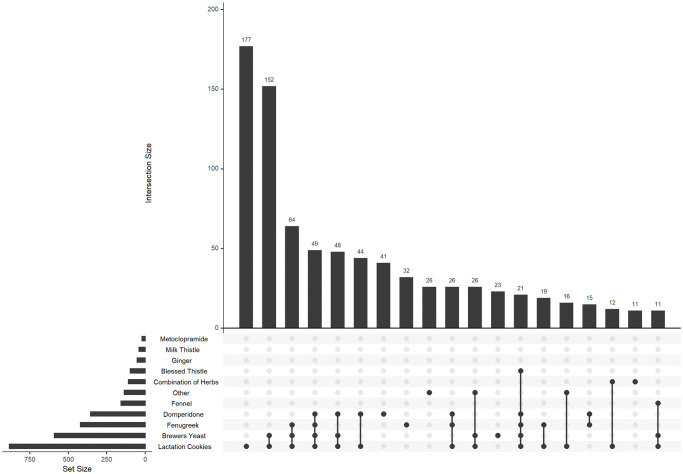
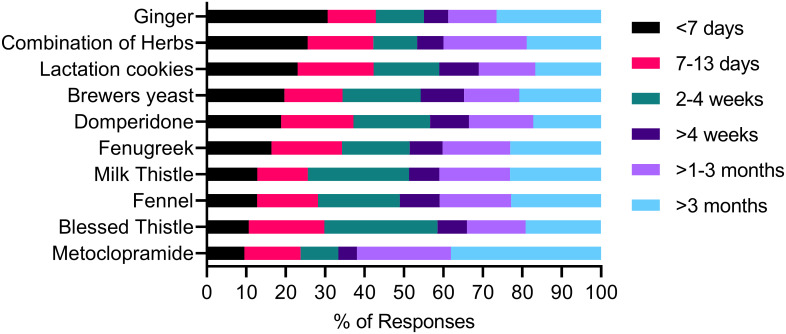
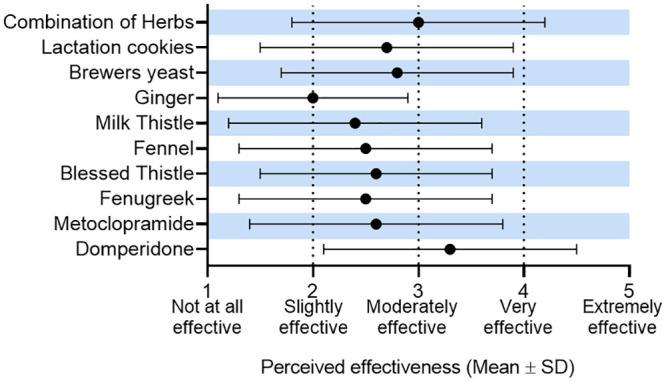
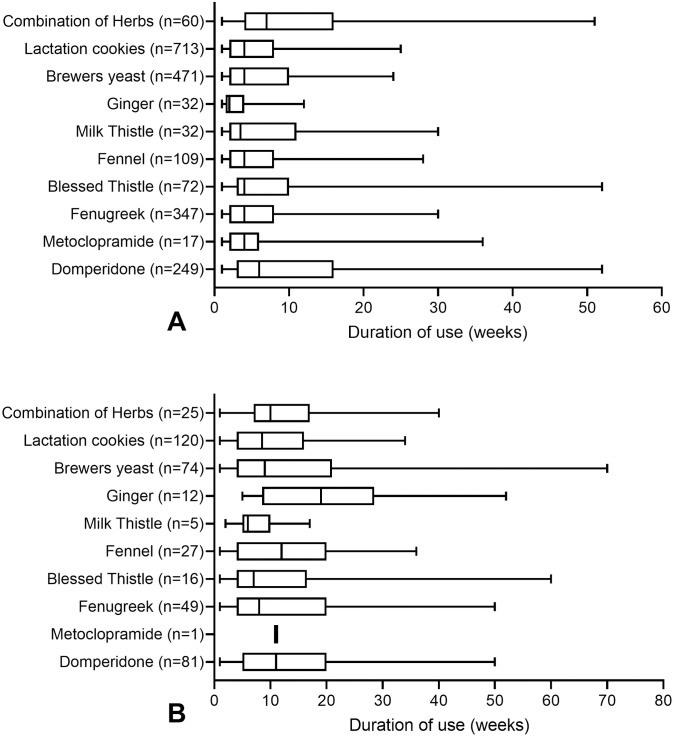
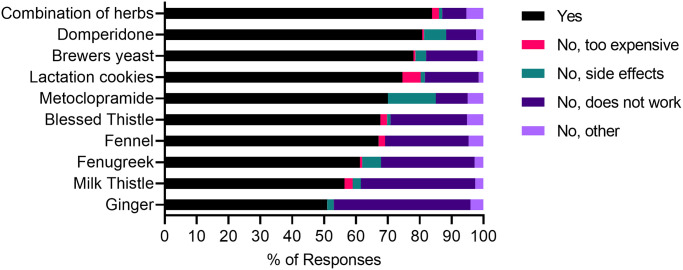
Results: Among 1876 respondents, 1120 (60%) reported using one or more galactagogues. Women were 31.5 ± 4.8 years (mean ± standard deviation) at their most recent birth. Sixty-five percent of women were currently breastfeeding at the time of the survey. The most commonly reported galactagogues included lactation cookies (47%), brewer's yeast (32%), fenugreek (22%) and domperidone (19%). The mean duration of use for each galactagogue ranged from 2 to 20 weeks. Approximately 1 in 6 women reported commencing galactagogues within the first week postpartum. Most women reported receiving recommendations to use herbal/dietary galactagogues from the internet (38%) or friends (25%), whereas pharmaceutical galactagogues were most commonly prescribed by General Practitioners (72%). The perceived effectiveness varied greatly across galactagogues. Perceived effectiveness was highest for domperidone (mean rating of 3.3 compared with 2.0 to 3.0 among other galactagogues). Over 23% of domperidone users reported experiencing multiple side effects, compared to an average of 3% of women taking herbal galactagogues.
Conclusions: This survey demonstrates that galactagogues use is common in Australia. Further research is needed to generate robust evidence about galactagogues' efficacy and safety to support evidence-based strategies and improve breastfeeding outcomes.
Conflict of interest statement
The authors have declared that no competing interests exist.
Figures
References
-
- COAG Health Council. Australian National Breastfeeding Strategy: 2019 and beyond. Canberra, Department of Health; 2019.
-
- Australian Institute of Health and Welfare. 2010 Australian National Infant Feeding Survey: Indicator Results. 2011.
-
- World Health Organization. Infant and young child feeding: World Health Organization; 2020. [updated 1 April 2020. https://www.who.int/news-room/fact-sheets/detail/infant-and-young-child-....
