


Short-term outcome of pregnant women vaccinated with BNT162b2 mRNA COVID-19 vaccine
- PMID: 34198360
- PMCID: PMC8441755
- DOI: 10.1002/uog.23729
Short-term outcome of pregnant women vaccinated with BNT162b2 mRNA COVID-19 vaccine
Abstract
Objectives: To determine the immunogenicity and reactogenicity of the Pfizer/BioNTech BNT162b2 mRNA coronavirus disease 2019 (COVID-19) vaccine among pregnant women compared with non-pregnant women, and to evaluate obstetric outcome following vaccination.
Methods: This was an observational case-control study of pregnant women who were vaccinated with a two-dose regimen of the BNT162b2 vaccine during gestation between January and February 2021 (study group) and age-matched non-pregnant women who received the vaccine during the same time period (control group). Participants received a digital questionnaire 1-4 weeks after the second dose and were asked to provide information regarding demographics, medication, medical history, history of severe acute respiratory syndrome coronavirus 2 (SARS-CoV-2) infection, timing of COVID-19 vaccine doses and side effects after each vaccine dose. A second digital questionnaire, regarding current pregnancy and delivery outcomes, was sent to patients in the study group after the calculated due date. All recruited women were offered a serology blood test for SARS-CoV-2 immunoglobulin G (IgG) following the second vaccination dose and SARS-CoV-2 IgG levels were compared between the two groups.
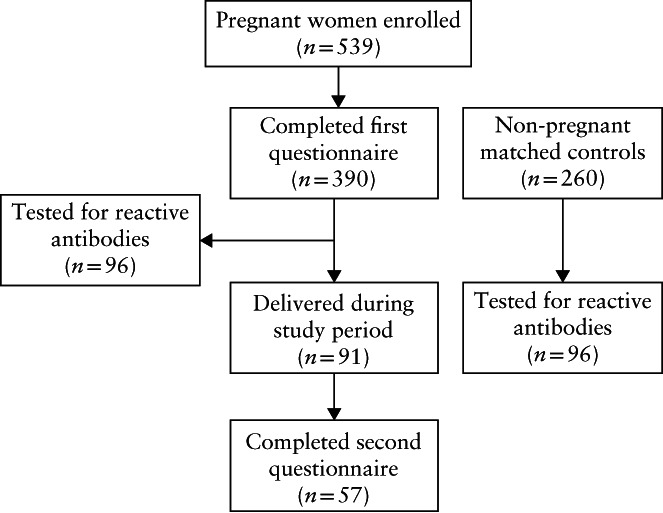
Results: Of 539 pregnant women who were recruited after completion of the two-dose regimen of the vaccine, 390 returned the digital questionnaire and were included in the study group and compared to 260 age-matched non-pregnant vaccinated women. The rates of rash, fever and severe fatigue following vaccination among pregnant women were comparable to those in non-pregnant women. Myalgia, arthralgia and headache were significantly less common among pregnant women after each dose, local pain or swelling and axillary lymphadenopathy were significantly less common among pregnant women after the first and second doses, respectively, while paresthesia was significantly more common among the pregnant population after the second dose. Among pregnant women, there were no significant differences in the rates of side effects according to whether the vaccine was administered during the first, second or third trimester of pregnancy, except for local pain/swelling, which was significantly less common after the first dose when administered during the third trimester, and uterine contractions, which were significantly more common after the second dose when administered during the third trimester. The rates of obstetric complications, including uterine contractions (1.3% after the first dose and 6.4% after the second dose), vaginal bleeding (0.3% after the first dose and 1.5% after the second dose) and prelabor rupture of membranes (0% after the first dose and 0.8% after the second dose), were very low following vaccination. All serum samples in both groups were positive for SARS-CoV-2 IgG. However, pregnant women had significantly lower serum SARS-CoV-2 IgG levels compared to non-pregnant women (signal-to-cut-off ratio, 27.03 vs 34.35, respectively; P < 0.001). Among the 57 pregnant women who delivered during the study period and who completed the second questionnaire, median gestational age at delivery was 39.5 (interquartile range, 38.7-40.0) weeks, with no cases of preterm birth < 37 weeks, no cases of fetal or neonatal death and two (3.5%) cases of admission to the neonatal intensive care unit for respiratory support.
Conclusions: The adverse-effect profile and short-term obstetric and neonatal outcomes among pregnant women who were vaccinated with the BNT162b2 vaccine at any stage of pregnancy do not indicate any safety concerns. The vaccine is effective in generating a humoral immune response in pregnant women, although SARS-CoV-2 IgG levels were lower than those observed in non-pregnant vaccinated women. © 2021 International Society of Ultrasound in Obstetrics and Gynecology.
Keywords: COVID-19; SARS-CoV-2 antibodies; obstetric outcome; pregnancy; vaccine.
© 2021 International Society of Ultrasound in Obstetrics and Gynecology.
Figures
Comment in
-
Re: Short-term outcome of pregnant women vaccinated with BNT162b2 mRNA COVID-19 vaccine.Ultrasound Obstet Gynecol. 2021 Dec;58(6):958. doi: 10.1002/uog.24811. Ultrasound Obstet Gynecol. 2021. PMID: 34855292 No abstract available.
-
Reply.Ultrasound Obstet Gynecol. 2021 Dec;58(6):958. doi: 10.1002/uog.24813. Ultrasound Obstet Gynecol. 2021. PMID: 34855295 No abstract available.
References
-
- World Health Organization . Coronavirus disease (COVID‐19) Weekly Epidemiological Update and Weekly Operational Update. https://www.who.int/publications/m/item/weekly‐update‐on‐covid‐19‐‐‐16‐october‐2020.
-
- DeBolt CA, Bianco A, Limaye MA, Silverstein J, Penfield CA, Roman AS, Rosenberg HM, Ferrara L, Lambert C, Khoury R, Bernstein PS, Burd J, Berghella V, Kaplowitz E, Overbey JR, Stone J. Pregnant women with severe or critical coronavirus disease 2019 have increased composite morbidity compared with nonpregnant matched controls. Am J Obstet Gynecol 2021; 224: 510.e1–12. - PMC - PubMed
-
- Hantoushzadeh S, Shamshirsaz AA, Aleyasin A, Seferovic MD, Aski SK, Arian SE, Pooransari P, Ghotbizadeh F, Aalipour S, Soleimani Z, Naemi M, Molaei B, Ahangari R, Salehi M, Oskoei AD, Pirozan P, Darkhaneh RF, Laki MG, Farani AK, Atrak S, Miri MM, Kouchek M, Shojaei S, Hadavand F, Keikha F, Hosseini MS, Borna S, Ariana S, Shariat M, Fatemi A, Nouri B, Nekooghadam SM, Aagaard K. Maternal death due to COVID‐19. Am J Obstet Gynecol 2020; 223: 109.e1–16. - PMC - PubMed
Publication types
MeSH terms
Substances
LinkOut - more resources
Full Text Sources
Medical
Miscellaneous
