


One-Year Clinical Performance of the Fast-Modelling Bulk Technique and Composite-Up Layering Technique in Class I Cavities
- PMID: 34200021
- PMCID: PMC8200224
- DOI: 10.3390/polym13111873
One-Year Clinical Performance of the Fast-Modelling Bulk Technique and Composite-Up Layering Technique in Class I Cavities
Abstract
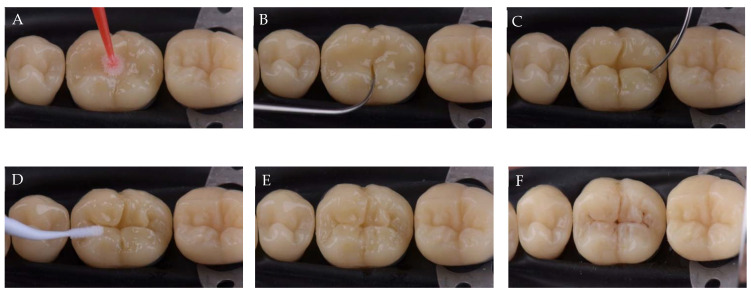
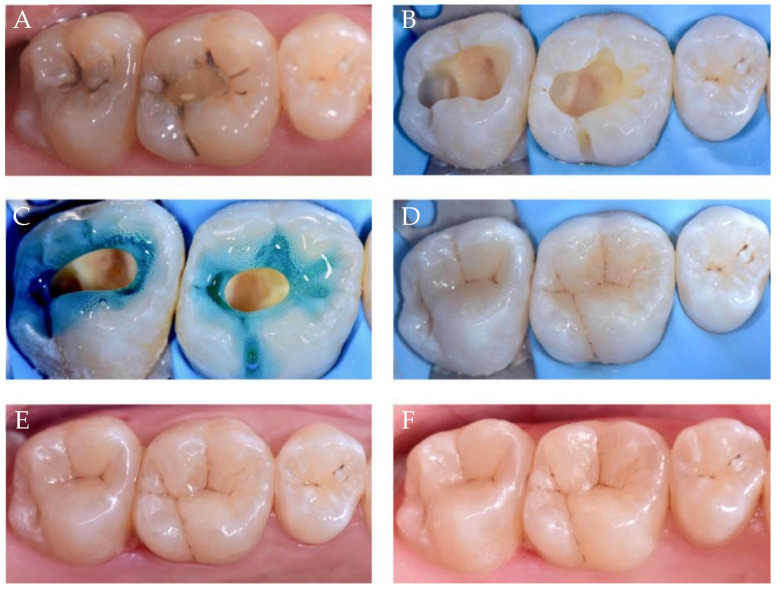
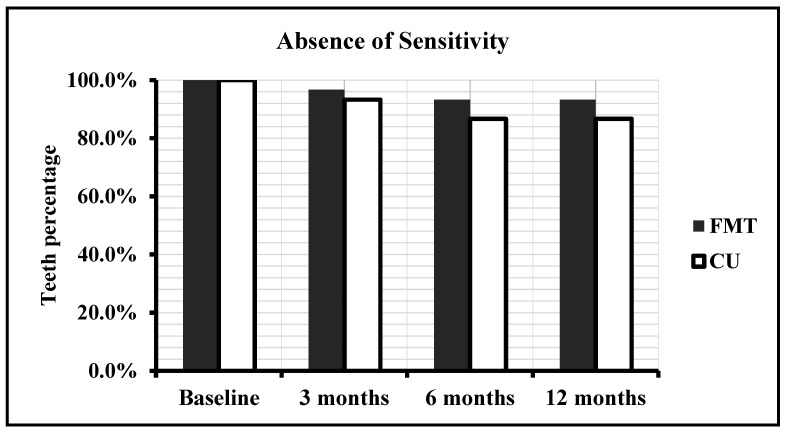
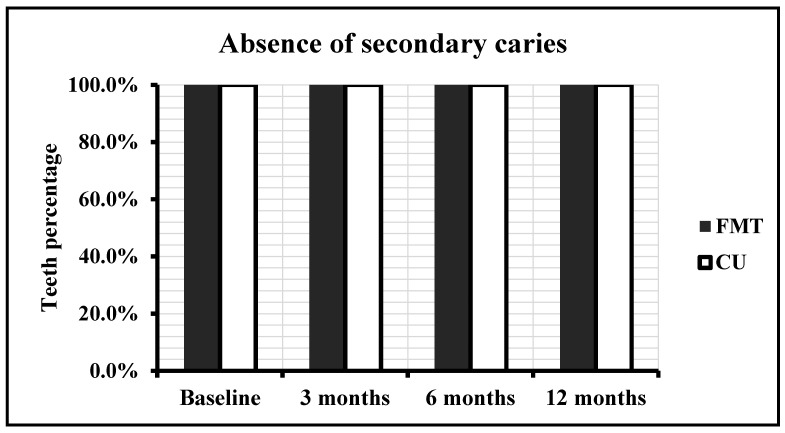
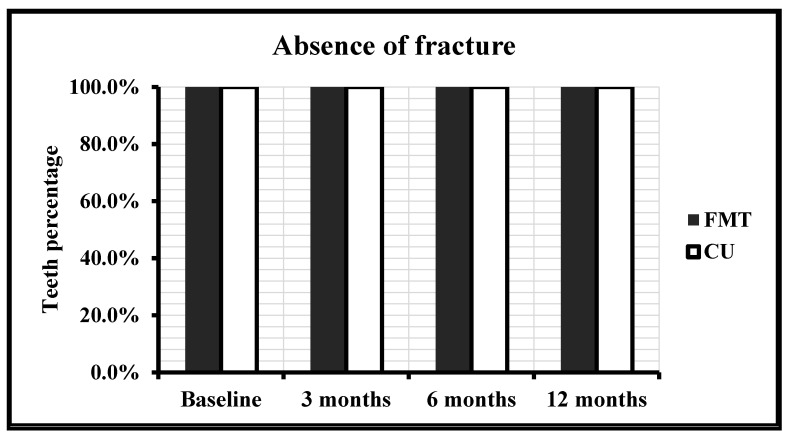
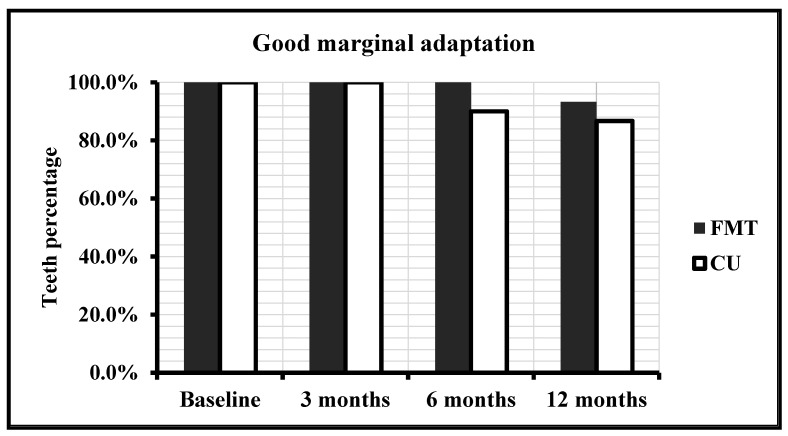
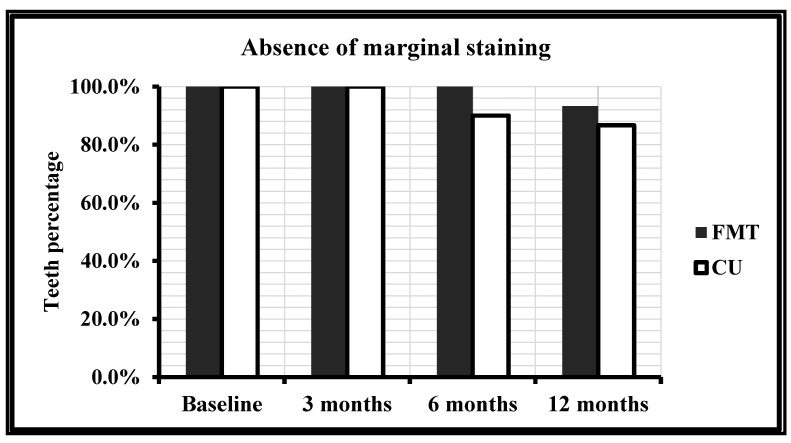
The aim of this study was to assess the one year clinical performance of a new application method, the Fast-Modelling Bulk Technique (FMBT), in comparison to the Composite-Up Layering Technique (CULT) in posterior cavities. Thirty patients with two class I cavities on permanent human molars were enrolled in the present study. A total of sixty class I cavities were prepared and randomly divided according to the restoration technique used: 30 cavities restored by incremental layering technique and modelling of the last layer with Composite-Up Technique (CUT) using the composite Filtek Z250XT (3M ESPE; St. Paul, MN, USA) and the other 30 restored by Bulk Filling technique and modelling of the last layer by Fast-Modelling Technique (FMT) using the composite Filtek Bulk Fill Posterior Restorative (3M ESPE; St. Paul, MN, USA). Restorations were evaluated for up to one year by two observers according to Federation Dentaire Internationale (FDI) criteria, through clinical and radiological exams. Exact Fisher tests were used for statistical analysis. (p ≤ 0.05). From a biological perspective, at baseline, teeth restored with both techniques did not reveal any postoperative sensitivity. However, with time, FMBT showed less postoperative sensitivity and therefore more desirable results than CULT with a nonsignificant difference after one year (p > 0.05). Concerning secondary caries, fracture of the material, and marginal adaptation, no significant difference was noted between both techniques (p > 0.05). Regarding marginal staining, CULT resulted in more staining with a significant difference, as compared to FMBT (p < 0.05). Upon radiological examination, FMBT showed a good marginal fit during the first year, whereas CULT showed small empty voids from baseline with a nonsignificant difference (p = 1.00). After one year of clinical function, both techniques showed promising results. The present study indicates that the new FMBT could have a positive effect on the marginal staining of resin composite.
Keywords: bulk fill; class I; nanohybrid composite; polymerization stress; resin composites.
Conflict of interest statement
The authors declare no conflict of interest.
Figures

References
-
- El-Banna A., Sherief D., Fawzy A.S. Advanced Dental Biomaterials. Woodhead Publishing; Cambridge, UK: 2019. Resin-based dental composites for tooth filling; pp. 127–173. - DOI
-
- Miletic V. Dental Composite Materials for Direct Restorations. Springer; Cham, Switzerland: 2018. Development of Dental Composites; pp. 3–9.
LinkOut - more resources
Full Text Sources
Medical
