


A Microsatellite Genotyping-Based Genetic Study of Interspecific Hybridization between the Red and Sika Deer in the Western Czech Republic
- PMID: 34200330
- PMCID: PMC8229882
- DOI: 10.3390/ani11061701
A Microsatellite Genotyping-Based Genetic Study of Interspecific Hybridization between the Red and Sika Deer in the Western Czech Republic
Abstract
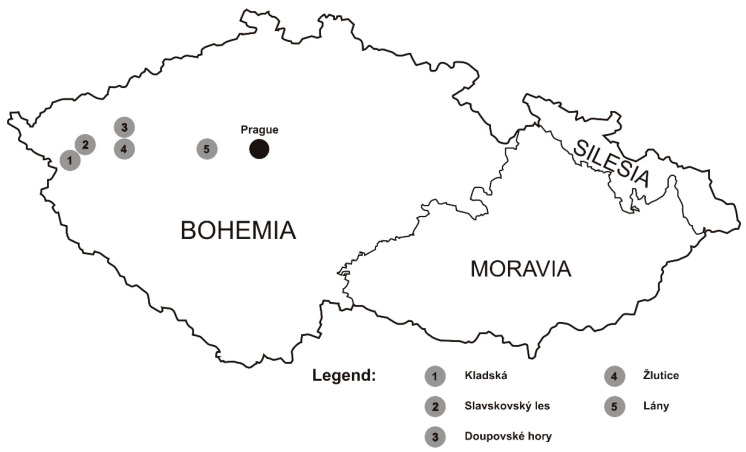
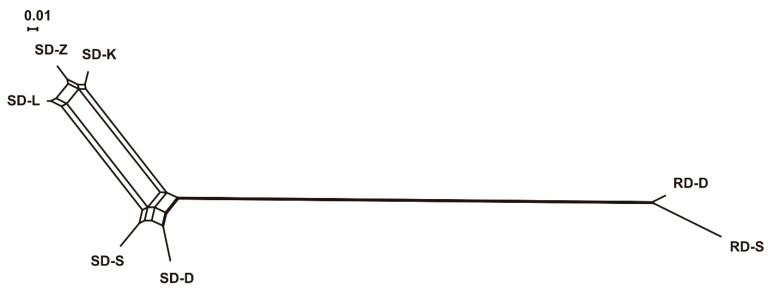
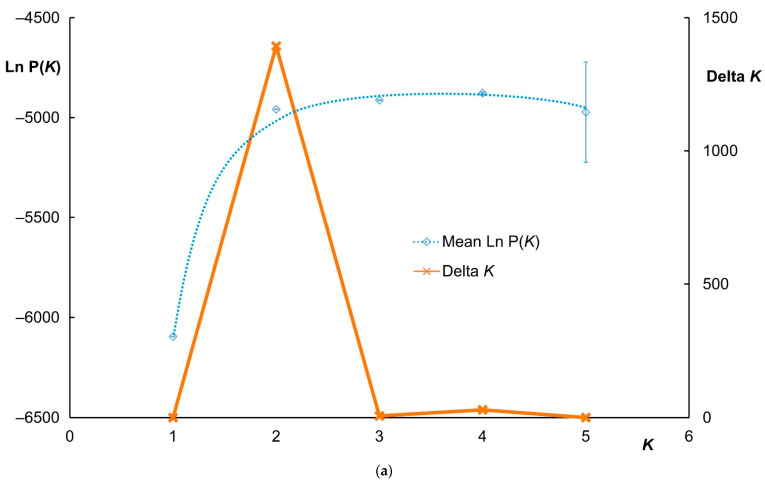
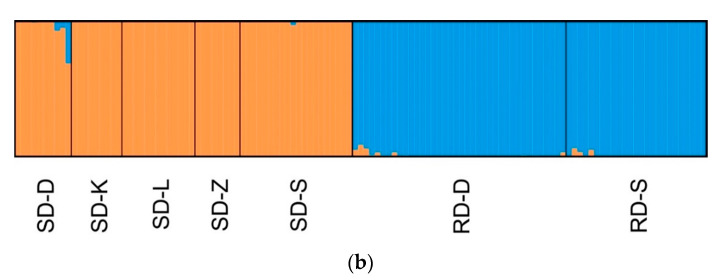
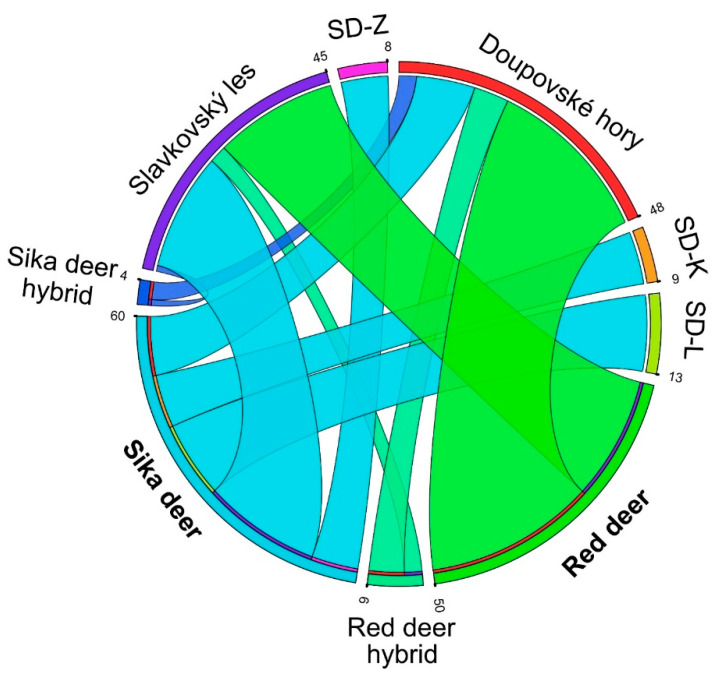
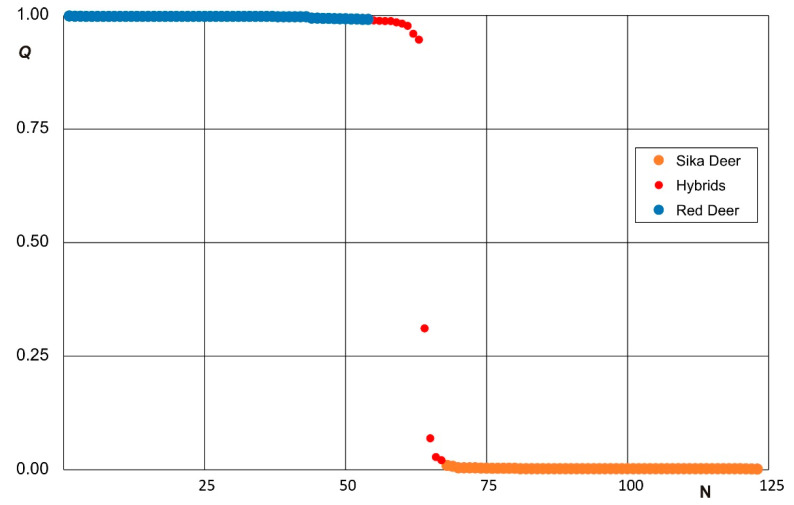
Although inter-species hybrids between the red and sika deer can be phenotypically determined only exceptionally, there is the eventuality of identification via molecular genetic analysis. We used bi-parentally inherited microsatellite markers and a Bayesian statistical framework to re-examine the proportion of hybrids in the Czech red and sika deer populations. In total, 123 samples were collected, and the nuclear dataset consisted of 2668 allelic values. The number of alleles per locus ranged from 10 (BM1818) to 22 (BM888 and T193), yielding the mean of 16 alleles per locus across the deer. The mean allelic diversity of the red deer markedly exceeded that of the Japanese sika deer. Interspecific hybrids were detected, enabling us to confirm the genetic introgression of the sika deer into the red deer populations and vice versa in western Bohemia. The mean hybrid score equaled 10.6%, with 14.3% of the hybrids being among red deer-like individuals and 6.7% among sika-like ones. At two western Bohemian locations, namely, Doupovské hory and Slavkovský les, the total percentages of hybrid animals equaled 18.8 and 8.9, respectively. No red deer alleles were detected in the sika populations of the subregions of Kladská, Žlutice, and Lány. The NeighborNet network clearly separated the seven red and sika deer sampling populations according to the geography. The knowledge gained from the evaluated data is applicable in hunting management to reduce hybridization with the European deer.
Keywords: genetic structure; hybridization; introgression; microsatellite variability; sika-red deer hybrid.
Conflict of interest statement
The authors declare no conflict of interest. The funders had no role in the actual designing of the study; in the collection, analyses, or interpretation of data; in the writing of the manuscript; or in the decision to publish the results.
Figures
References
-
- Simberloff D. Hybridization between native and introduced wildlife species: Importance for conservation. Wildl. Biol. 1996;2:143–150. doi: 10.2981/wlb.1996.012. - DOI
-
- Huxel G.R. Rapid displacement of native species by invasive species: Effects of hybridization. Biol. Cons. 1999;89:143–152. doi: 10.1016/S0006-3207(98)00153-0. - DOI
-
- Allendorf F.W., Leary R.F., Spruell P., Wenburg J.K. The problems with hybrids: Setting conservation guidelines. Trends Ecol. Evol. 2001;16:613–622. doi: 10.1016/S0169-5347(01)02290-X. - DOI
-
- Harrington R. Hybridization among deer and its implications for conservation. Ir. For. 1973;30:64–78.
-
- Fitzpatrick B.M., Ryan M.E., Johnson J.R., Corush J. Hybridization and the species problem in conservation. Curr. Zool. 2015;61:206–216. doi: 10.1093/czoolo/61.1.206. - DOI
Grants and funding
LinkOut - more resources
Full Text Sources
