


Lung Transplantation, Pulmonary Endothelial Inflammation, and Ex-Situ Lung Perfusion: A Review
- PMID: 34200413
- PMCID: PMC8229792
- DOI: 10.3390/cells10061417
Lung Transplantation, Pulmonary Endothelial Inflammation, and Ex-Situ Lung Perfusion: A Review
Abstract
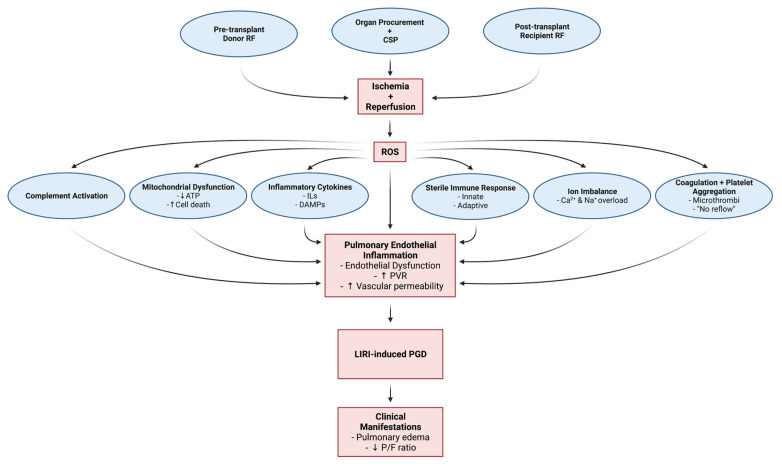
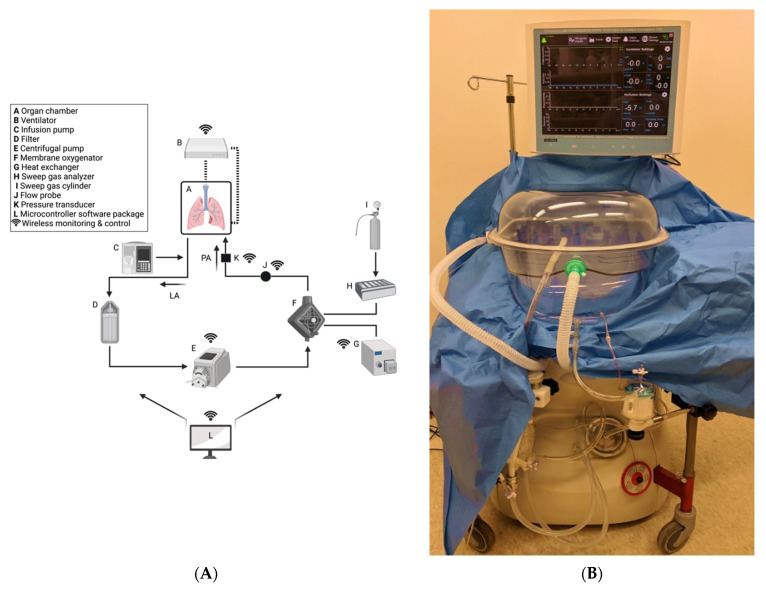
Lung transplantation (LTx) is the gold standard treatment for end-stage lung disease; however, waitlist mortality remains high due to a shortage of suitable donor lungs. Organ quality can be compromised by lung ischemic reperfusion injury (LIRI). LIRI causes pulmonary endothelial inflammation and may lead to primary graft dysfunction (PGD). PGD is a significant cause of morbidity and mortality post-LTx. Research into preservation strategies that decrease the risk of LIRI and PGD is needed, and ex-situ lung perfusion (ESLP) is the foremost technological advancement in this field. This review addresses three major topics in the field of LTx: first, we review the clinical manifestation of LIRI post-LTx; second, we discuss the pathophysiology of LIRI that leads to pulmonary endothelial inflammation and PGD; and third, we present the role of ESLP as a therapeutic vehicle to mitigate this physiologic insult, increase the rates of donor organ utilization, and improve patient outcomes.
Keywords: ex-situ lung perfusion; ischemic reperfusion injury; lung transplantation; primary graft dysfunction; pulmonary inflammation.
Conflict of interest statement
Dr. Jayan Nagendran and Dr. Darren H. Freed are Co-Founders of TEVOSOL Inc. Dr. Jayan Nagendran and Dr. Darren Freed provide consulting services to Bridge to Life LTD. None of the remaining authors have any relationships with a commercial entity that has an interest in the subject of the presented manuscript or other conflict of interest to disclose.
Figures
References
-
- Chambers D.C., Yusen R.D., Cherikh W.S., Goldfarb S.B., Kucheryavaya A.Y., Khusch K., Levvey B.J., Lund L.H., Meiser B., Rossano J.W., et al. The Registry of the International Society for Heart and Lung Transplantation: Thirty-fourth Adult Lung and Heart-Lung Transplantation Report-2017; Focus Theme: Allograft ischemic time. J. Heart Lung Transplant. 2017;36:1047–1059. doi: 10.1016/j.healun.2017.07.016. - DOI - PubMed
Publication types
MeSH terms
LinkOut - more resources
Full Text Sources
Medical
Miscellaneous
