


Interaction between Lipopolysaccharide and Gut Microbiota in Inflammatory Bowel Diseases
- PMID: 34200555
- PMCID: PMC8226948
- DOI: 10.3390/ijms22126242
Interaction between Lipopolysaccharide and Gut Microbiota in Inflammatory Bowel Diseases
Abstract
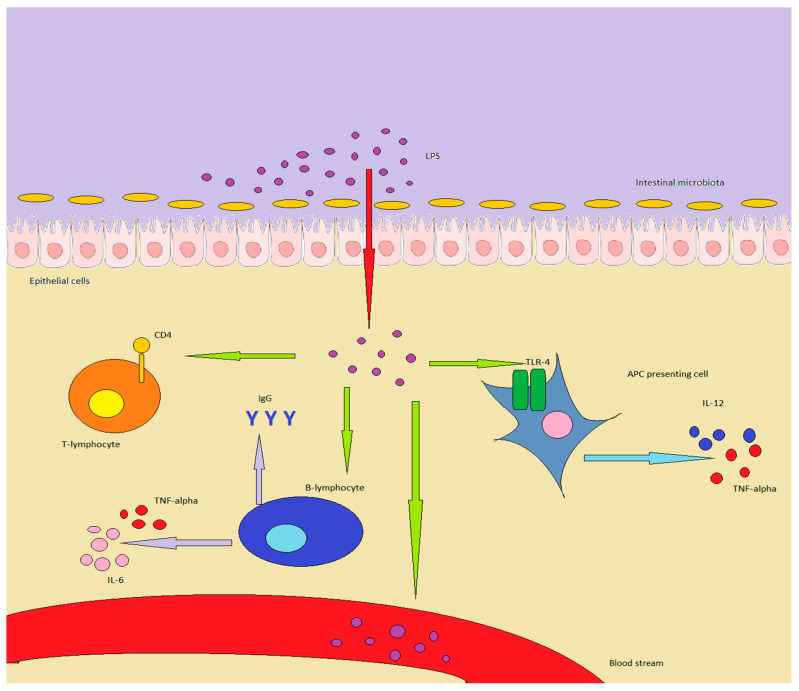
Lipopolysaccharides (LPSs) are bacterial surface glycolipids, produced by Gram-negative bacteria. LPS is known to determine acute inflammatory reactions, particularly in the context of sepsis. However, LPS can also trigger chronic inflammation. In this case, the source of LPS is not an external infection, but rather an increase in endogenous production, which is usually sustained by gut microbiota (GM), and LPS contained in food. The first site in which LPS can exert its inflammatory action is the gut: both GM and gut-associated lymphoid tissue (GALT) are influenced by LPS and shift towards an inflammatory pattern. The changes in GM and GALT induced by LPS are quite similar to the ones seen in IBD: GM loses diversity, while GALT T regulatory (Tregs) lymphocytes are reduced in number, with an increase in Th17 and Th1 lymphocytes. Additionally, the innate immune system is triggered, through the activation of toll-like receptor (TLR)-4, while the epithelium is directly damaged, further triggering inflammation. In this review, we will discuss the importance of the crosstalk between LPS, GM, and GALT, and discuss the possible implications.
Keywords: Crohn’s disease; IBD; LPS; Th17; Tregs; inflammation; metabolic endotoxemia; microbiota; ulcerative colitis.
Conflict of interest statement
The authors declare no conflict of interest.
Figures
References
Publication types
MeSH terms
Substances
LinkOut - more resources
Full Text Sources
