


Field and Molecular Epidemiology: How Viral Sequencing Changed Transmission Inferences in the First Portuguese SARS-CoV-2 Infection Cluster
- PMID: 34200621
- PMCID: PMC8226748
- DOI: 10.3390/v13061116
Field and Molecular Epidemiology: How Viral Sequencing Changed Transmission Inferences in the First Portuguese SARS-CoV-2 Infection Cluster
Abstract
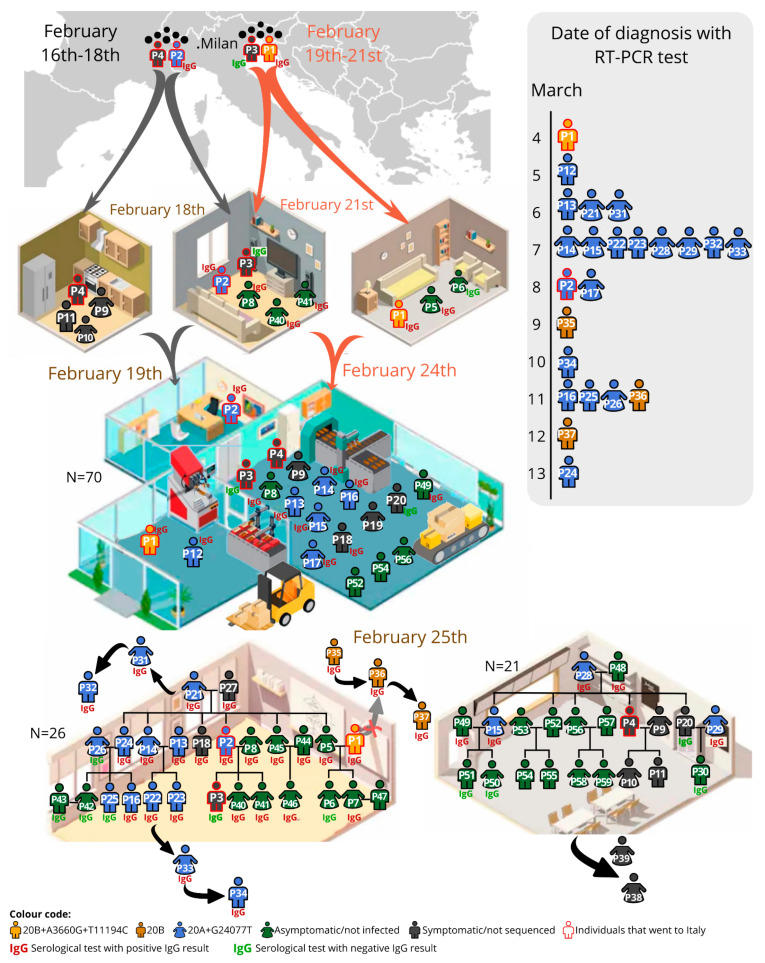
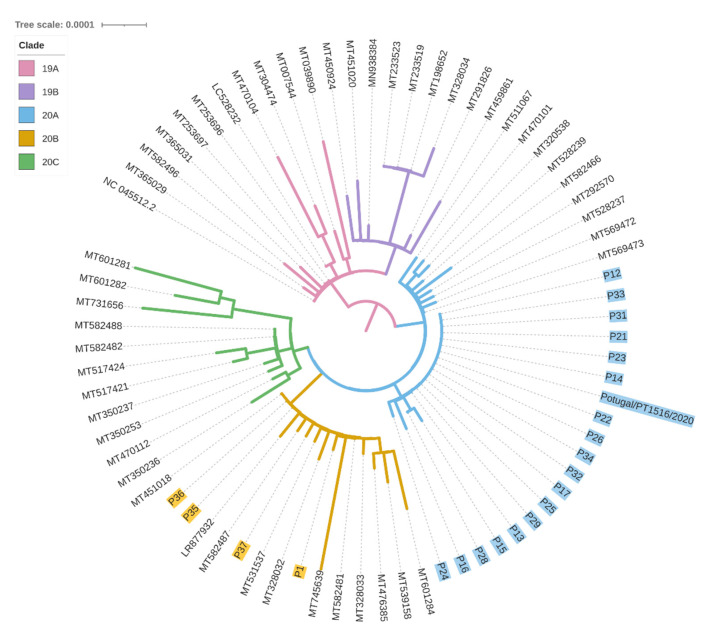
Field epidemiology and viral sequencing provide a comprehensive characterization of transmission chains and allow a better identification of superspreading events. However, very few examples have been presented to date during the COVID-19 pandemic. We studied the first COVID-19 cluster detected in Portugal (59 individuals involved amongst extended family and work environments), following the return of four related individuals from work trips to Italy. The first patient to introduce the virus would be misidentified following the traditional field inquiry alone, as shown by the viral sequencing in isolates from 23 individuals. The results also pointed out family, and not work environment, as the primary mode of transmission.
Keywords: COVID-19; epidemiological survey; family versus work environment; infection cluster; viral sequencing.
Conflict of interest statement
The authors declare no conflict of interest.
Figures
References
-
- Alteri C., Cento V., Piralla A., Costabile V., Tallarita M., Colagrossi L., Renica S., Giardina F., Novazzi F., Gaiarsa S., et al. Genomic epidemiology of SARS-CoV-2 reveals multiple lineages and early spread of SARS-CoV-2 infections in Lombardy, Italy. Nat. Commun. 2021;12:434. doi: 10.1038/s41467-020-20688-x. - DOI - PMC - PubMed
Publication types
MeSH terms
Substances
Grants and funding
LinkOut - more resources
Full Text Sources
Medical
Miscellaneous
