


Relationship of Physical Activity and Sedentary Time with Metabolic Health in Children and Adolescents Measured by Accelerometer: A Narrative Review
- PMID: 34200736
- PMCID: PMC8230405
- DOI: 10.3390/healthcare9060709
Relationship of Physical Activity and Sedentary Time with Metabolic Health in Children and Adolescents Measured by Accelerometer: A Narrative Review
Abstract
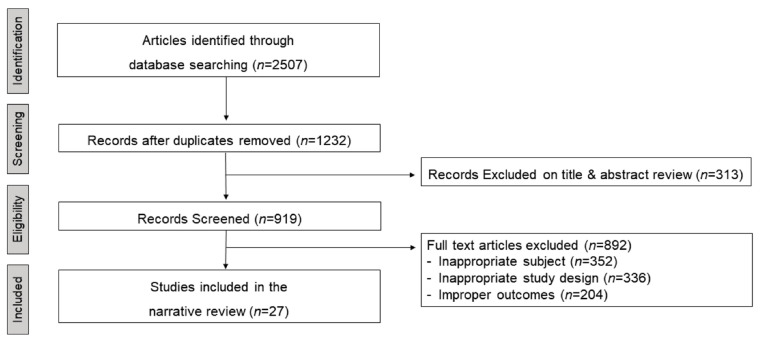
The purpose of this study was to summarize the associations of physical activity (PA) and sedentary time (SED) with metabolic health and examine the effects of time reallocation on metabolic health in adolescents using accelerometer data. A literature search was conducted using PubMed, ScienceDirect, Web of Science, Cochran Library, and Google Scholar, and 27 articles were reviewed. Recent research generally confirms the associations of PA and SED with metabolic health. High PA levels and low SED levels had a positive relationship with metabolic health. Moreover, reallocating 10 min of daily SED to PA was associated with better metabolic health indicators. These results were stronger for moderate-to-vigorous physical activity than for light intensity PA. Thus, efforts to convert SED into PA of at least moderate intensity appear to be an effective strategy to prevent metabolic disease development in children and adolescents. However, some of the associations between PA and metabolic health indicators were inconsistent, depending on age, obesity degree, and PA intensity. Additionally, various accelerometer data collection and processing criteria impact the interpretation of the results. Therefore, consistent accelerometer data collection and analysis methods are needed in future studies. Further, intervention studies are required to verify the causality and effectiveness of the isotemporal substitution model.
Keywords: accelerometer; adolescents; metabolic health; physical activity; sedentary time.
Conflict of interest statement
The authors declare no conflict of interest.
Figures
References
-
- Bull F.C., Al-Ansari S.S., Biddle S., Borodulin K., Buman M.P., Cardon G., Carty C., Chaput J.-P., Chastin S., Chou R., et al. World Health Organization 2020 guidelines on physical activity and sedentary behaviour. Br. J. Sports Med. 2020;54:1451–1462. doi: 10.1136/bjsports-2020-102955. - DOI - PMC - PubMed
-
- 2018 Physical Activity Guidelines Advisory Committee . 2018 Physical Activity Guidelines Advisory Committee Scientific Report. US Department of Health and Human Services; Washington, DC, USA: 2018.
-
- Child and Adolescent Health Measurement Initiative 2016 National Survey of Children’s Health (NSCH) data query. Data Resource Center for Child and Adolescent Health supported by the U.S. Department of Health and Human Services, Health Resources and Services Administration (HRSA), Maternal and Child Health Bureau (MCHB) [(accessed on 13 March 2021)]; Available online: https://www.childhealthdata.org/browse/survey/results?q=5190&r=1.
-
- National Health and Nutrition Examination Survey (NHANES) 2015-16 Public Data General Release File Documentation. [(accessed on 9 June 2021)];2016 Available online: https://wwwn.cdc.gov/nchs/nhanes/continuousnhanes/default.aspx?BeginYear....
-
- Saunders T.J., Tremblay M.S., Mathieu M.-È., Henderson M., O’Loughlin J., Tremblay A., Chaput J.-P., on behalf of the QUALITY Cohort Research Group Associations of Sedentary Behavior, Sedentary Bouts and Breaks in Sedentary Time with Cardiometabolic Risk in Children with a Family History of Obesity. PLoS ONE. 2013;8:e79143. doi: 10.1371/journal.pone.0079143. - DOI - PMC - PubMed
Publication types
LinkOut - more resources
Full Text Sources
