


Regulation of Cancer Metabolism by Deubiquitinating Enzymes: The Warburg Effect
- PMID: 34201062
- PMCID: PMC8226939
- DOI: 10.3390/ijms22126173
Regulation of Cancer Metabolism by Deubiquitinating Enzymes: The Warburg Effect
Abstract
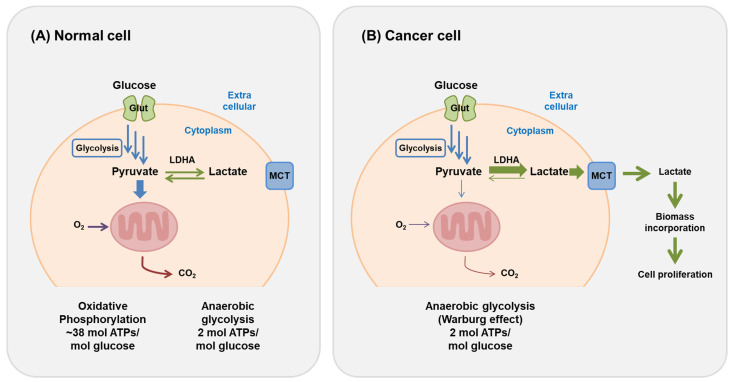
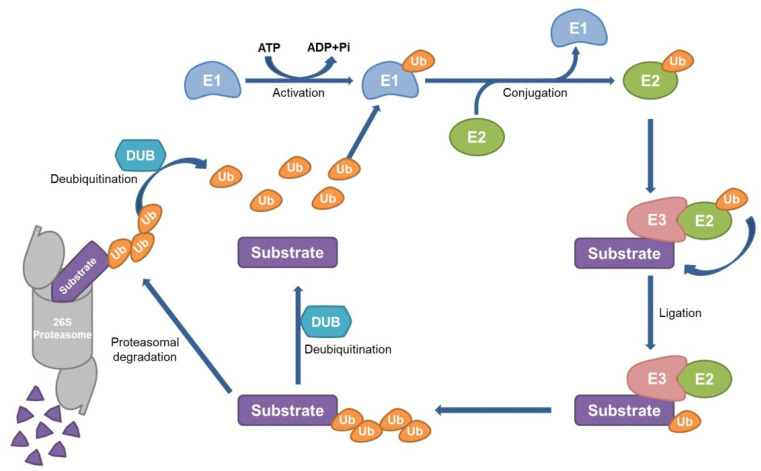
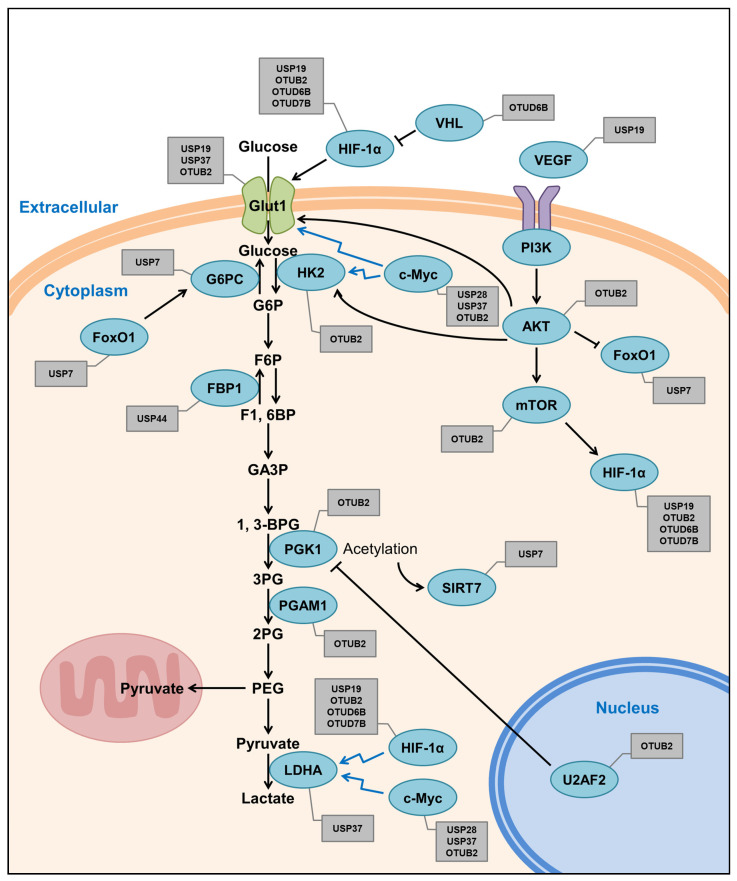
Cancer is a disorder of cell growth and proliferation, characterized by different metabolic pathways within normal cells. The Warburg effect is a major metabolic process in cancer cells that affects the cellular responses, such as proliferation and apoptosis. Various signaling factors down/upregulate factors of the glycolysis pathway in cancer cells, and these signaling factors are ubiquitinated/deubiquitinated via the ubiquitin-proteasome system (UPS). Depending on the target protein, DUBs act as both an oncoprotein and a tumor suppressor. Since the degradation of tumor suppressors and stabilization of oncoproteins by either negative regulation by E3 ligases or positive regulation of DUBs, respectively, promote tumorigenesis, it is necessary to suppress these DUBs by applying appropriate inhibitors or small molecules. Therefore, we propose that the DUBs and their inhibitors related to the Warburg effect are potential anticancer targets.
Keywords: anaerobic glycolysis; anticancer; hypoxia; small molecules; ubiquitin–proteasome system (UPS).
Conflict of interest statement
The authors declare no conflict of interest.
Figures
References
Publication types
MeSH terms
Substances
Grants and funding
LinkOut - more resources
Full Text Sources
Medical
