Can Antiviral Activity of Licorice Help Fight COVID-19 Infection?
- PMID: 34201172
- PMCID: PMC8227143
- DOI: 10.3390/biom11060855
Can Antiviral Activity of Licorice Help Fight COVID-19 Infection?
Abstract
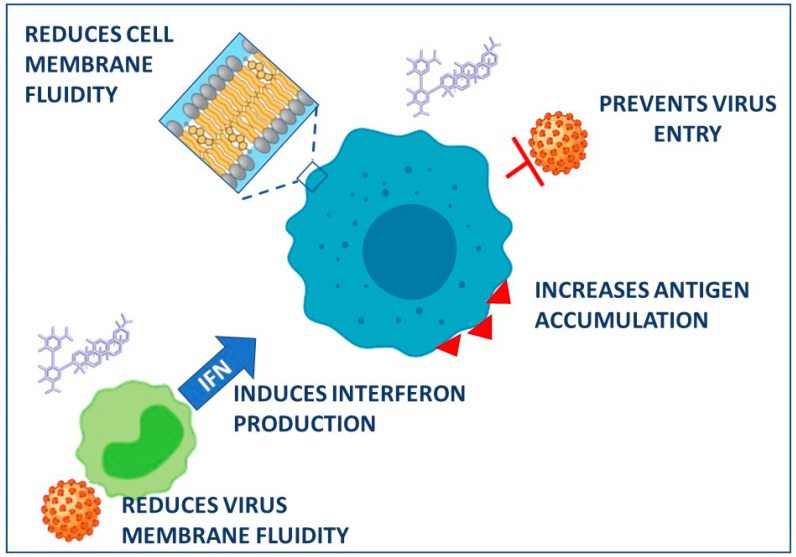
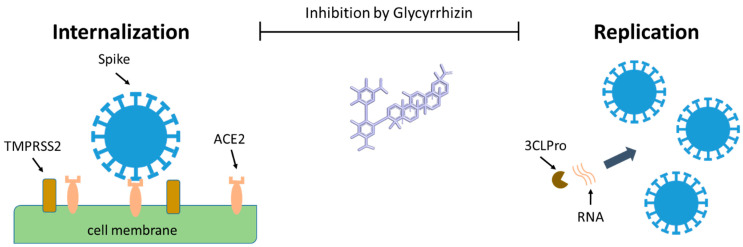
The phytotherapeutic properties of Glycyrrhiza glabra (licorice) extract are mainly attributed to glycyrrhizin (GR) and glycyrrhetinic acid (GA). Among their possible pharmacological actions, the ability to act against viruses belonging to different families, including SARS coronavirus, is particularly important. With the COVID-19 emergency and the urgent need for compounds to counteract the pandemic, the antiviral properties of GR and GA, as pure substances or as components of licorice extract, attracted attention in the last year and supported the launch of two clinical trials. In silico docking studies reported that GR and GA may directly interact with the key players in viral internalization and replication such as angiotensin-converting enzyme 2 (ACE2), spike protein, the host transmembrane serine protease 2, and 3-chymotrypsin-like cysteine protease. In vitro data indicated that GR can interfere with virus entry by directly interacting with ACE2 and spike, with a nonspecific effect on cell and viral membranes. Additional anti-inflammatory and antioxidant effects of GR cannot be excluded. These multiple activities of GR and licorice extract are critically re-assessed in this review, and their possible role against the spread of the SARS-CoV-2 and the features of COVID-19 disease is discussed.
Keywords: COVID-19; SARS-CoV-2; enoxolone; glycyrrhetinic acid; glycyrrhizic acid; glycyrrhizin; licorice; liquorice; virus.
Conflict of interest statement
This study is part of a more than 30-year collaboration between Perfetti Van Melle S.P.A. and the Istituto di Ricerche Farmacologiche Mario Negri IRCCS (IRFMN). It essentially concerns scientific support for the group’s activities with particular regard to product safety, the working environment, and updating of legislation. M.S., L.D., M.G., O.F., A.G. and M.B. are employees of IRFMN. The authors declare no conflict of interest. Perfetti Van Melle S.P.A. has no role in the collection, analyses, and interpretation of data, in the writing of the manuscript, or in the decision to publish the results.
Figures