


Continuous Subcutaneous Apomorphine Infusion in Parkinson's Disease: A Single-Center, Long-Term Follow-Up Study of the Causes for Discontinuation
- PMID: 34201198
- PMCID: PMC8226743
- DOI: 10.3390/jpm11060525
Continuous Subcutaneous Apomorphine Infusion in Parkinson's Disease: A Single-Center, Long-Term Follow-Up Study of the Causes for Discontinuation
Abstract
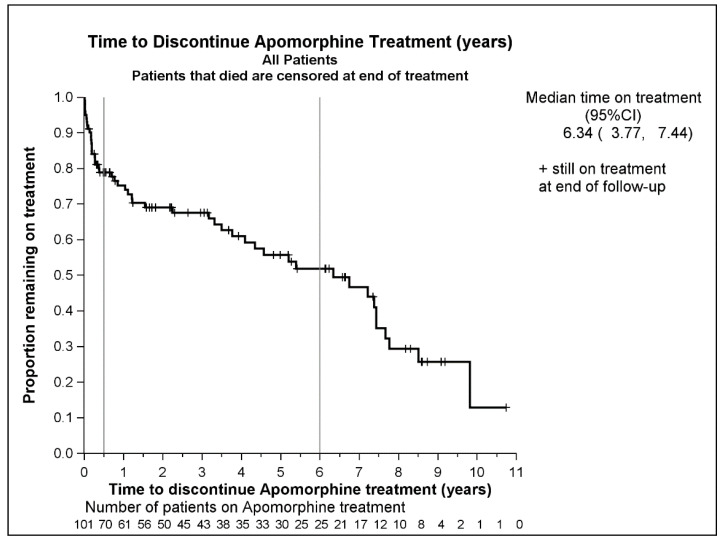
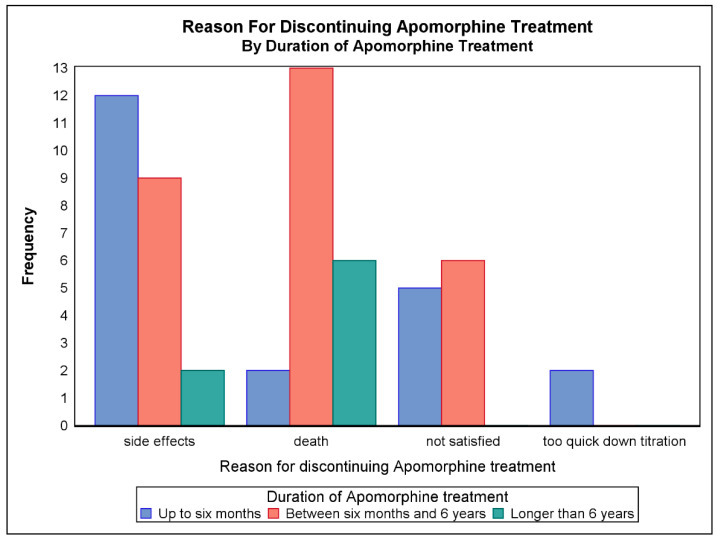
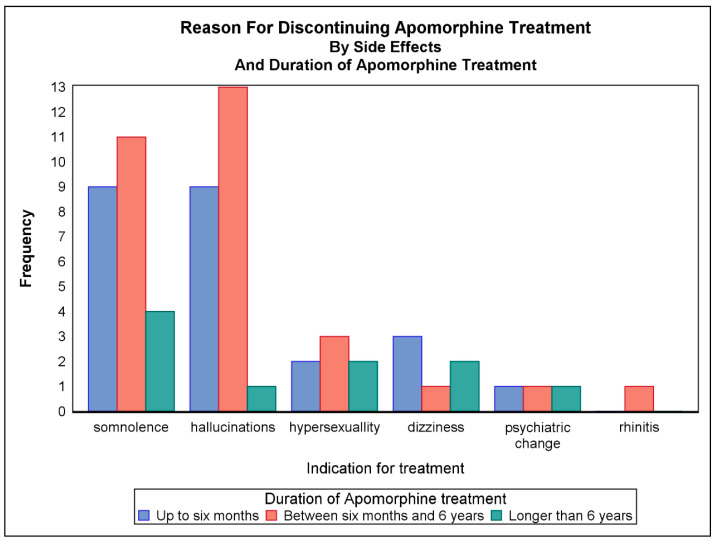
(1) Background: Subcutaneous apomorphine infusion (SCAI) is one of the three main treatment options for motor fluctuations in advanced Parkinson's disease (PD). The adherence to SCAI is generally considered to be low due to adverse events and because it is perceived as a treatment option to be used for a limited period only. We evaluated the reasons for discontinuation of SCAI in relation to when patients stopped treatment. (2) Methods: We reviewed the medical records of PD patients treated with SCAI at a single center, capturing patient demographics and the reasons for cessation of SCAI. (3) Results: 101 patients were included in the analysis, with a median time on treatment of 6.34 years. The main reasons for stopping SCAI were adverse events, death, and dissatisfaction with treatment. In the first 6 years of treatment, the predominant side effects leading to discontinuation were somnolence and hallucinations. (4) Conclusions: We suggest that SCAI can be an effective long-term treatment option for advanced PD, but it requires careful patient selection, a high level of communication with the patient and carer, and rigorous monitoring of the effects of treatment and for any adverse events so they can be promptly managed.
Keywords: adherence; advanced Parkinson’s disease; apomorphine.
Conflict of interest statement
Tove Henriksen: has received honoraria for talks from AbbVie A/S, Britannia Pharmaceuticals, NeuroDerm, EVER Pharma, Lobsor Pharmaceutical, Lundbeck Pharma. She is Principal Investigator of a medical study sponsored by AbbVie. Harry Staines: has received consultancy fees from Britannia.
Figures
References
LinkOut - more resources
Full Text Sources
