


The Acceptability, Feasibility, and Effectiveness of Wearable Activity Trackers for Increasing Physical Activity in Children and Adolescents: A Systematic Review
- PMID: 34201248
- PMCID: PMC8228417
- DOI: 10.3390/ijerph18126211
The Acceptability, Feasibility, and Effectiveness of Wearable Activity Trackers for Increasing Physical Activity in Children and Adolescents: A Systematic Review
Abstract
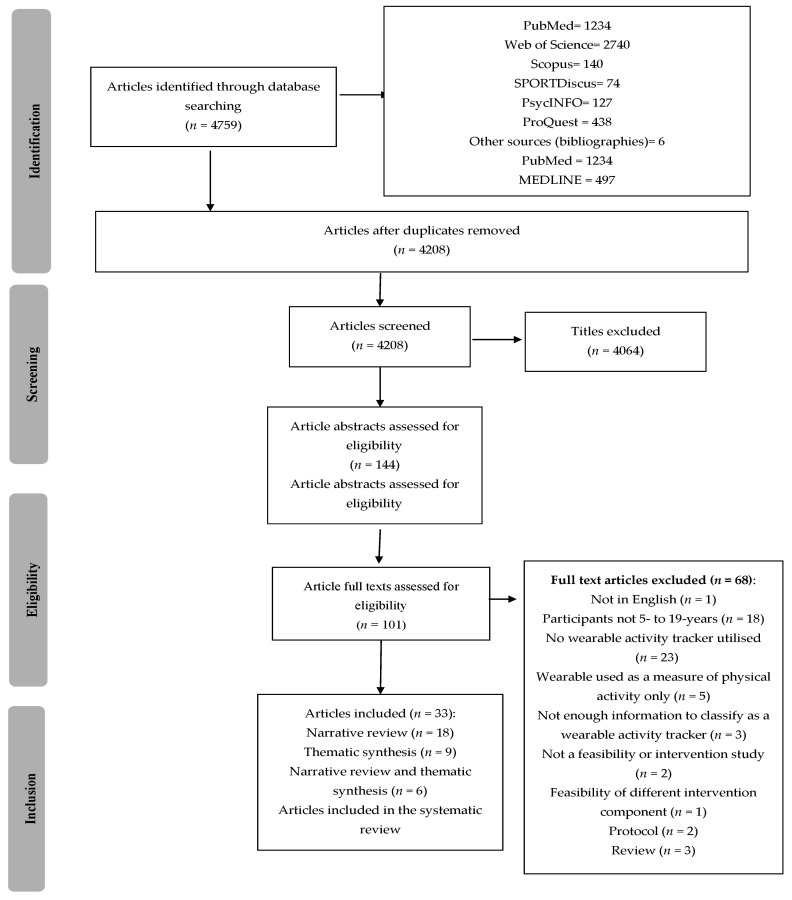
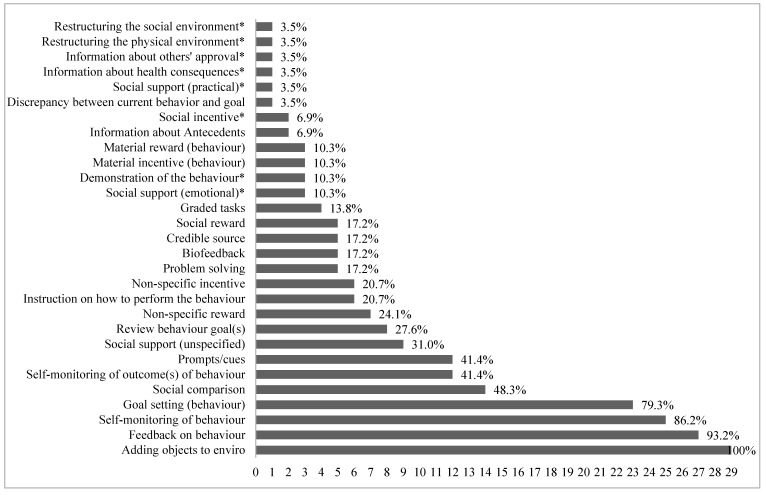
Wearable activity trackers (wearables) embed numerous behaviour change techniques (BCTs) that have previously been shown to increase adult physical activity (PA). With few children and adolescents achieving PA guidelines, it is crucial to explore ways to increase their PA. This systematic review examined the acceptability, feasibility, and effectiveness of wearables and their potential mechanisms of action for increasing PA in 5 to 19-year-olds. A systematic search of six databases was conducted, including data from the start date of each database to December 2019 (PROSPERO registration: CRD42020164506). Thirty-three studies were included. Most studies (70%) included only adolescents (10 to 19 years). There was some-but largely mixed-evidence that wearables increase steps and moderate-to-vigorous-intensity PA and reduce sedentary behaviour. There were no apparent differences in effectiveness based on the number of BCTs used and between studies using a wearable alone or as part of a multi-component intervention. Qualitative findings suggested wearables increased motivation to be physically active via self-monitoring, goal setting, feedback, and competition. However, children and adolescents reported technical difficulties and a novelty effect when using wearables, which may impact wearables' long-term use. More rigorous and long-term studies investigating the acceptability, feasibility, and effectiveness of wearables in 5 to 19-year-olds are warranted.
Keywords: adolescents; children; feasibility; interventions; physical activity; systematic review; wearable activity trackers.
Conflict of interest statement
The authors declare no conflict of interest.
Figures
References
-
- Kim J., Chun S., Heo J., Lee S., Han A. Contribution of Leisure-Time Physical Activity on Psychological Benefits Among Elderly Immigrants. Appl. Res. Qual. Life. 2016;11:461–470. doi: 10.1007/s11482-014-9374-7. - DOI
-
- Poitras V.J., Gray C., Borghese M.M., Carson V., Chaput J.-P., Janssen I., Katzmarzyk P., Pate R.R., Gorber S.C., Kho M., et al. Systematic review of the relationships between objectively measured physical activity and health indicators in school-aged children and youth. Appl. Physiol. Nutr. Metab. 2016;41:S197–S239. doi: 10.1139/apnm-2015-0663. - DOI - PubMed
-
- Da Silva B.G.C., da Silva I.C.M., Ekelund U., Brage S., Ong K.K., Rolfe E.D.L., Lima N.P., da Silva S.G., de França G.V.A., Horta B.L. Associations of physical activity and sedentary time with body composition in Brazilian young adults. Sci. Rep. 2019;9:5444. doi: 10.1038/s41598-019-41935-2. - DOI - PMC - PubMed
Publication types
MeSH terms
Grants and funding
LinkOut - more resources
Full Text Sources
Medical
