


Sourdough Microbiome Comparison and Benefits
- PMID: 34201420
- PMCID: PMC8306212
- DOI: 10.3390/microorganisms9071355
Sourdough Microbiome Comparison and Benefits
Abstract
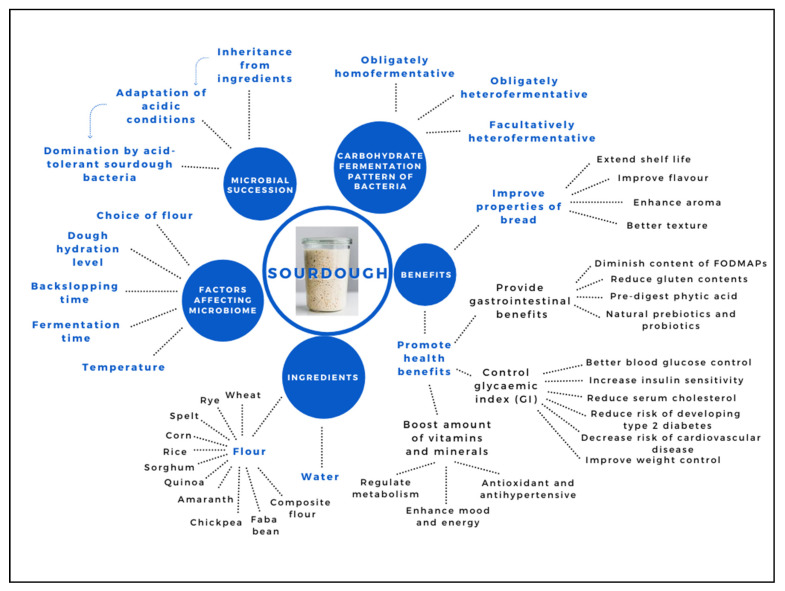
Sourdough is the oldest form of leavened bread used as early as 2000 BC by the ancient Egyptians. It may have been discovered by accident when wild yeast drifted into dough that had been left out resulting in fermentation of good microorganisms, which made bread with better flavour and texture. The discovery was continued where sourdough was produced as a means of reducing wastage with little known (at that point of time) beneficial effects to health. With the progress and advent of science and technology in nutrition, sourdough fermentation is now known to possess many desirable attributes in terms of health benefits. It has become the focus of attention and practice in modern healthy eating lifestyles when linked to the secret of good health. The sourdough starter is an excellent habitat where natural and wild yeast plus beneficial bacteria grow by ingesting only water and flour. As each sourdough starter is unique, with different activities, populations and interactions of yeast and bacteria due to different ingredients, environment, fermentation time and its carbohydrate fermentation pattern, there is no exact elucidation on the complete make-up of the sourdough microbiome. Some lactic acid bacteria (LAB) strains that are part of the sourdough starter are considered as probiotics which have great potential for improving gastrointestinal health. Hence, from a wide literature surveyed, this paper gives an overview of microbial communities found in different sourdough starters. This review also provides a systematic analysis that identifies, categorises and compares these microbes in the effort of linking them to specific functions, particularly to unlock their health benefits.
Keywords: benefits; fermentation; health; microbiota; sourdough.
Conflict of interest statement
The authors declare no conflict of interest.
References
-
- Chavan R.S., Chavan S.R. Sourdough Technology–A Traditional Way for Wholesome Foods: A Review. Compr. Rev. Food Sci. Food Saf. 2011;10 doi: 10.1111/j.1541-4337.2011.00148.x. - DOI
-
- Hammes W.P., Gänzle M.G. Microbiology of Fermented Foods. Springer; Boston, MA, USA: 1998. Sourdough breads and related products.
-
- Müller M.R.A., Wolfrum G., Stolz P., Ehrmann M.A., Vogel R.F. Monitoring the growth of Lactobacillus species during a rye flour fermentation. Food Microbiol. 2001;18 doi: 10.1006/fmic.2000.0394. - DOI
Publication types
LinkOut - more resources
Full Text Sources
Other Literature Sources
Molecular Biology Databases
Research Materials
Miscellaneous
