


Oxidative-Stress-Induced Cellular Toxicity and Glycoxidation of Biomolecules by Cosmetic Products under Sunlight Exposure
- PMID: 34201737
- PMCID: PMC8300617
- DOI: 10.3390/antiox10071008
Oxidative-Stress-Induced Cellular Toxicity and Glycoxidation of Biomolecules by Cosmetic Products under Sunlight Exposure
Abstract
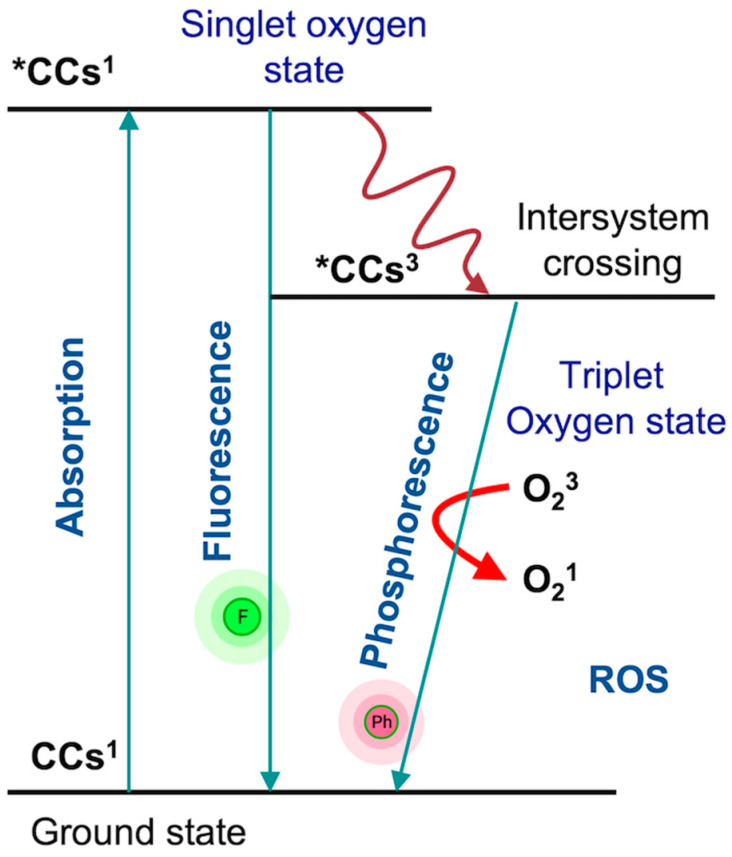
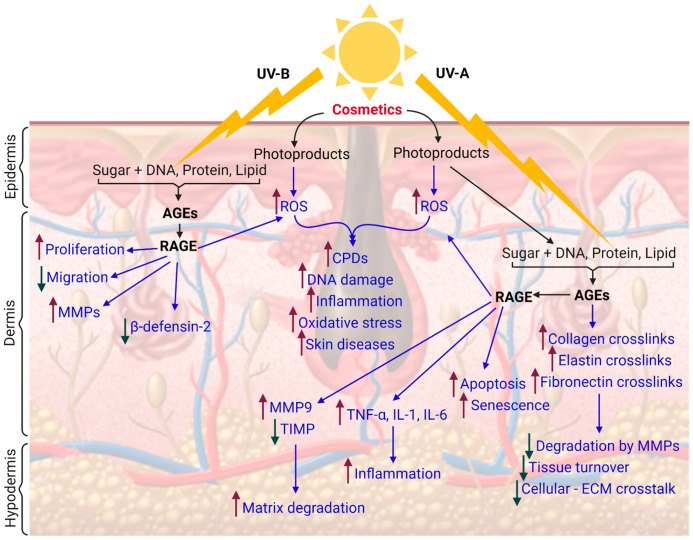
Cosmetics, commonly known as 'makeup' are products that can enhance the appearance of the human body. Cosmetic products include hair dyes, shampoos, skincare, sunscreens, kajal, and other makeup products. Cosmetics are generally applied throughout the face and over the neck region. Sunlight has different wavelengths of light, which include UV-A, UV-B, UV-C, and other radiations. Most cosmetic products have absorption maxima (λmax) in the range of visible light and UV-R. The effect of light-induced photosensitization of cosmetic products, which results in the production of free radicals through type-I and type-II photosensitization mechanisms. Free-radicals-mediated DNA damage and oxidative stress are common consequences of cosmetic phototoxicity. Cosmetic phototoxicity may include percutaneous absorption, skin irritation, eye irritation, photosensitization, mutagenicity, and genotoxicity. Oxidative stress induces membrane lipid peroxidation, glycoxidation, and protein covalent modifications, resulting in their dysfunction. Natural antioxidants inhibit oxidative-stress-induced cosmetic toxicity. Sunlight-induced photodegradation and accumulation of cosmetic photoproducts are also a matter of serious concern. India has tropical weather conditions throughout the year and generally, a majority of human activities such as commerce, agriculture, sports, etc. are performed under bright sunlight conditions. Thus, more focused and dedicated research is warranted to explore the effects of cosmetics on oxidative stress, glycoxidation of biomolecules, and photoproducts accumulation for its total human safety.
Keywords: UV-R; cosmetics; photoproducts; photosensitization.
Conflict of interest statement
The authors declare no conflict of interest.
Figures
References
-
- Dogra A., Minocha Y.C., Kaur S. Adverse reactions to cosmetics. Indian J. Derm. Venereol Leprol. 2003;69:165–167. - PubMed
-
- Centers for Disease Control and Prevention Second national report on human exposure to environmental chemicals. USA Environ. Prot. Agency. 2003;4:98–100.
Publication types
LinkOut - more resources
Full Text Sources
