


Manipulation of Cellular Processes via Nucleolus Hijaking in the Course of Viral Infection in Mammals
- PMID: 34202380
- PMCID: PMC8303250
- DOI: 10.3390/cells10071597
Manipulation of Cellular Processes via Nucleolus Hijaking in the Course of Viral Infection in Mammals
Abstract
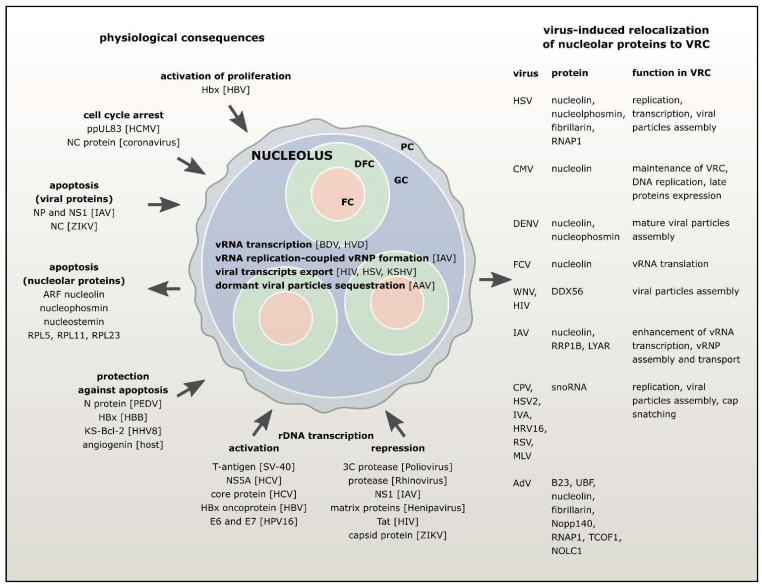
Due to their exceptional simplicity of organization, viruses rely on the resources, molecular mechanisms, macromolecular complexes, regulatory pathways, and functional compartments of the host cell for an effective infection process. The nucleolus plays an important role in the process of interaction between the virus and the infected cell. The interactions of viral proteins and nucleic acids with the nucleolus during the infection process are universal phenomena and have been described for almost all taxonomic groups. During infection, proteins of the nucleolus in association with viral components can be directly used for the processes of replication and transcription of viral nucleic acids and the assembly and transport of viral particles. In the course of a viral infection, the usurpation of the nucleolus functions occurs and the usurpation is accompanied by profound changes in ribosome biogenesis. Recent studies have demonstrated that the nucleolus is a multifunctional and dynamic compartment. In addition to the biogenesis of ribosomes, it is involved in regulating the cell cycle and apoptosis, responding to cellular stress, repairing DNA, and transcribing RNA polymerase II-dependent genes. A viral infection can be accompanied by targeted transport of viral proteins to the nucleolus, massive release of resident proteins of the nucleolus into the nucleoplasm and cytoplasm, the movement of non-nucleolar proteins into the nucleolar compartment, and the temporary localization of viral nucleic acids in the nucleolus. The interaction of viral and nucleolar proteins interferes with canonical and non-canonical functions of the nucleolus and results in a change in the physiology of the host cell: cell cycle arrest, intensification or arrest of ribosome biogenesis, induction or inhibition of apoptosis, and the modification of signaling cascades involved in the stress response. The nucleolus is, therefore, an important target during viral infection. In this review, we discuss the functional impact of viral proteins and nucleic acid interaction with the nucleolus during infection.
Keywords: apoptosis; biocondensate; cell cycle; host–virus interaction; nucleoli; ribosome biogenesis; snoRNAs.
Conflict of interest statement
The authors declare no conflict of interest.
Figures
References
Publication types
MeSH terms
Substances
Grants and funding
LinkOut - more resources
Full Text Sources
Medical
