


18F-Sodium Fluoride PET as a Diagnostic Modality for Metabolic, Autoimmune, and Osteogenic Bone Disorders: Cellular Mechanisms and Clinical Applications
- PMID: 34204387
- PMCID: PMC8234710
- DOI: 10.3390/ijms22126504
18F-Sodium Fluoride PET as a Diagnostic Modality for Metabolic, Autoimmune, and Osteogenic Bone Disorders: Cellular Mechanisms and Clinical Applications
Abstract
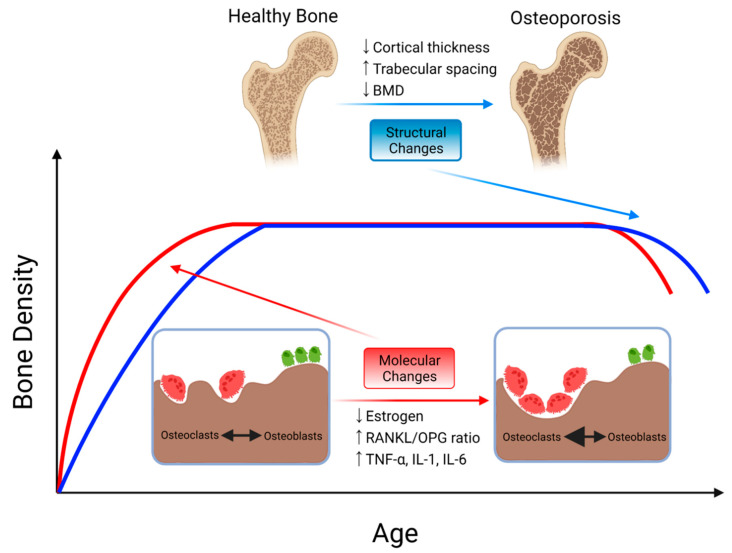
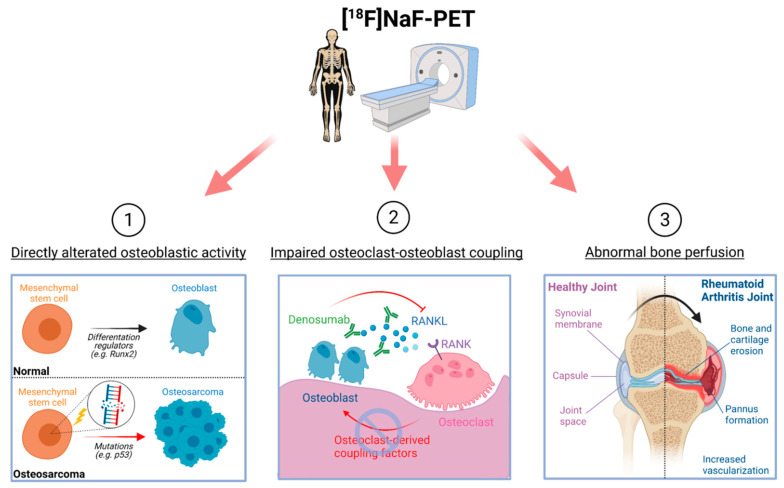
In a healthy body, homeostatic actions of osteoclasts and osteoblasts maintain the integrity of the skeletal system. When cellular activities of osteoclasts and osteoblasts become abnormal, pathological bone conditions, such as osteoporosis, can occur. Traditional imaging modalities, such as radiographs, are insensitive to the early cellular changes that precede gross pathological findings, often leading to delayed disease diagnoses and suboptimal therapeutic strategies. 18F-sodium fluoride (18F-NaF)-positron emission tomography (PET) is an emerging imaging modality with the potential for early diagnosis and monitoring of bone diseases through the detection of subtle metabolic changes. Specifically, the dissociated 18F- is incorporated into hydroxyapatite, and its uptake reflects osteoblastic activity and bone perfusion, allowing for the quantification of bone turnover. While 18F-NaF-PET has traditionally been used to detect metastatic bone disease, recent literature corroborates the use of 18F-NaF-PET in benign osseous conditions as well. In this review, we discuss the cellular mechanisms of 18F-NaF-PET and examine recent findings on its clinical application in diverse metabolic, autoimmune, and osteogenic bone disorders.
Keywords: 18F-NaF; 18F-sodium fluoride; PET; Paget’s disease; ankylosing spondylitis; hyperparathyroidism; osteoporosis; osteosarcoma; rheumatoid arthritis.
Conflict of interest statement
The authors declare no conflict of interest.
Figures
References
-
- Abarrategi A., Tornin J., Martinez-Cruzado L., Hamilton A., Martinez-Campos E., Rodrigo J.P., Gonzalez M.V., Baldini N., Garcia-Castro J., Rodriguez R. Osteosarcoma: Cells-of-Origin, Cancer Stem Cells, and Targeted Therapies. Stem Cells Int. 2016;2016:3631764. doi: 10.1155/2016/3631764. - DOI - PMC - PubMed
Publication types
MeSH terms
Substances
LinkOut - more resources
Full Text Sources
Medical
Research Materials
