


Evaluating the Antioxidants, Whitening and Antiaging Properties of Rice Protein Hydrolysates
- PMID: 34204643
- PMCID: PMC8231118
- DOI: 10.3390/molecules26123605
Evaluating the Antioxidants, Whitening and Antiaging Properties of Rice Protein Hydrolysates
Abstract
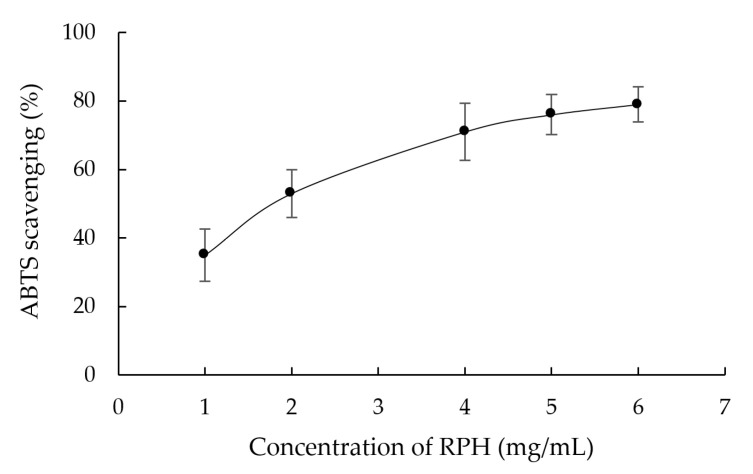
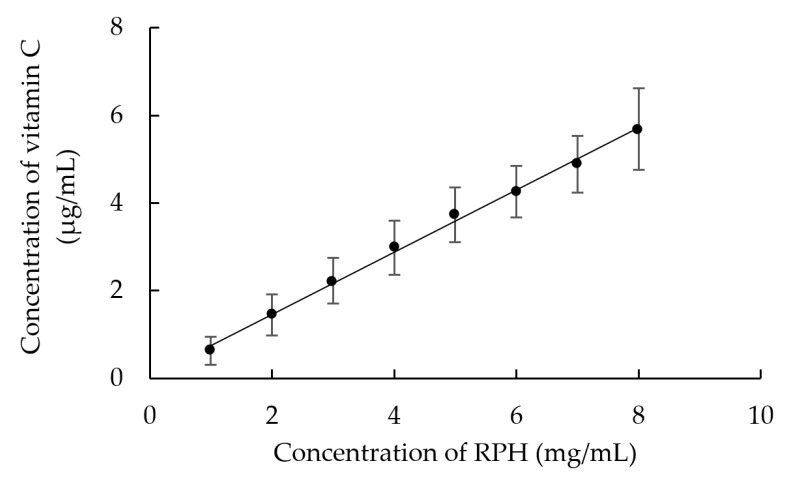
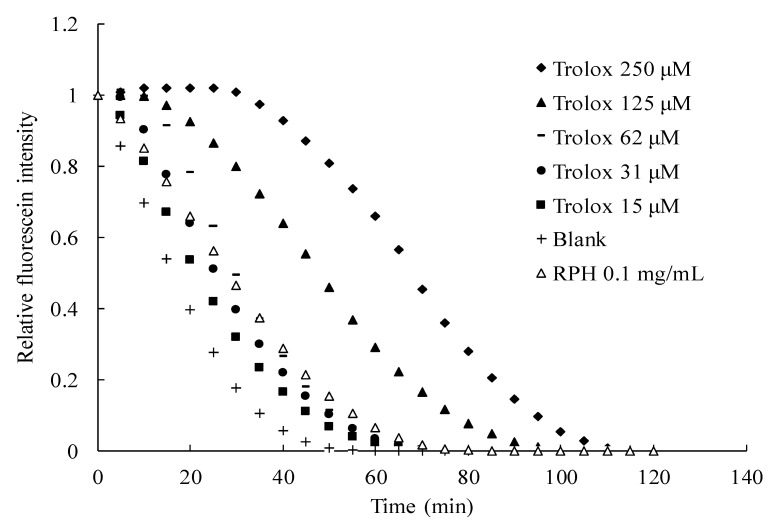
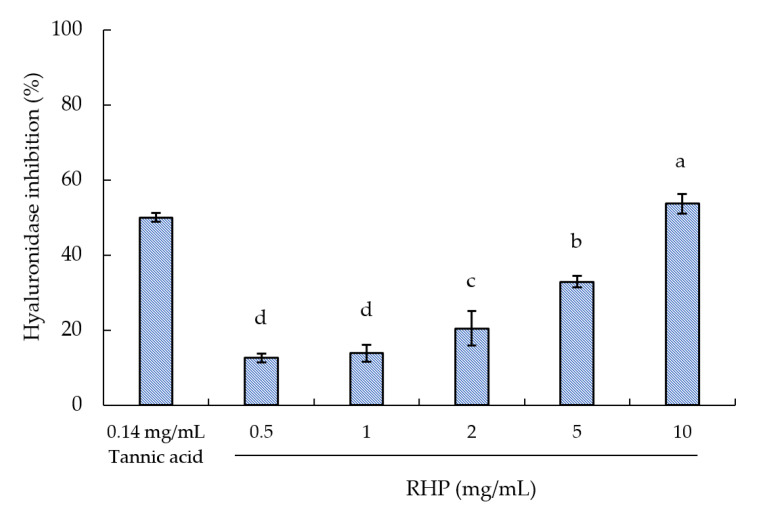
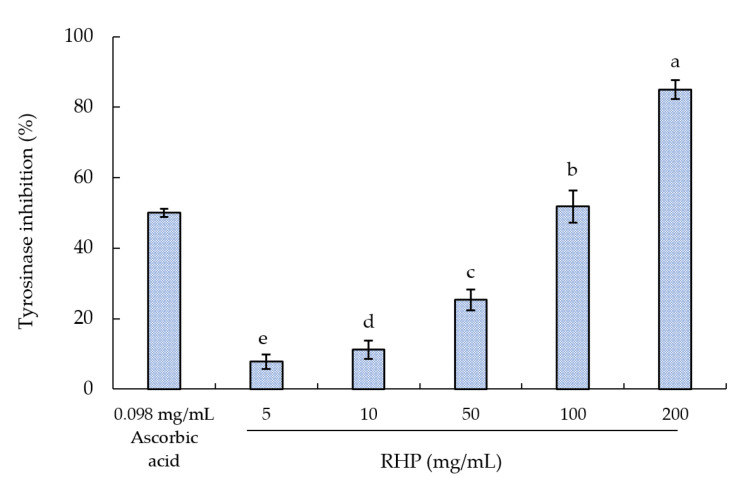
Plant-derived protein hydrolysates have potential applications in nutrition. Rice protein hydrolysates (RPHs), an excellent source of proteins, have attracted attention for the development of cosmeceuticals. However, few studies have reported the potential application of RPH in analysis, and this study examined their antioxidant activities and the inhibitory activities of skin aging enzymes. The results indicated that the total phenolic and flavonoid concentrations were 2.06 ± 0.13 mg gallic acid equivalent/g RPHs and 25.96 ± 0.52 µg quercetin equivalent/g RPHs, respectively. RPHs demonstrated dose-dependent activity for scavenging free radicals from 1,1-diphenyl-2-picrylhydrazyl [half-maximal inhibitory concentration (IC50) = 42.58 ± 2.1 mg/g RPHs] and 2,2'-azino-bis (3-ethylbenzothiazoline-6-sulfonic acid) (IC50 = 2.11 ± 0.88 mg/g RPHs), dose-dependent reduction capacity (6.95 ± 1.40 mg vitamin C equivalent/g RPHs) and oxygen radical absorbance capacity (473 µmol Trolox equivalent/g RPHs). The concentrations of the RPH solution required to achieve 50% inhibition of hyaluronidase and tyrosinase activities were determined to be 8.91 and 107.6 mg/mL, respectively. This study demonstrated that RPHs have antioxidant, antihyaluronidase, and antityrosinase activities for future cosmetic applications.
Keywords: antioxidant; cosmetic; hyaluronidase; rice protein hydrolysate; tyrosinase.
Conflict of interest statement
The authors declare that there are no conflicts of interest.
Figures


References
-
- Ichihashi M., Ando H., Yoshida M., Niki Y., Matsui M. Photoaging of the skin. Anti-Aging Med. 2009;6:46–59. doi: 10.3793/jaam.6.46. - DOI
-
- Kim J.-S., Kim D., Kim H.-J., Jang A. Protection effect of donkey hide gelatin hydrolysates on UVB-induced photoaging of human skin fibroblasts. Process. Biochem. 2018;67:118–126. doi: 10.1016/j.procbio.2018.02.004. - DOI
-
- Guo X., Zhang J., Ma Y., Tian S. Optimization of limited hydrolysis of proteins in rice residue and characterization of the functional properties of the products. J. Food Proc. Preserv. 2013;37:245–253. doi: 10.1111/j.1745-4549.2011.00641.x. - DOI
MeSH terms
Substances
Grants and funding
LinkOut - more resources
Full Text Sources
Other Literature Sources
Miscellaneous
