


Lack of Trust, Conspiracy Beliefs, and Social Media Use Predict COVID-19 Vaccine Hesitancy
- PMID: 34204971
- PMCID: PMC8226842
- DOI: 10.3390/vaccines9060593
Lack of Trust, Conspiracy Beliefs, and Social Media Use Predict COVID-19 Vaccine Hesitancy
Abstract
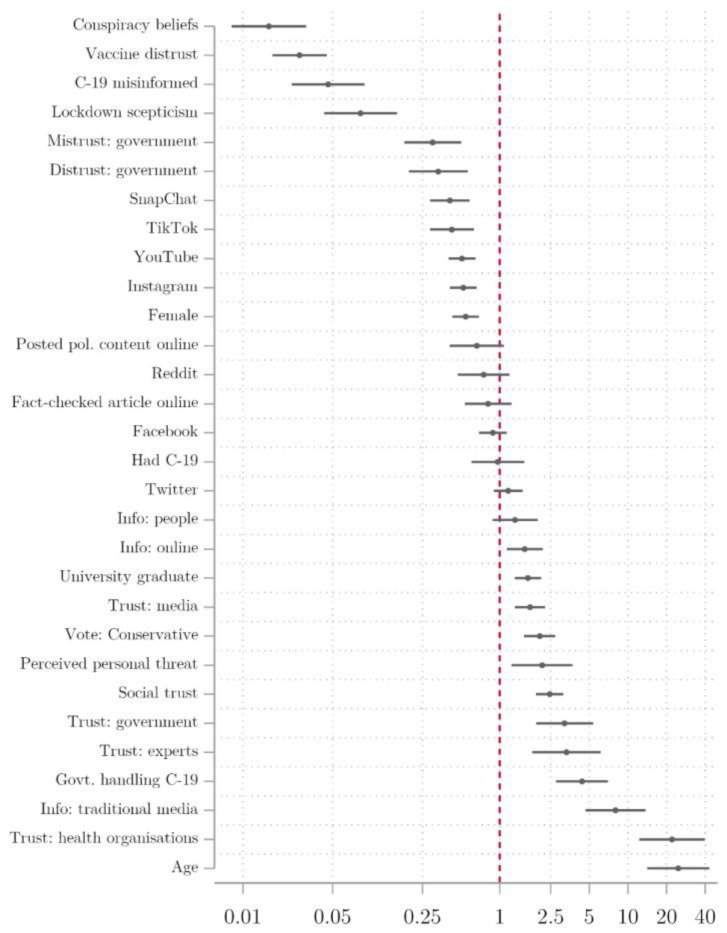
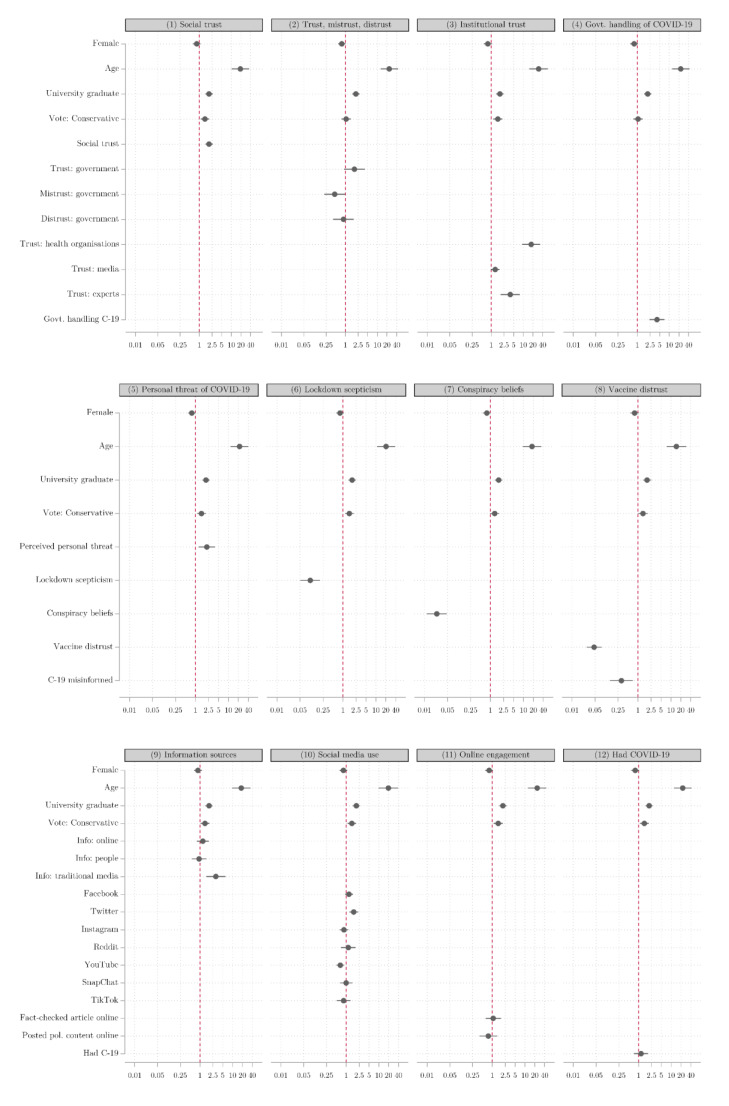
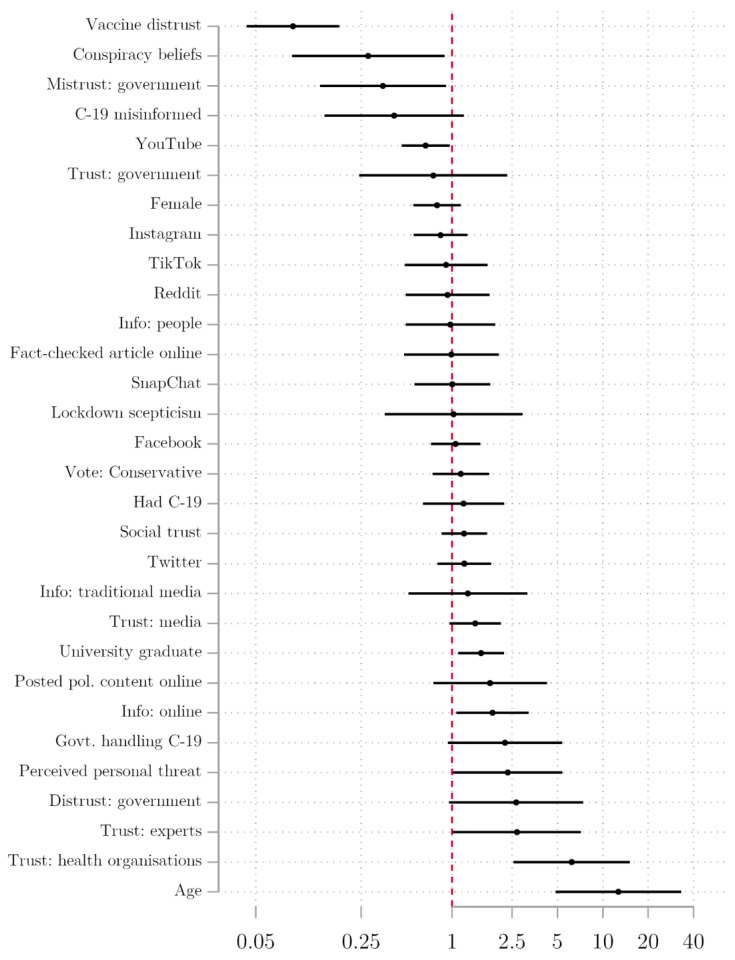
As COVID-19 vaccines are rolled out across the world, there are growing concerns about the roles that trust, belief in conspiracy theories, and spread of misinformation through social media play in impacting vaccine hesitancy. We use a nationally representative survey of 1476 adults in the UK between 12 and 18 December 2020, along with 5 focus groups conducted during the same period. Trust is a core predictor, with distrust in vaccines in general and mistrust in government raising vaccine hesitancy. Trust in health institutions and experts and perceived personal threat are vital, with focus groups revealing that COVID-19 vaccine hesitancy is driven by a misunderstanding of herd immunity as providing protection, fear of rapid vaccine development and side effects, and beliefs that the virus is man-made and used for population control. In particular, those who obtain information from relatively unregulated social media sources-such as YouTube-that have recommendations tailored by watch history, and who hold general conspiratorial beliefs, are less willing to be vaccinated. Since an increasing number of individuals use social media for gathering health information, interventions require action from governments, health officials, and social media companies. More attention needs to be devoted to helping people understand their own risks, unpacking complex concepts, and filling knowledge voids.
Keywords: COVID-19; misinformation; trust; vaccination.
Conflict of interest statement
The authors declare no conflict of interest.
Figures
References
-
- Mills M., Rahal C., Brazel D., Yan J., Gieysztor S. COVID-19 Vaccine Deployment: Behaviour, Ethics, Misinformation and Policy Strategies. [(accessed on 14 April 2021)];Lond. R. Soc. Br. Acad. 2020 Available online: https://royalsociety.org/-/media/policy/projects/set-c/set-c-vaccine-dep....
-
- Jennings W., Stoker G., Valgarðsson V., Devine D., Gaskell J. How Trust, Mistrust and Distrust Shape the Governance of the COVID-19 Crisis. J. Eur. Publ. Pol. 2021 forthcoming.
Grants and funding
LinkOut - more resources
Full Text Sources
Research Materials
