


An Immunoinformatics Approach for SARS-CoV-2 in Latam Populations and Multi-Epitope Vaccine Candidate Directed towards the World's Population
- PMID: 34205992
- PMCID: PMC8228945
- DOI: 10.3390/vaccines9060581
An Immunoinformatics Approach for SARS-CoV-2 in Latam Populations and Multi-Epitope Vaccine Candidate Directed towards the World's Population
Abstract
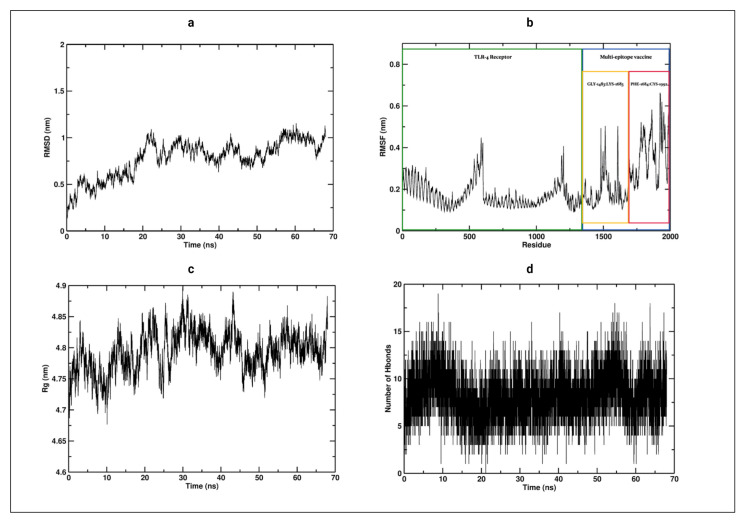
The coronavirus pandemic is a major public health crisis affecting global health systems with dire socioeconomic consequences, especially in vulnerable regions such as Latin America (LATAM). There is an urgent need for a vaccine to help control contagion, reduce mortality and alleviate social costs. In this study, we propose a rational multi-epitope candidate vaccine against SARS-CoV-2. Using bioinformatics, we constructed a library of potential vaccine peptides, based on the affinity of the most common major human histocompatibility complex (HLA) I and II molecules in the LATAM population to predict immunological complexes among antigenic, non-toxic and non-allergenic peptides extracted from the conserved regions of 92 proteomes. Although HLA-C, had the greatest antigenic peptide capacity from SARS-CoV-2, HLA-B and HLA-A, could be more relevant based on COVID-19 risk of infection in LATAM countries. We also used three-dimensional structures of SARS-CoV-2 proteins to identify potential regions for antibody production. The best HLA-I and II predictions (with increased coverage in common alleles and regions evoking B lymphocyte responses) were grouped into an optimized final multi-epitope construct containing the adjuvants Beta defensin-3, TpD, and PADRE, which are recognized for invoking a safe and specific immune response. Finally, we used Molecular Dynamics to identify the multi-epitope construct which may be a stable target for TLR-4/MD-2. This would prove to be safe and provide the physicochemical requirements for conducting experimental tests around the world.
Keywords: LATAM; SARS-CoV-2; in silico; vaccine.
Conflict of interest statement
The authors declare that they have no competing interest.
Figures
References
-
- Prompetchara E., Ketloy C., Palaga T. Immune responses in COVID-19 and potential vaccines: Lessons learned from SARS and MERS epidemic. Asian Pac. J. Allergy Immunol. 2020;38:1–9. - PubMed
-
- Adhikari S.P., Meng S., Wu Y.J., Mao Y.P., Ye R.X., Wang Q.Z., Sun C., Sylvia S., Rozelle S., Raat H., et al. Epidemiology, causes, clinical manifestation and diagnosis, prevention and control of coronavirus disease (COVID-19) during the early outbreak period: A scoping review. Infect. Dis. Poverty. 2020;9:29. doi: 10.1186/s40249-020-00646-x. - DOI - PMC - PubMed
-
- Rodriguez-Morales A.J., Gallego V., Escalera-Antezana J.P., Méndez C.A., Zambrano L.I., Franco-Paredes C., Suárez J.A., Rodriguez-Enciso H.D., Balbin-Ramon G.J., Savio-Larriera E., et al. COVID-19 in Latin America: The implications of the first confirmed case in Brazil. Travel Med. Infect. Dis. 2020;35:101613. doi: 10.1016/j.tmaid.2020.101613. - DOI - PMC - PubMed
LinkOut - more resources
Full Text Sources
Research Materials
Miscellaneous
