


Low-Intensity Continuous Ultrasound Therapies—A Systematic Review of Current State-of-the-Art and Future Perspectives
- PMID: 34207333
- PMCID: PMC8235587
- DOI: 10.3390/jcm10122698
Low-Intensity Continuous Ultrasound Therapies—A Systematic Review of Current State-of-the-Art and Future Perspectives
Abstract
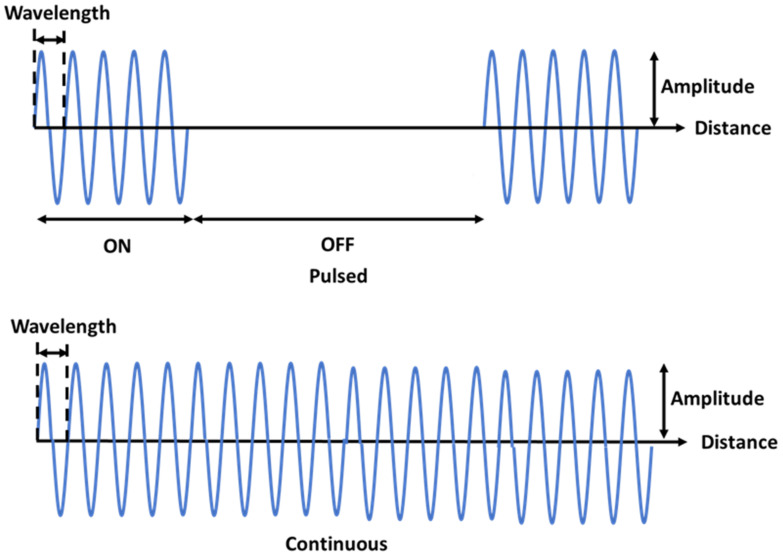
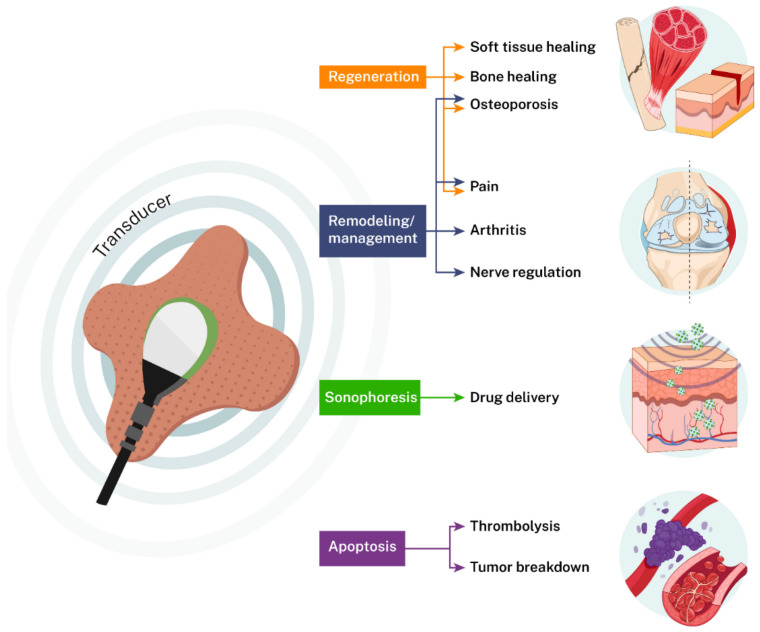
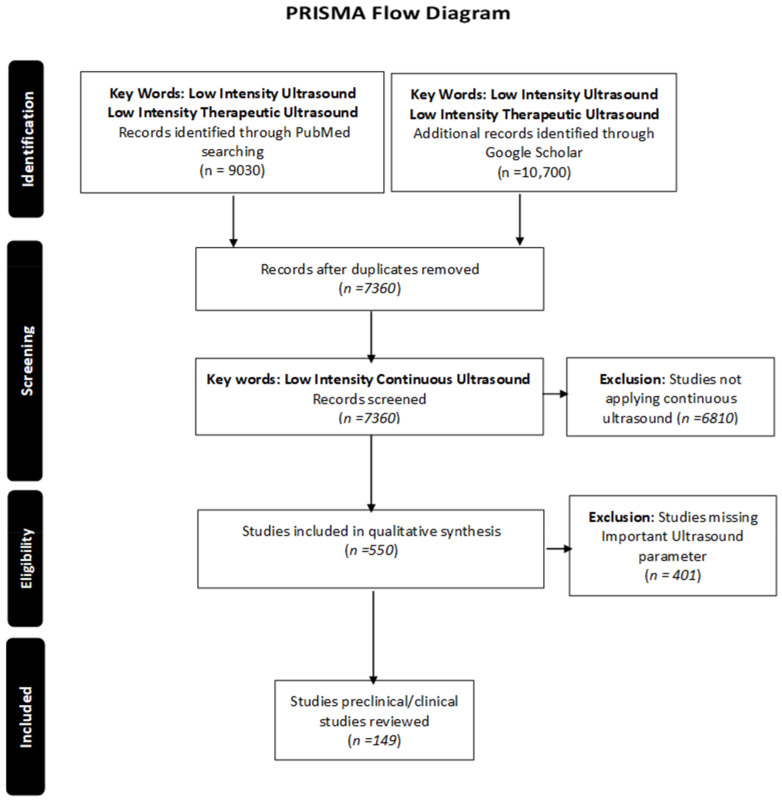
Therapeutic ultrasound has been studied for over seven decades for different medical applications. The versatility of ultrasound applications are highly dependent on the frequency, intensity, duration, duty cycle, power, wavelength, and form. In this review article, we will focus on low-intensity continuous ultrasound (LICUS). LICUS has been well-studied for numerous clinical disorders, including tissue regeneration, pain management, neuromodulation, thrombosis, and cancer treatment. PubMed and Google Scholar databases were used to conduct a comprehensive review of all research studying the application of LICUS in pre-clinical and clinical studies. The review includes articles that specify intensity and duty cycle (continuous). Any studies that did not identify these parameters or used high-intensity and pulsed ultrasound were not included in the review. The literature review shows the vast implication of LICUS in many medical fields at the pre-clinical and clinical levels. Its applications depend on variables such as frequency, intensity, duration, and type of medical disorder. Overall, these studies show that LICUS has significant promise, but conflicting data remain regarding the parameters used, and further studies are required to fully realize the potential benefits of LICUS.
Keywords: arthritis; bone healing; low-intensity continuous ultrasound; low-intensity pulsed ultrasound; pain management; regeneration; soft tissue healing; sonophoresis; sustained acoustic medicine; ultrasound.
Conflict of interest statement
The authors declare no conflict of interest.
Figures
References
Publication types
LinkOut - more resources
Full Text Sources
