


Cancer Epigenetic Biomarkers in Liquid Biopsy for High Incidence Malignancies
- PMID: 34208598
- PMCID: PMC8233712
- DOI: 10.3390/cancers13123016
Cancer Epigenetic Biomarkers in Liquid Biopsy for High Incidence Malignancies
Abstract
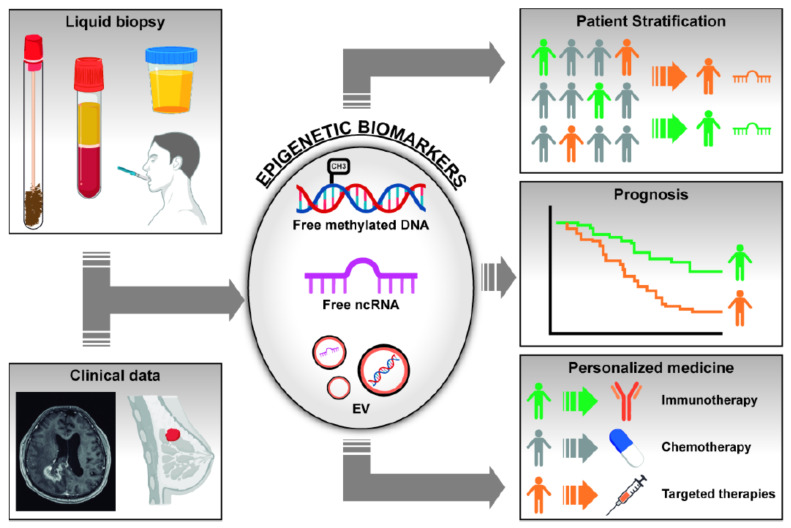
Early alterations in cancer include the deregulation of epigenetic events such as changes in DNA methylation and abnormal levels of non-coding (nc)RNAs. Although these changes can be identified in tumors, alternative sources of samples may offer advantages over tissue biopsies. Because tumors shed DNA, RNA, and proteins, biological fluids containing these molecules can accurately reflect alterations found in cancer cells, not only coming from the primary tumor, but also from metastasis and from the tumor microenvironment (TME). Depending on the type of cancer, biological fluids encompass blood, urine, cerebrospinal fluid, and saliva, among others. Such samples are named with the general term "liquid biopsy" (LB). With the advent of ultrasensitive technologies during the last decade, the identification of actionable genetic alterations (i.e., mutations) in LB is a common practice to decide whether or not targeted therapy should be applied. Likewise, the analysis of global or specific epigenetic alterations may also be important as biomarkers for diagnosis, prognosis, and even for cancer drug response. Several commercial kits that assess the DNA promoter methylation of single genes or gene sets are available, with some of them being tested as biomarkers for diagnosis in clinical trials. From the tumors with highest incidence, we can stress the relevance of DNA methylation changes in the following genes found in LB: SHOX2 (for lung cancer); RASSF1A, RARB2, and GSTP1 (for lung, breast, genitourinary and colon cancers); and SEPT9 (for colon cancer). Moreover, multi-cancer high-throughput methylation-based tests are now commercially available. Increased levels of the microRNA miR21 and several miRNA- and long ncRNA-signatures can also be indicative biomarkers in LB. Therefore, epigenetic biomarkers are attractive and may have a clinical value in cancer. Nonetheless, validation, standardization, and demonstration of an added value over the common clinical practice are issues needed to be addressed in the transfer of this knowledge from "bench to bedside".
Keywords: DNA methylation; cancer; epigenetic biomarkers; micro-RNAs.
Conflict of interest statement
Authors declare no conflict of interests.
Figures
References
-
- Alvarez H., Opalinska J., Zhou L., Sohal D., Fazzari M.J., Yu Y., Montagna C., Montgomery E.A., Canto M., Dunbar K.B., et al. Widespread hypomethylation occurs early and synergizes with gene amplification during esophageal carcinogenesis. PLoS Genet. 2011;7:e1001356. doi: 10.1371/annotation/8dcded85-a924-40f4-a7ea-56961b87447f. - DOI - PMC - PubMed
Publication types
LinkOut - more resources
Full Text Sources
Research Materials
Miscellaneous
