


Predictive Value of Comorbid Conditions for COVID-19 Mortality
- PMID: 34208640
- PMCID: PMC8233968
- DOI: 10.3390/jcm10122652
Predictive Value of Comorbid Conditions for COVID-19 Mortality
Abstract
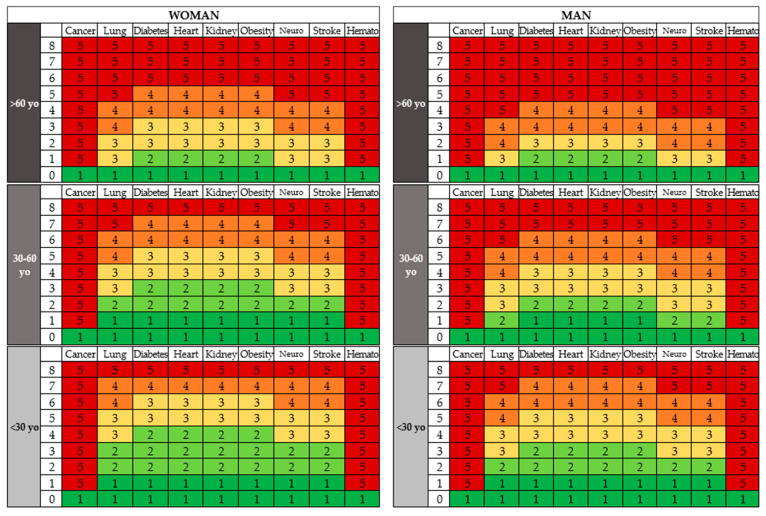
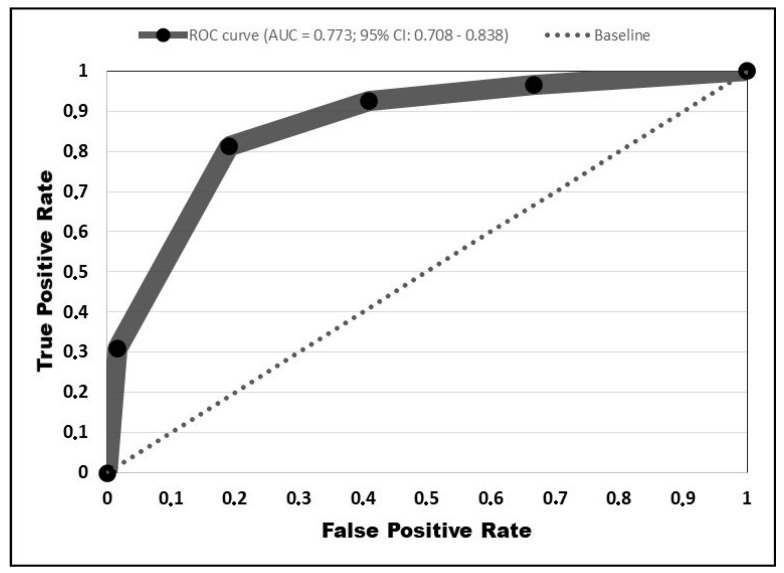
In this paper, we aim at understanding the broad spectrum of factors influencing the survival of infected patients and the correlations between these factors to create a predictive probabilistic score for surviving the COVID-19 disease. Initially, 510 hospital admissions were counted in the study, out of which 310 patients did not survive. A prediction model was developed based on this data by using a Bayesian approach. Following the data collection process for the development study, the second cohort of patients totaling 541 was built to validate the risk matrix previously created. The final model has an area under the curve of 0.773 and predicts the mortality risk of SARS-CoV-2 infection based on nine disease groups while considering the gender and age of the patient as distinct risk groups. To ease medical workers' assessment of patients, we created a visual risk matrix based on a probabilistic model, ranging from a score of 1 (very low mortality risk) to 5 (very high mortality risk). Each score comprises a correlation between existing comorbid conditions, the number of comorbid conditions, gender, and age group category. This clinical model can be generalized in a hospital context and can be used to identify patients at high risk for whom immediate intervention might be required.
Keywords: COVID-19; SARS-CoV-2; mortality risk; prediction model.
Conflict of interest statement
The authors declare no conflict of interest.
Figures
References
-
- World Health Organization Naming the Coronavirus Disease (COVID-19) and the Virus That Causes It. [(accessed on 10 January 2021)]; Available online: https://www.who.int/emergencies/diseases/novel-coronavirus-2019/technica....
LinkOut - more resources
Full Text Sources
Miscellaneous
