


The Role of Neural Network for the Detection of Parkinson's Disease: A Scoping Review
- PMID: 34208654
- PMCID: PMC8235532
- DOI: 10.3390/healthcare9060740
The Role of Neural Network for the Detection of Parkinson's Disease: A Scoping Review
Abstract
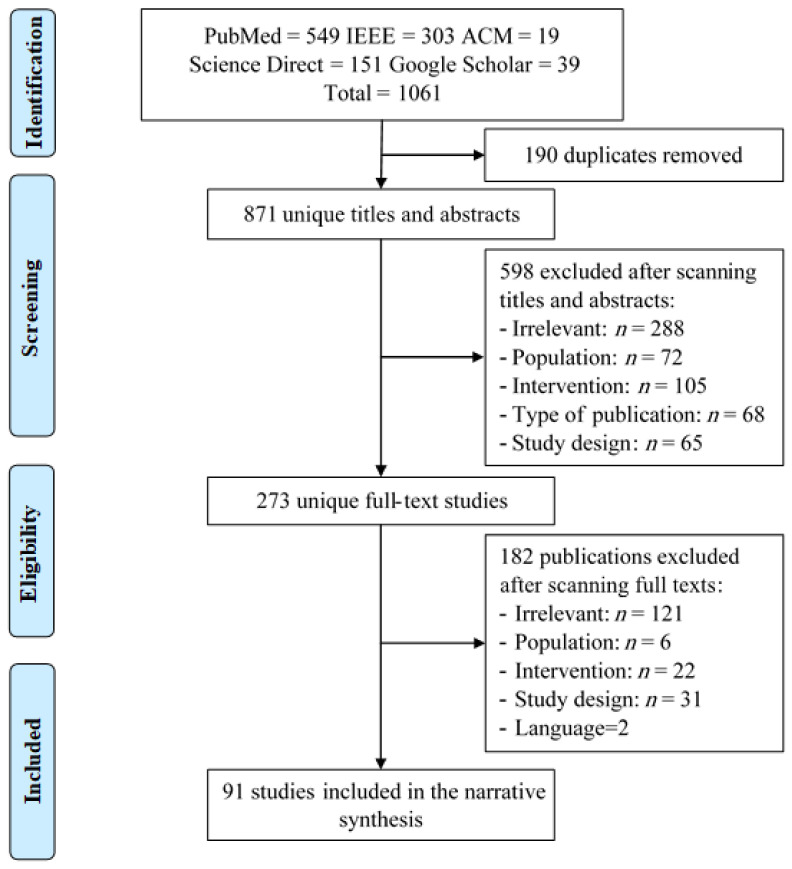
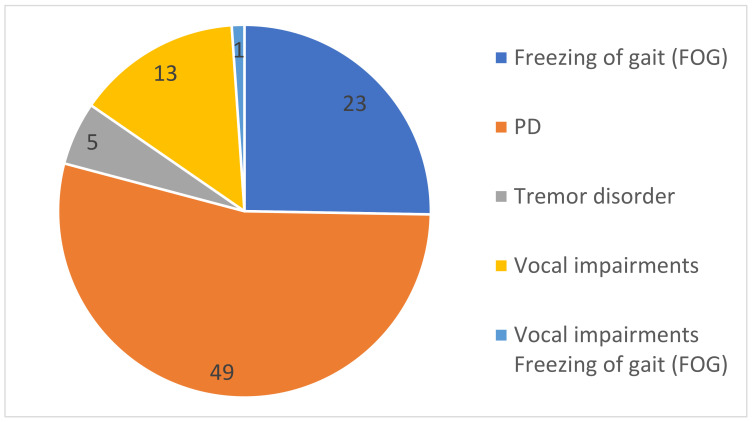
Background: Parkinson's Disease (PD) is a chronic neurodegenerative disorder that has been ranked second after Alzheimer's disease worldwide. Early diagnosis of PD is crucial to combat against PD to allow patients to deal with it properly. However, there is no medical test(s) available to diagnose PD conclusively. Therefore, computer-aided diagnosis (CAD) systems offered a better solution to make the necessary data-driven decisions and assist the physician. Numerous studies were conducted to propose CAD to diagnose PD in the early stages. No comprehensive reviews have been conducted to summarize the role of AI tools to combat PD. Objective: The study aimed to explore and summarize the applications of neural networks to diagnose PD. Methods: PRISMA Extension for Scoping Reviews (PRISMA-ScR) was followed to conduct this scoping review. To identify the relevant studies, both medical databases (e.g., PubMed) and technical databases (IEEE) were searched. Three reviewers carried out the study selection and extracted the data from the included studies independently. Then, the narrative approach was adopted to synthesis the extracted data. Results: Out of 1061 studies, 91 studies satisfied the eligibility criteria in this review. About half of the included studies have implemented artificial neural networks to diagnose PD. Numerous studies included focused on the freezing of gait (FoG). Biomedical voice and signal datasets were the most commonly used data types to develop and validate these models. However, MRI- and CT-scan images were also utilized in the included studies. Conclusion: Neural networks play an integral and substantial role in combating PD. Many possible applications of neural networks were identified in this review, however, most of them are limited up to research purposes.
Keywords: Parkinson’s disease; classification; deep learning; neural network.
Conflict of interest statement
The authors declare no conflict of interest.
Figures
References
-
- Alissa M. Parkinson’s Disease Diagnosis Using Deep Learning. arXiv. 20212101.05631
-
- Ranjan A., Swetapadma A. An Intelligent Computing Based Approach for Parkinson Disease Detection; Proceedings of the Proceedings of 2018 2nd International Conference on Advances in Electronics, Computers and Communications, ICAECC 2018; Bangalore, India. 9–10 February 2018; - DOI
-
- Gunduz H. Deep Learning-Based Parkinson’s Disease Classification Using Vocal Feature Sets. IEEE Access. 2019;7:115540–115551. doi: 10.1109/ACCESS.2019.2936564. - DOI
-
- “GBD Compare” Data Visualizations. [(accessed on 26 May 2021)]; Available online: https://vizhub.healthdata.org/gbd-compare/
Publication types
LinkOut - more resources
Full Text Sources
Miscellaneous
