Review
. 2021 Jun 30;22(13):7055.
doi: 10.3390/ijms22137055.

Nanocarriers for Biomedicine: From Lipid Formulations to Inorganic and Hybrid Nanoparticles

Affiliations
Review

Nanocarriers for Biomedicine: From Lipid Formulations to Inorganic and Hybrid Nanoparticles

Ruslan Kashapov et al. Int J Mol Sci. .

Abstract

Encapsulation of cargoes in nanocontainers is widely used in different fields to solve the problems of their solubility, homogeneity, stability, protection from unwanted chemical and biological destructive effects, and functional activity improvement. This approach is of special importance in biomedicine, since this makes it possible to reduce the limitations of drug delivery related to the toxicity and side effects of therapeutics, their low bioavailability and biocompatibility. This review highlights current progress in the use of lipid systems to deliver active substances to the human body. Various lipid compositions modified with amphiphilic open-chain and macrocyclic compounds, peptide molecules and alternative target ligands are discussed. Liposome modification also evolves by creating new hybrid structures consisting of organic and inorganic parts. Such nanohybrid platforms include cerasomes, which are considered as alternative nanocarriers allowing to reduce inherent limitations of lipid nanoparticles. Compositions based on mesoporous silica are beginning to acquire no less relevance due to their unique features, such as advanced porous properties, well-proven drug delivery efficiency and their versatility for creating highly efficient nanomaterials. The types of silica nanoparticles, their efficacy in biomedical applications and hybrid inorganic-polymer platforms are the subject of discussion in this review, with current challenges emphasized.

Keywords: cerasome; drug delivery; hybrid nanocarriers; liposome; macrocycle; mesoporous silica; non-covalent modification; peptide; surfactant.


Conflict of interest statement

The authors declare no conflict of interest.

Figures
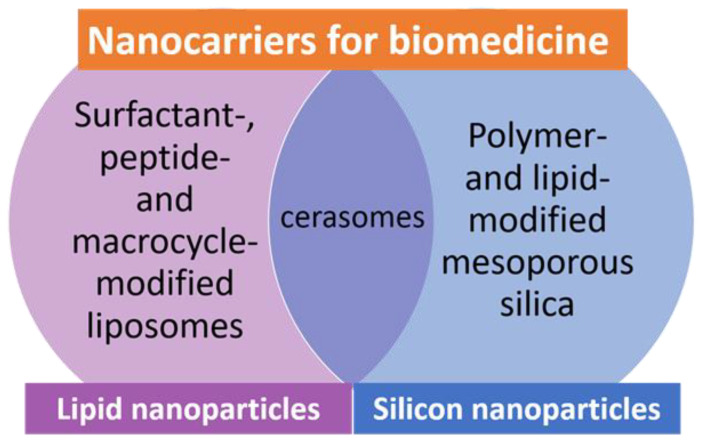
Figure 1
Figure 1
Main types of lipid- and silicon-containing nanoparticles, comprising many kinds of nanocarriers that can be used to achieve the best medical performance.
Figure 2
Figure 2
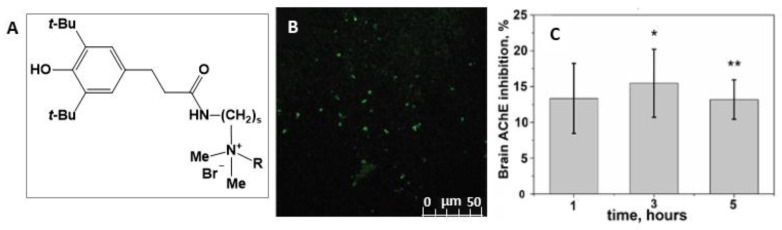
Structures of sterically hindered phenol containing quaternary ammonium moiety (SHP-s-R), where s = 2, 3; R=CH2Ph (SHP-2-Bn); R=CnH2n+1, n = 8, 10, 12, 16 (SHP-2-R) (A); Section of rat cerebral cortex (B); Determination of brain AChE inhibition level in vivo (C) after intranasal administration of PC/SHP-2-Bn/SHP-2-16 nanoparticles. * p = 0.028 and ** p = 0.004 indicate differences by Mann–Whitney test. Reprinted with permission from [40]. Copyright 2020 Royal Society of Chemistry.
Figure 3
Figure 3
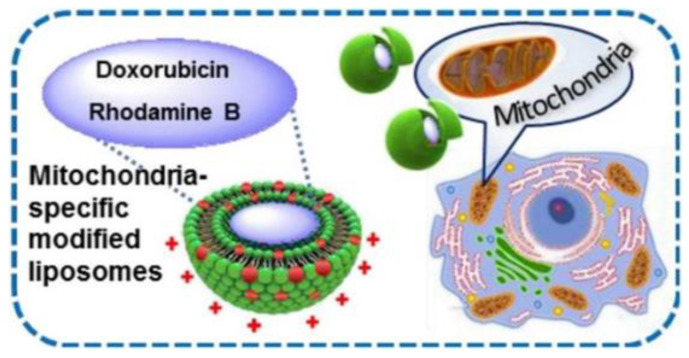
Schematic representation of mitochondria-specific modified liposomes. Reprinted with permission from [47]. Copyright 2021 Elsevier.
Figure 4
Figure 4
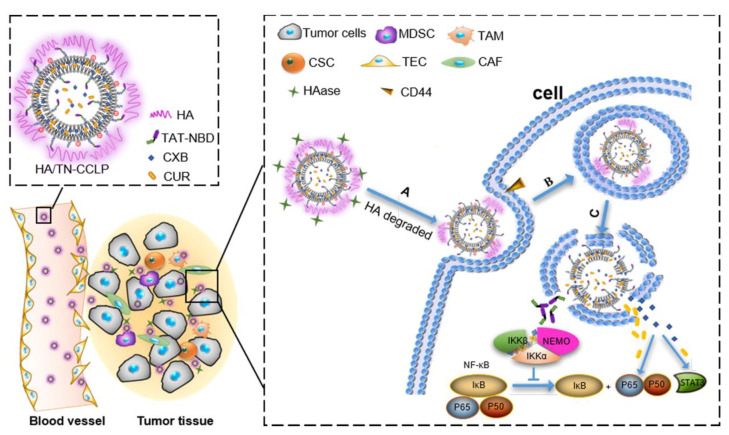
Schematic illustration of the in vivo fate of hyaluronic acid (HA) and TAT-NBD-modified liposomal system (HA/TN-CCLP). After intravenous injection, HA/TN-CCLP preferentially accumulate at the tumor tissues. (A) HA shell degraded or partially degraded by hyaluronidase (HAase), exposed TN-modified cationic liposome, and CD44 receptor promoted cellular uptake; (B, C) Endolysosomal escape. The released celecoxib (CXB), curcumin (CUR), and TAT-NBD peptide (TN) acted on NF-κB and STAT3. Abbreviations: MDSC—myeloid-derived suppressor cells, TAM—tumor-associated macrophages, CSC—cancer stem cells, TEC—tumor endothelial cells, CAF—cancer-associated fibroblasts. Reprinted with permission from [78]. Copyright 2019 American Chemical Society.
Figure 5
Figure 5
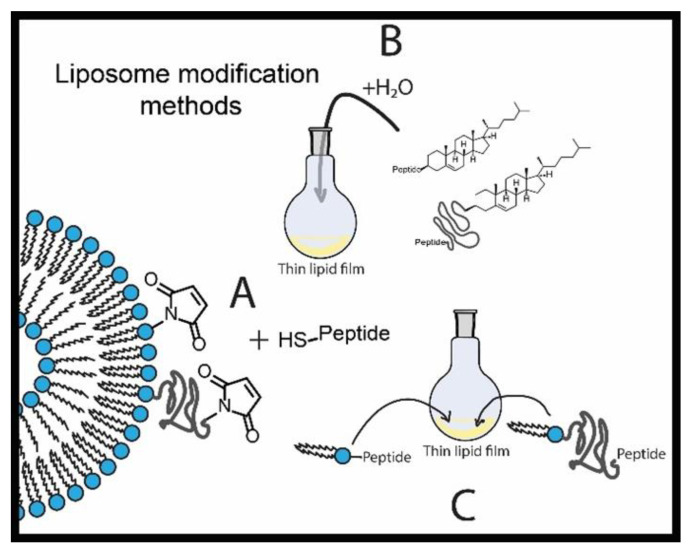
Different examples of liposome modification methods: (A) chemical conjugation to prepared liposomes (usually a fast reaction is applied such as thiol-maleimide coupling); (B) hydration with aqueous solutions of functionalized lipids (CHO shown as a sample anchoring moiety), or post-insertion; (C) incorporation of functionalized lipids to the initial lipid film.
Figure 6
Figure 6
Chemical structures of calix[4]resorcinols 1, 2 and calix[4]resorcinol cavitand 3.
Figure 7
Figure 7
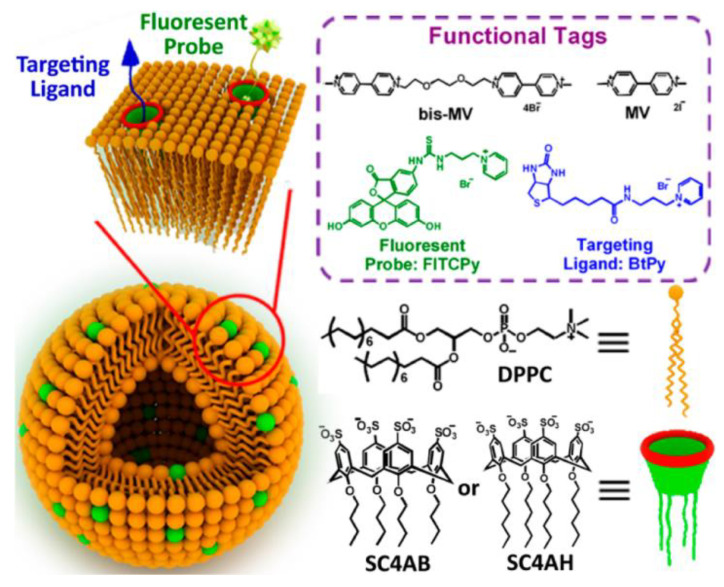
Schematic representation of a multifunctional liposomes, chemical structures of functional tags, DPPC, SC4AB and SC4AH. Reprinted with permission from [127]. Copyright 2015 American Chemical Society.
Figure 8
Figure 8
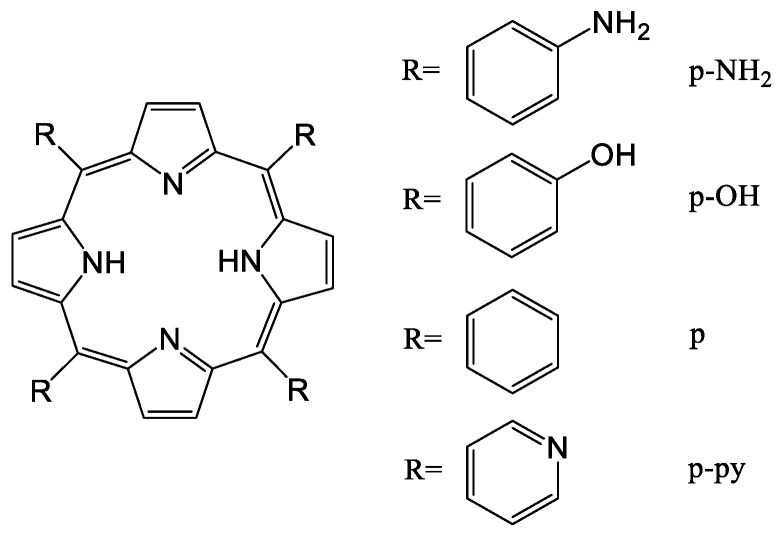
Chemical structures of porphyrins (p-NH2, p-OH, p, and p-py).
Figure 9
Figure 9
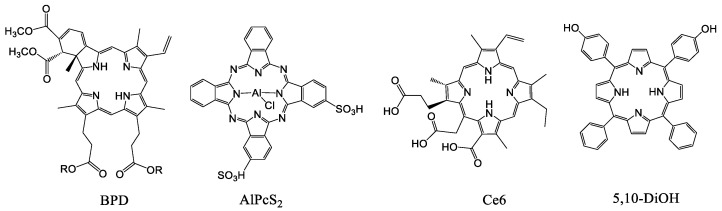
Chemical structures of porphyrins (BPD, AlPcS2, Ce6 and 5,10-DiOH).
Figure 10
Figure 10
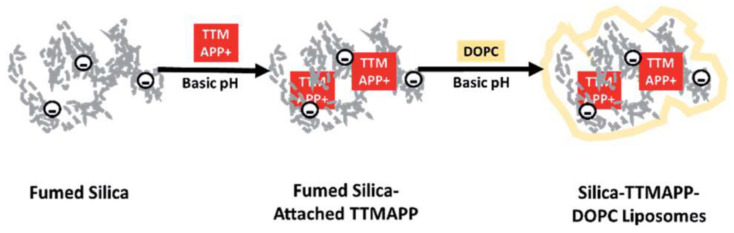
Formation of liposomes loaded with silica-attached TTMAPP porphyrin. Reprinted with permission from [138]. Copyright 2020 Royal Society of Chemistry.
Figure 11
Figure 11
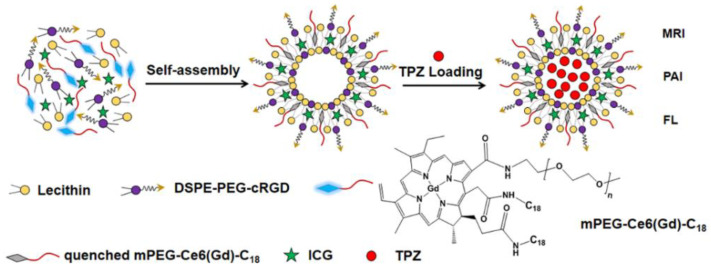
Formation of liposomes loaded with mPEG-Ce6-C18. Reprinted with permission from [145]. Copyright 2019 American Chemical Society.
Figure 12
Figure 12
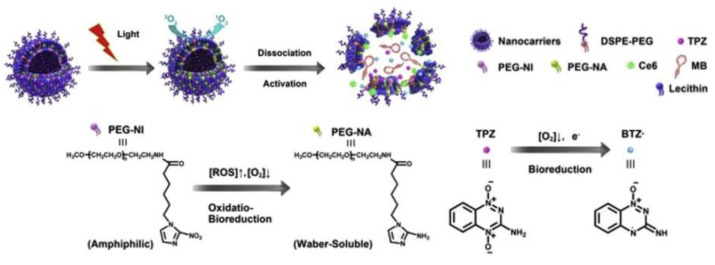
Dissociation of the liposomes with the release and activation of Ce6 and TPZ. Bioreduction of PEG-NI and TPZ. Reprinted with permission from [146]. Copyright 2018 Elsevier.
Figure 13
Figure 13
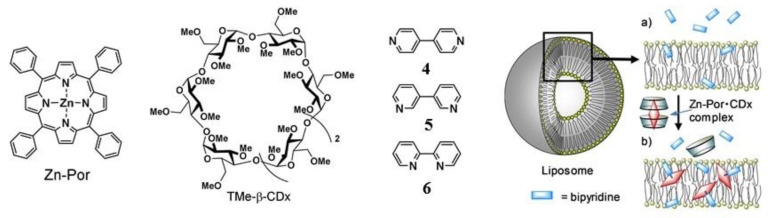
Formation of liposomes loaded with Zn-Por, TMe-β-CD and bipyridines. Retention of bipyridines in the lipid membranes (a) before and (b) after the addition of the Zn-Por• TMe-β-CDx complex. Reprinted with permission from [150]. Copyright 2019 Wiley Online Library.
Figure 14
Figure 14
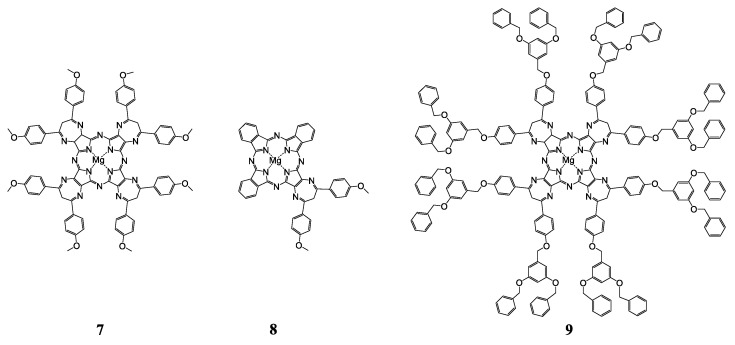
Chemical structures of Mg-porphyrazines.
Figure 15
Figure 15
Schematic illustration of preparation of hollow mesoporous silica nanoparticles (HMSN) and drug loading-release. Reprinted with permission from [188]. Copyright 2017 Royal Society of Chemistry.
Figure 16
Figure 16
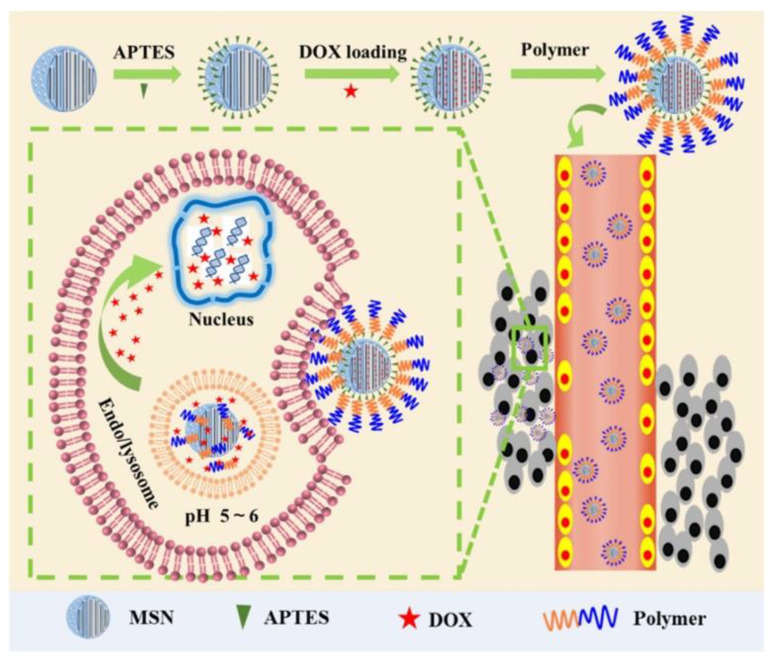
Schematic illustration of the preparation of Polymer@MSN-DOX and pH-triggered release of DOX. Reprinted with permission from [210]. Copyright 2019 Elsevier.
Figure 17
Figure 17
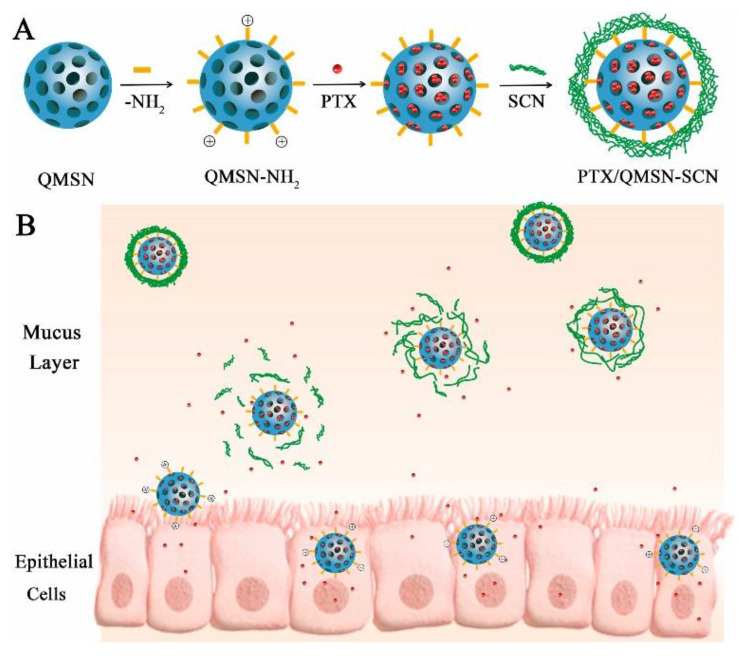
Scheme of protein-decorated mesoporous silica nanoparticles preparation (A) and its intestinal uptake (B) (here QMSN = CdSe/ZnS quantum dots doped mesoporous silica nanoparticles; SCN = succinylated casein). Reprinted with permission from [235]. Copyright 2020 Elsevier.
Figure 18
Figure 18
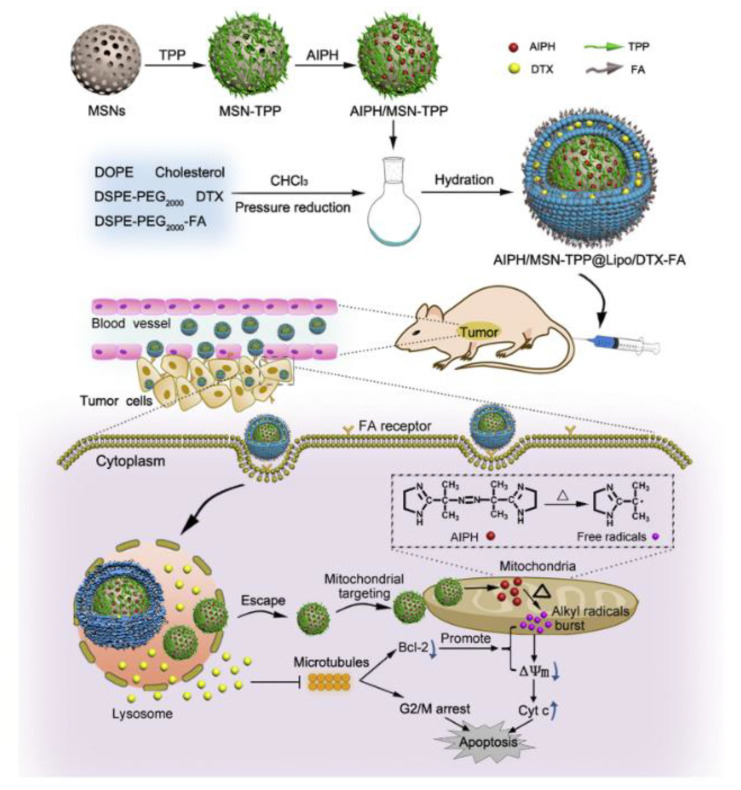
Schematic representation of preparation of MSN particle in lipid shell and mechanism of its antitumor activity (MSN = mesoporous silica nanoparticle; TPP = triphenylphosphine; AIPH = 2,2′-azobis[2-(2-imidazolin-2-yl)propane] dihydrochloride; DTX = drug docetaxel; FA = folic acid; DOPE = dioleoylphosphoethanolamine; DSPE-PEG2000 = 1,2-distearoyl-sn-glycero-3-phosphoethanolamine-N-[amino(polyethylene glycol)-2000] (ammonium salt). Reprinted with permission from [254]. Copyright 2020 Elsevier.
Figure 19
Figure 19
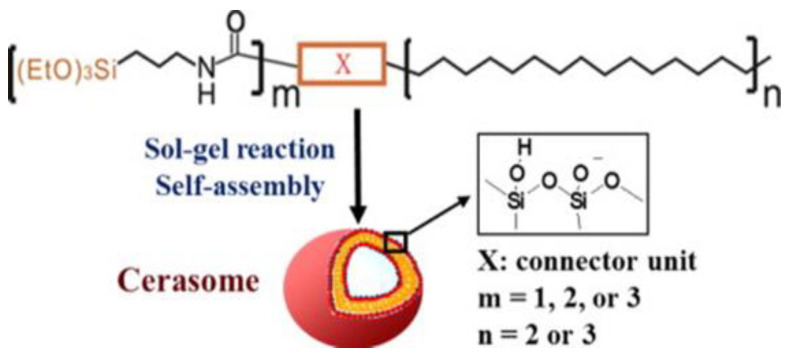
General concept of cerasome: a vesicle that is constructed of cerasome forming lipids that undergo hydrolysis upon forming a bilayer and covalently link with each other via Si-O-Si bonds. Reprinted with permission from [267]. Copyright 2014 Elsevier.
Figure 20
Figure 20
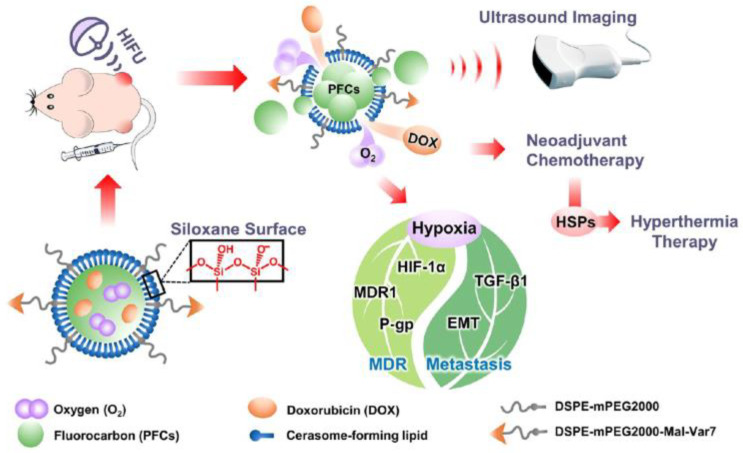
The schematic demonstration of a complex chemotherapeutic system. The cerasomes loaded with oxygen and DOX are delivered to tumor sites, where ultrasound irradiation helps release the cargo for dual action of treating hypoxia to prevent drug resistance and metastasis, and producing a cytotoxic effect caused by DOX for tumor mitigation. Reprinted with permission from [280]. Copyright 2020 American Chemical Society.

References

    1. Guimarães D., Cavaco-Paulo A., Nogueira E. Design of liposomes as drug delivery system for therapeutic applications. Int. J. Pharm. 2021;601:120571. doi: 10.1016/j.ijpharm.2021.120571. - DOI - PubMed
    1. Kashapov R., Gaynanova G., Gabdrakhmanov D., Kuznetsov D., Pavlov R., Petrov K., Zakharova L., Sinyashin O. Self-assembly of amphiphilic compounds as a versatile tool for construction of nanoscale drug carriers. Int. J. Mol. Sci. 2020;21:6961. doi: 10.3390/ijms21186961. - DOI - PMC - PubMed
    1. Weissig V. Drug development for the therapy of mitochondrial diseases. Trends Mol. Med. 2020;20:40–57. doi: 10.1016/j.molmed.2019.09.002. - DOI - PubMed
    1. Fattahi N., Shahbazi M.A., Maleki A., Hamidi M., Ramazani A., Santos H.A. Emerging insights on drug delivery by fatty acid mediated synthesis of lipophilic prodrugs as novel nanomedicines. J. Control. Release. 2020;326:556–598. doi: 10.1016/j.jconrel.2020.07.012. - DOI - PubMed
    1. Wang Z., Chen J., Little N., Lu J. Self-assembling prodrug nanotherapeutics for synergistic tumor targeted drug delivery. Acta Biomater. 2020;111:20–28. doi: 10.1016/j.actbio.2020.05.026. - DOI - PMC - PubMed

LinkOut - more resources