


Molecular Genetics and Complex Inheritance of Congenital Heart Disease
- PMID: 34209044
- PMCID: PMC8307500
- DOI: 10.3390/genes12071020
Molecular Genetics and Complex Inheritance of Congenital Heart Disease
Abstract
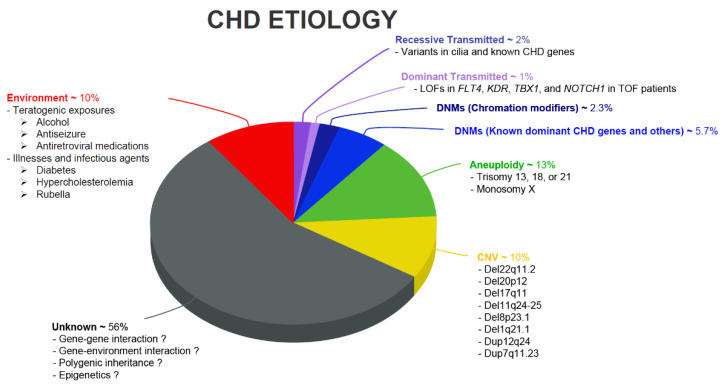
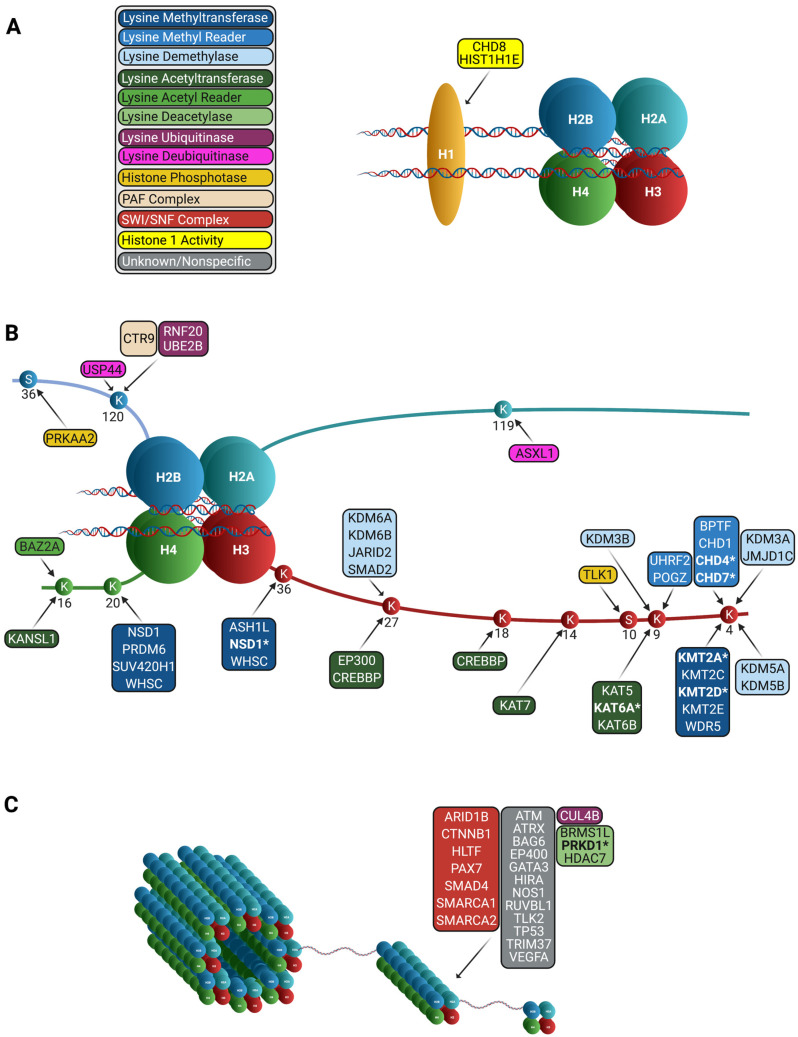
Congenital heart disease (CHD) is the most common congenital malformation and the leading cause of mortality therein. Genetic etiologies contribute to an estimated 90% of CHD cases, but so far, a molecular diagnosis remains unsolved in up to 55% of patients. Copy number variations and aneuploidy account for ~23% of cases overall, and high-throughput genomic technologies have revealed additional types of genetic variation in CHD. The first CHD risk genotypes identified through high-throughput sequencing were de novo mutations, many of which occur in chromatin modifying genes. Murine models of cardiogenesis further support the damaging nature of chromatin modifying CHD mutations. Transmitted mutations have also been identified through sequencing of population scale CHD cohorts, and many transmitted mutations are enriched in cilia genes and Notch or VEGF pathway genes. While we have come a long way in identifying the causes of CHD, more work is required to end the diagnostic odyssey for all CHD families. Complex genetic explanations of CHD are emerging but will require increasingly sophisticated analysis strategies applied to very large CHD cohorts before they can come to fruition in providing molecular diagnoses to genetically unsolved patients. In this review, we discuss the genetic architecture of CHD and biological pathways involved in its pathogenesis.
Keywords: complex inheritance; congenital heart disease; genetics; genomic medicine; genomics; histone marks; next-generation sequencing; precision medicine; rare disease.
Conflict of interest statement
The authors declare no conflict of interest.
Figures
References
-
- Peacock T.B. On Malformations, &c., of the Human Heart: With Original Cases. University of Michigan; Ann Arbor, MI, USA: 1981.
Publication types
MeSH terms
Grants and funding
LinkOut - more resources
Full Text Sources
Medical
