


Urban social determinants of non-communicable diseases risk factors in Argentina
- PMID: 34210611
- PMCID: PMC8714870
- DOI: 10.1016/j.healthplace.2021.102611
Urban social determinants of non-communicable diseases risk factors in Argentina
Abstract
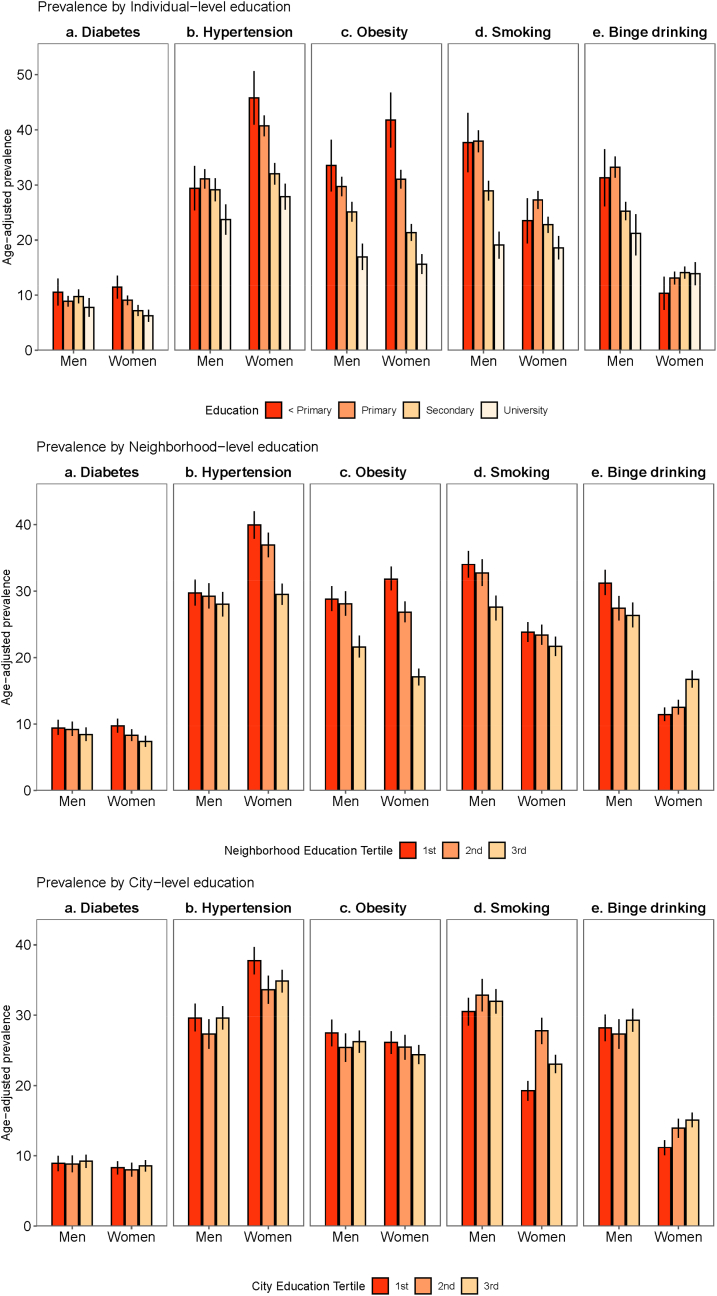
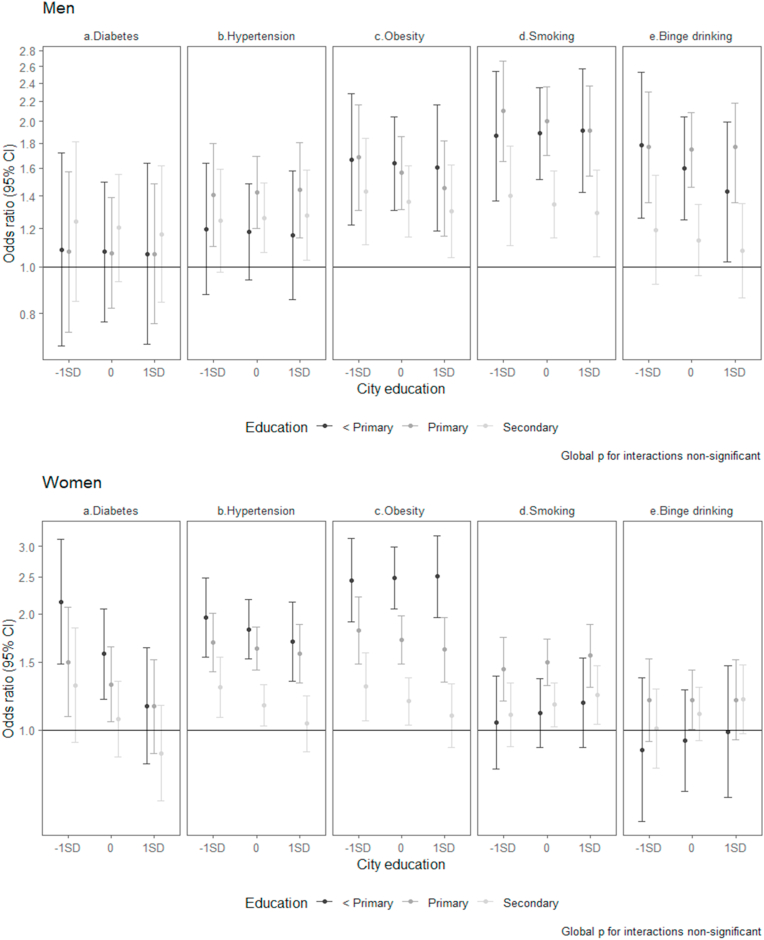
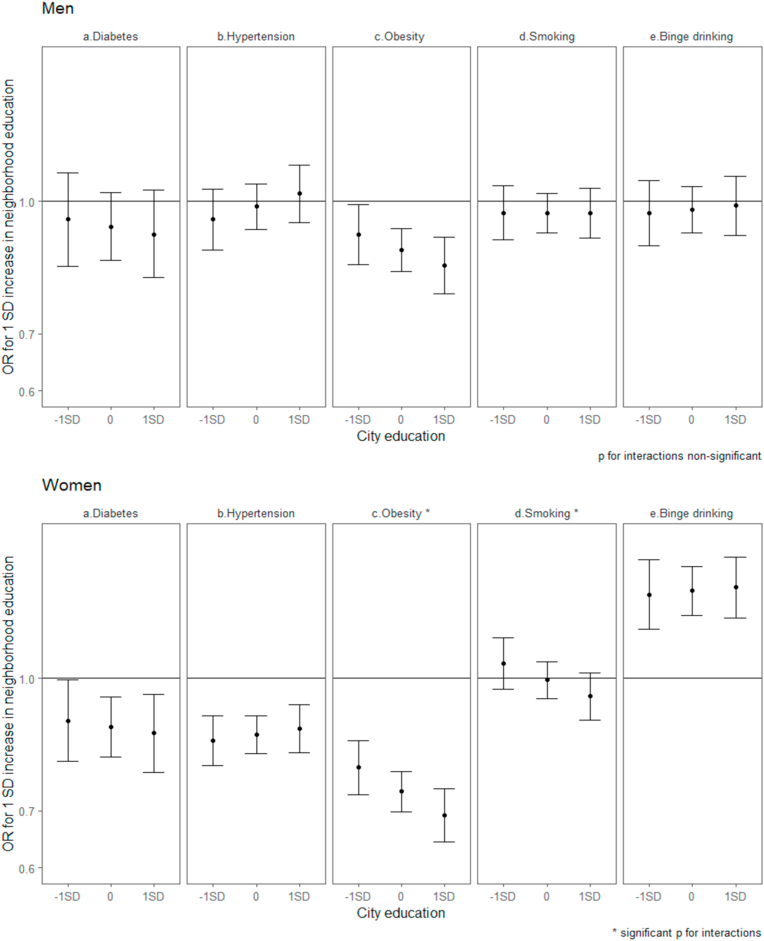
We examined associations of individual-, neighborhood- and city-level education -as proxies of SES at different levels-, with diabetes, hypertension, obesity, smoking and binge drinking (non-communicable disease risk factors -NCD/RF) among Argentinian adults. We estimated mixed models based on 21,415 individuals from the 2013 National Survey of Risk Factors, living in 2,698 neighborhoods and 33 cities. Gradients by individual-level education differed by gender and NCD/RF, and some were modified by city education. In addition, we identified contextual effects of neighborhood and city education on some NCD/RF. Urban efforts to tackle NCD/RF in Argentina should be context- and gender-sensitive, and mainly focused on socially disadvantaged groups.
Keywords: Argentina; Mixed models; Non-communicable diseases; Social determinants; Urban.
Copyright © 2021 The Authors. Published by Elsevier Ltd.. All rights reserved.
Conflict of interest statement
Declaration of competing interest None.
Figures
References
-
- Allen L., Williams J., Townsend N., Mikkelsen B., Roberts N., Foster C., Wickramasinghe K. Socioeconomic status and non-communicable disease behavioural risk factors in low-income and lower-middle-income countries: a systematic review. Lancet Glob. Health. 2017;5(3):e277–e289. doi: 10.1016/S2214-109X(17)30058-X. - DOI - PMC - PubMed
-
- Auchincloss A.H., Diez Roux A.V., Mujahid M.S., et al. Neighborhood resources for physical activity and healthy foods and incidence of type 2 diabetes mellitus: the Multi-Ethnic study of Atherosclerosis. Arch. Intern. Med. 2009;169:1698–1704. doi: 10.1001/archinternmed.2009.302. - DOI - PMC - PubMed
Publication types
MeSH terms
Grants and funding
LinkOut - more resources
Full Text Sources
