


Prevalence of childhood anaemia in Brazil: still a serious health problem: a systematic review and meta-analysis
- PMID: 34212834
- PMCID: PMC11148596
- DOI: 10.1017/S136898002100286X
Prevalence of childhood anaemia in Brazil: still a serious health problem: a systematic review and meta-analysis
Abstract
Objective: To estimate the prevalence of anaemia in Brazilian children up to 83·9 months old.
Design: Systematic review and meta-analysis, using databases PubMed, Scopus, SciELO, Lilacs, Google Scholar, Periódicos Capes, Arca, Biblioteca Virtual em Saúde, Microsoft Academic Search and Cochrane Library using search terms: anaemia, prevalence, child and Brazil. PROSPERO Registration number: CRD42020208818.
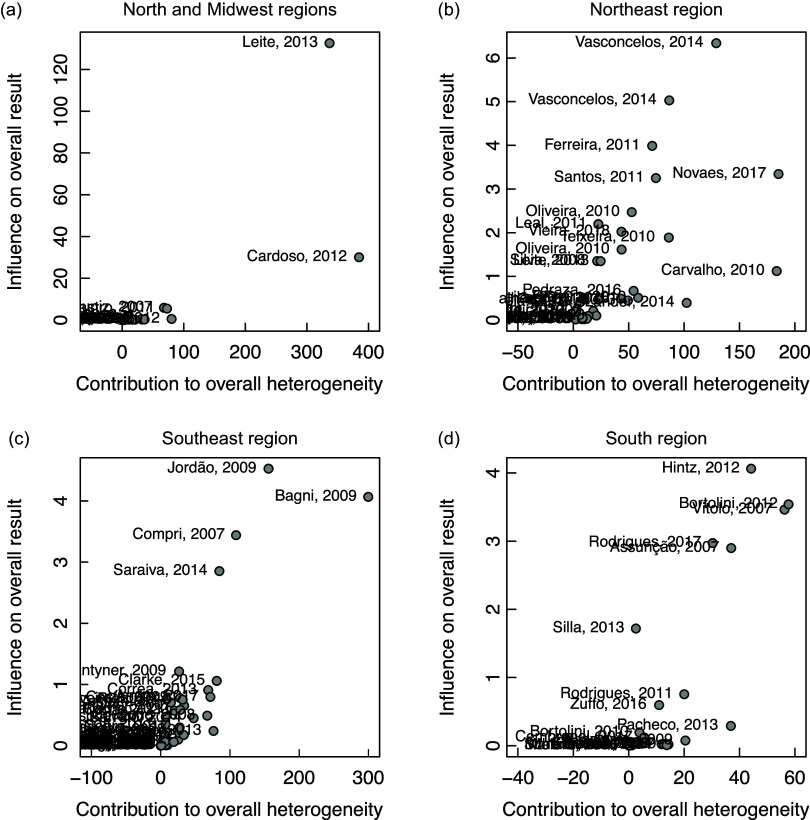
Setting: Cross-sectional, cohort, case-control and intervention studies published between 2007 and 2020 were searched, excluding those who assessed children with an illness or chronic condition. The main outcome was anaemia prevalence. Random effects models based on the inverse variance method were used to estimate pooled prevalence measures. Sensitivity analyses removed studies with high contribution to overall heterogeneity.
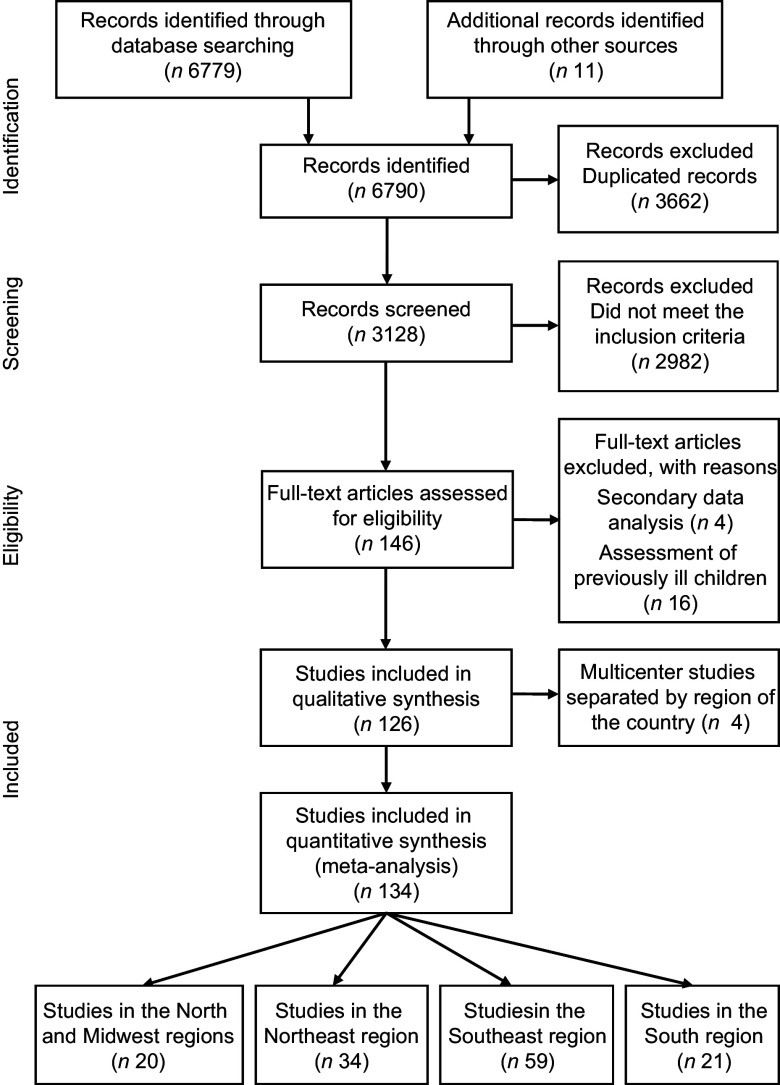
Participants: From 6790 first screened, 134 eligible studies were included, totalling 46 978 children aged zero to 83·9 months analysed, with adequate regions representativeness.
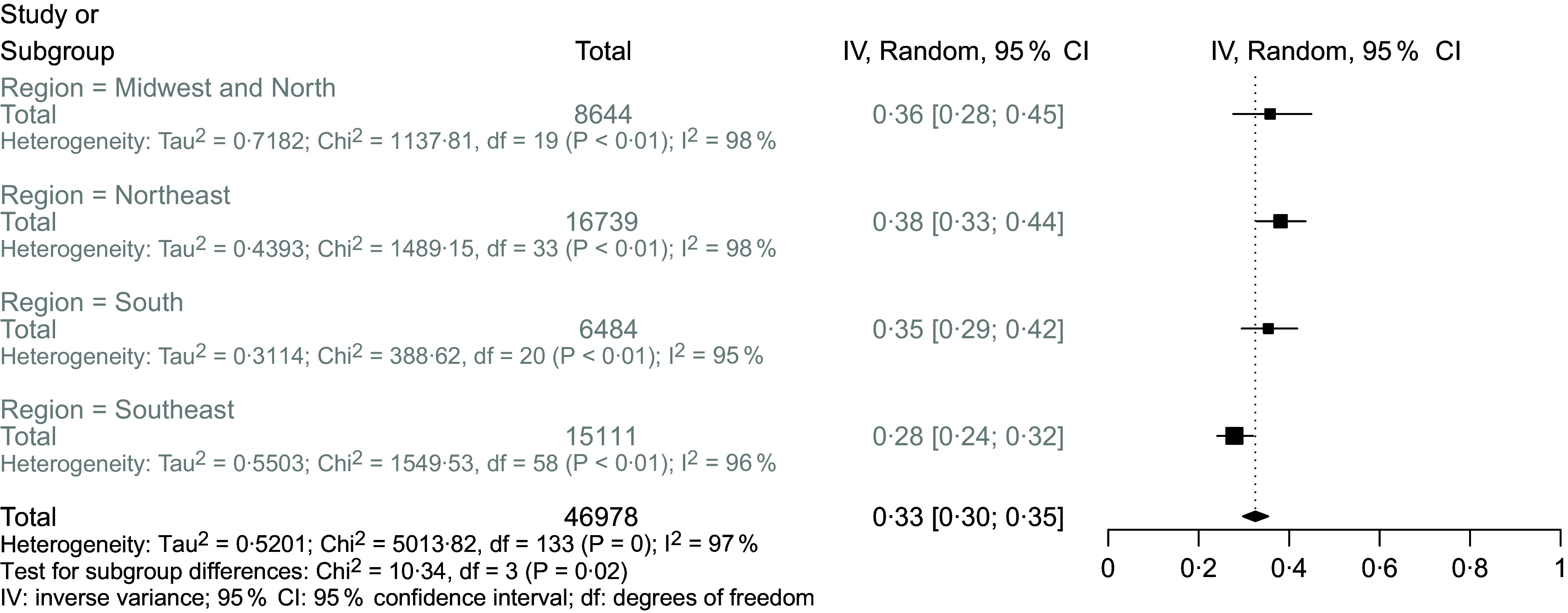
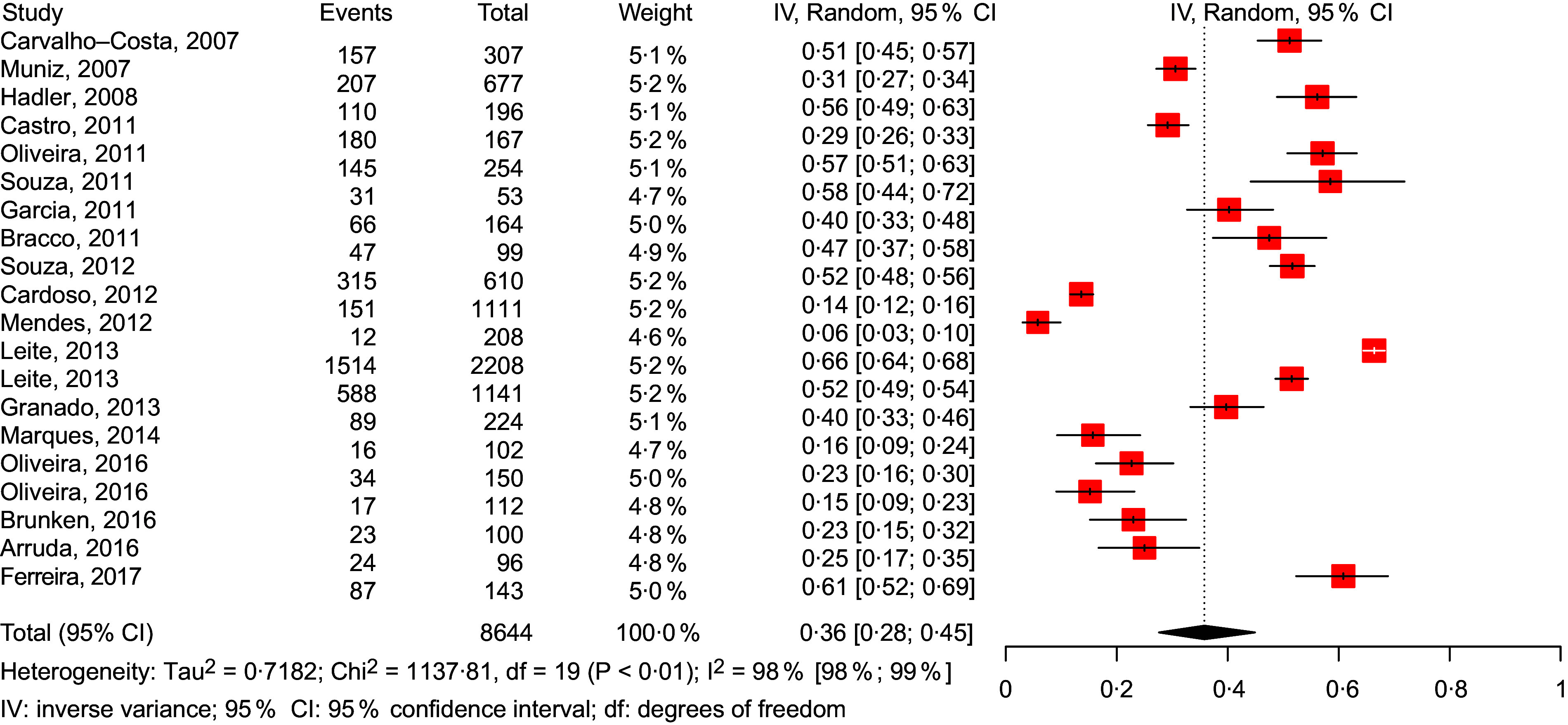
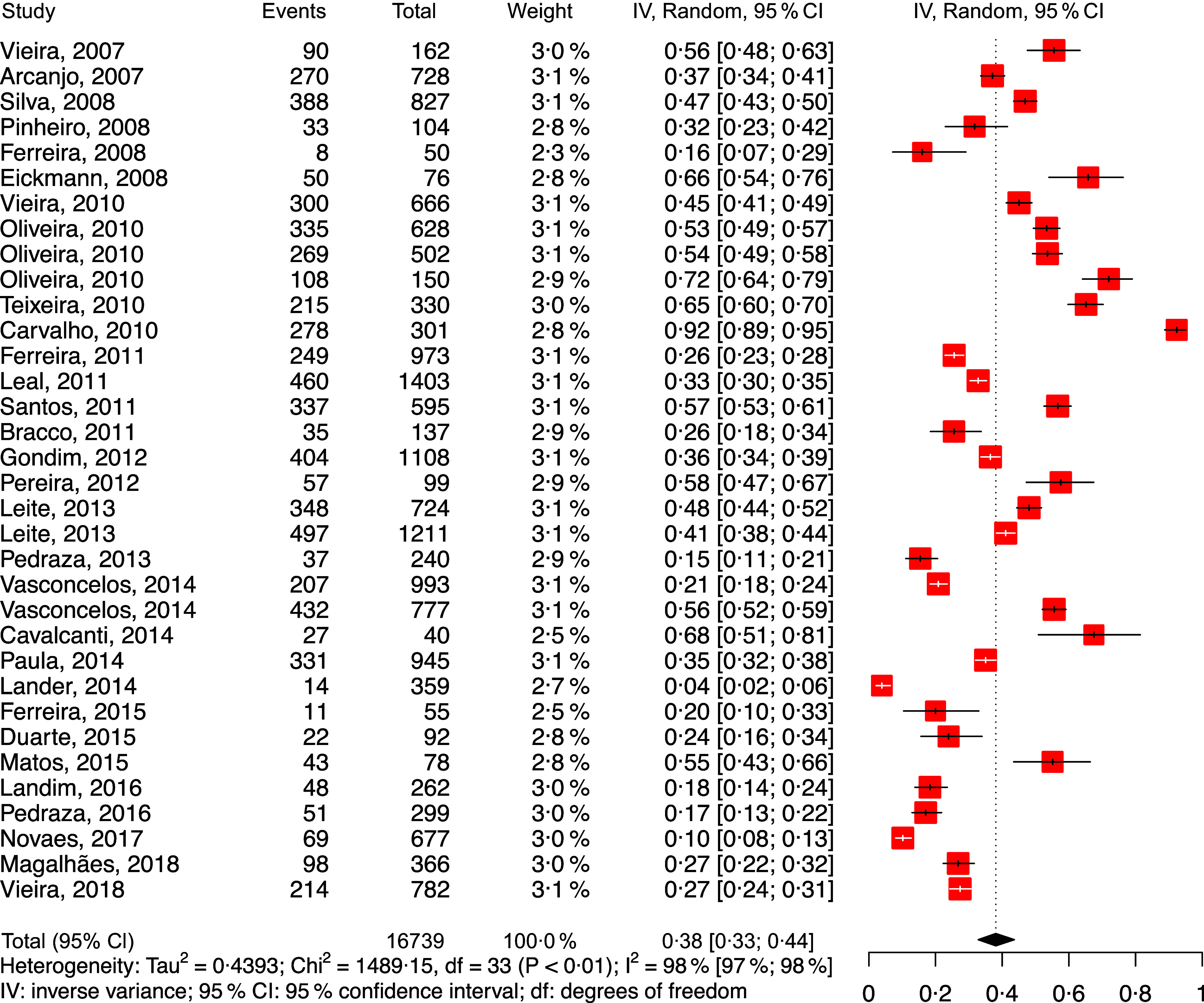
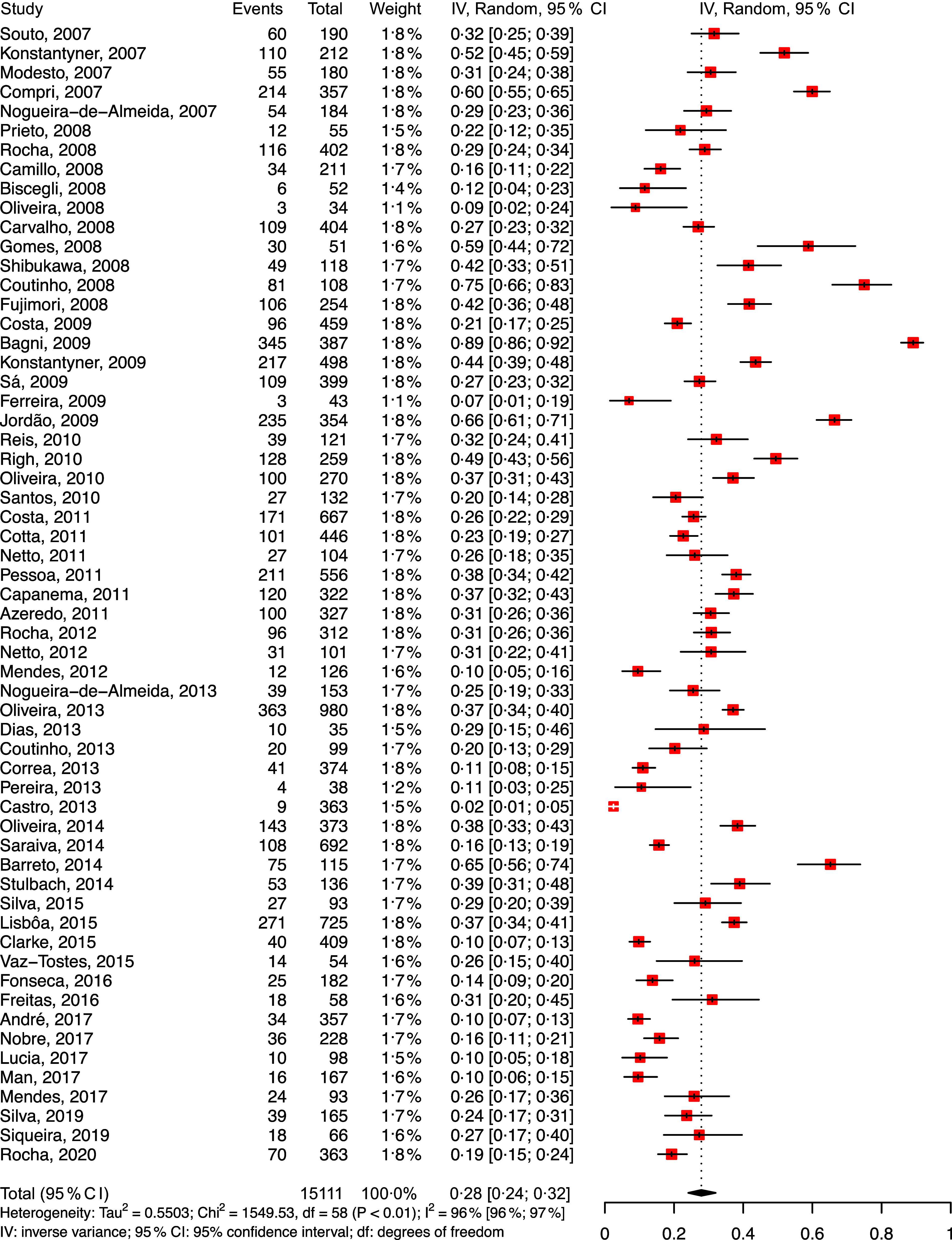
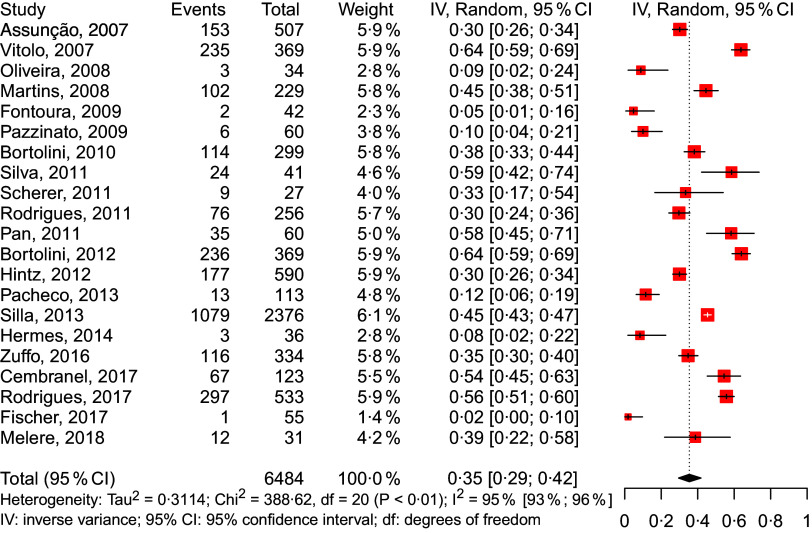
Results: Pooled prevalence of anaemia was 33 % (95 % CI 30, 35). Sensitivity analyses showed that withdrawal of studies that contributed to high heterogeneity did not influence national average prevalence.
Conclusions: Childhood anaemia is still a serious public health problem in Brazil, exposing 33 % of Brazilian children to the anaemia repercussions. The main limitation of the study is the estimation of national prevalence based on local surveys, but a large number of studies were included, with representation in all regions of the country, giving strength to the results. In Brazil, more public policies are needed to promote supplementation, fortification and access to healthy eating to reduce the high level of anaemia among children.
Keywords: Anaemia; Brazil; Child; Infant; Iron deficiency; Preschool; Prevalence.
Figures
References
-
- Allali S, Brousse V, Sacri AS et al. (2017) Anemia in children: prevalence, causes, diagnostic work-up, and long-term consequences. Expert Rev Hematol 10, 1023–1028. - PubMed
-
- WHO (2017) Nutritional Anaemias: Tools for Effective Prevention and Control No. 9241513063. Geneva: World Health Organization.
-
- Hunt JR (2003) Bioavailability of iron, zinc, and other trace minerals from vegetarian diets. Am J Clin Nutr 78, 633S–639S. - PubMed
-
- WHO (2008) Worldwide Prevalence of Anaemia 1993–2005: WHO Global Database on Anaemia. WHO Global Database on Anaemia No. 9241596651. Geneva: World Health Organization.
-
- De Benoist B, Cogswell M, Egli I et al. (2008) Worldwide Prevalence of Anaemia 1993–2005: WHO Global Database of Anaemia. Geneva: World Health Organization.
Publication types
MeSH terms
LinkOut - more resources
Full Text Sources
Medical
