


National Institutes of Health Consensus Development Project on Criteria for Clinical Trials in Chronic Graft-versus-Host Disease: IV. The 2020 Highly morbid forms report
- PMID: 34217703
- PMCID: PMC8478861
- DOI: 10.1016/j.jtct.2021.06.001
National Institutes of Health Consensus Development Project on Criteria for Clinical Trials in Chronic Graft-versus-Host Disease: IV. The 2020 Highly morbid forms report
Abstract
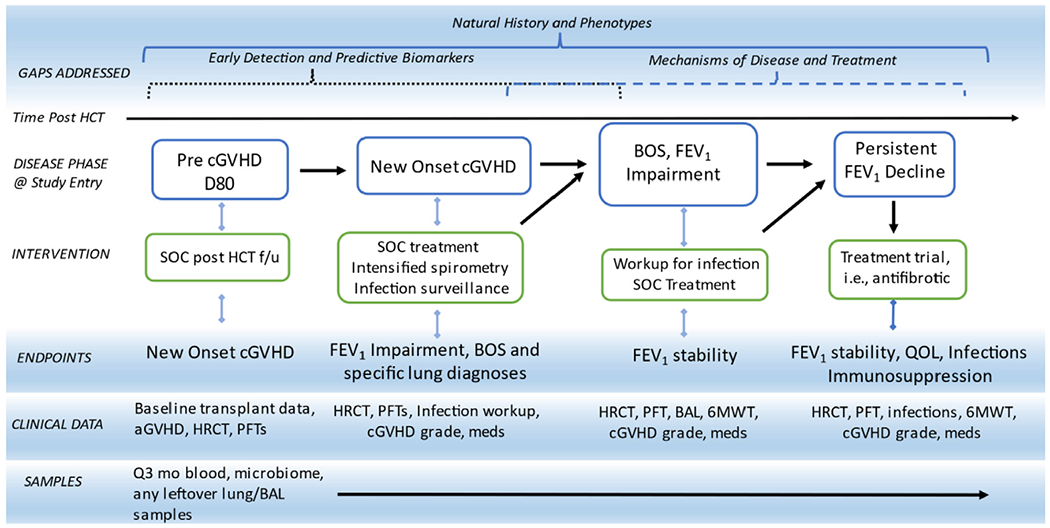
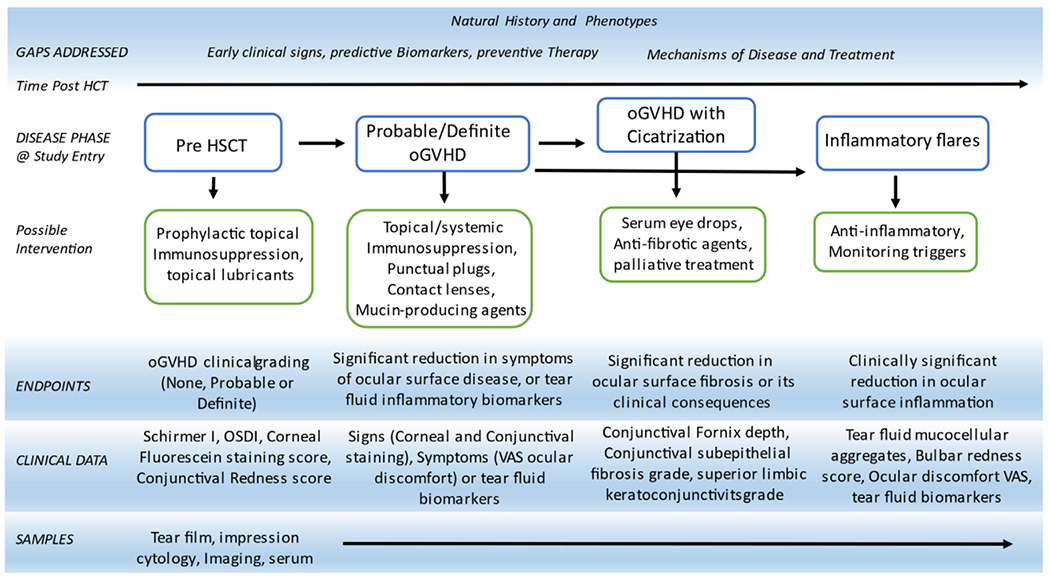
Chronic graft-versus-host disease (GVHD) can be associated with significant morbidity, in part because of nonreversible fibrosis, which impacts physical functioning (eye, skin, lung manifestations) and mortality (lung, gastrointestinal manifestations). Progress in preventing severe morbidity and mortality associated with chronic GVHD is limited by a complex and incompletely understood disease biology and a lack of prognostic biomarkers. Likewise, treatment advances for highly morbid manifestations remain hindered by the absence of effective organ-specific approaches targeting "irreversible" fibrotic sequelae and difficulties in conducting clinical trials in a heterogeneous disease with small patient numbers. The purpose of this document is to identify current gaps, to outline a roadmap of research goals for highly morbid forms of chronic GVHD including advanced skin sclerosis, fasciitis, lung, ocular and gastrointestinal involvement, and to propose strategies for effective trial design. The working group made the following recommendations: (1) Phenotype chronic GVHD clinically and biologically in future cohorts, to describe the incidence, prognostic factors, mechanisms of organ damage, and clinical evolution of highly morbid conditions including long-term effects in children; (2) Conduct longitudinal multicenter studies with common definitions and research sample collections; (3) Develop new approaches for early identification and treatment of highly morbid forms of chronic GVHD, especially biologically targeted treatments, with a special focus on fibrotic changes; and (4) Establish primary endpoints for clinical trials addressing each highly morbid manifestation in relationship to the time point of intervention (early versus late). Alternative endpoints, such as lack of progression and improvement in physical functioning or quality of life, may be suitable for clinical trials in patients with highly morbid manifestations. Finally, new approaches for objective response assessment and exploration of novel trial designs for small populations are required.
Keywords: Allogeneic hematopoietic cell transplantation; Chronic graft-versus-host disease; Consensus; Gastrointestinal tract; Lung; Ocular; Sclerosis; Skin.
Copyright © 2021 The American Society for Transplantation and Cellular Therapy. All rights reserved.
Figures
References
-
- Grube M, Holler E, Weber D, Holler B, Herr W, Wolff D. Risk Factors and Outcome of Chronic Graft-versus-Host Disease after Allogeneic Stem Cell Transplantation-Results from a Single-Center Observational Study. Biol Blood Marrow Transplant. 2016;22:1781–1791. - PubMed
-
- Pavletic SZ, Martin PJ, Schultz KR, Lee SJ. The future of chronic graft-versus-host disease: introduction to the 2020 National Institutes of Health Consensus Development Project Reports. Transplant Cell Ther. 2021. - PubMed
Publication types
MeSH terms
Grants and funding
LinkOut - more resources
Full Text Sources
