


Normative References for Graphomotor and Latency Digital Clock Drawing Metrics for Adults Age 55 and Older: Operationalizing the Production of a Normal Appearing Clock
- PMID: 34219739
- PMCID: PMC8379638
- DOI: 10.3233/JAD-201249
Normative References for Graphomotor and Latency Digital Clock Drawing Metrics for Adults Age 55 and Older: Operationalizing the Production of a Normal Appearing Clock
Erratum in
-
Normative References for Graphomotor and Latency Digital Clock Drawing Metrics for Adults Age 55 and Older: Operationalizing the Production of a Normal Appearing Clock.J Alzheimers Dis. 2021;83(2):937. doi: 10.3233/JAD-219009. J Alzheimers Dis. 2021. PMID: 34511506 No abstract available.
Abstract
Background: Relative to the abundance of publications on dementia and clock drawing, there is limited literature operationalizing 'normal' clock production.
Objective: To operationalize subtle behavioral patterns seen in normal digital clock drawing to command and copy conditions.
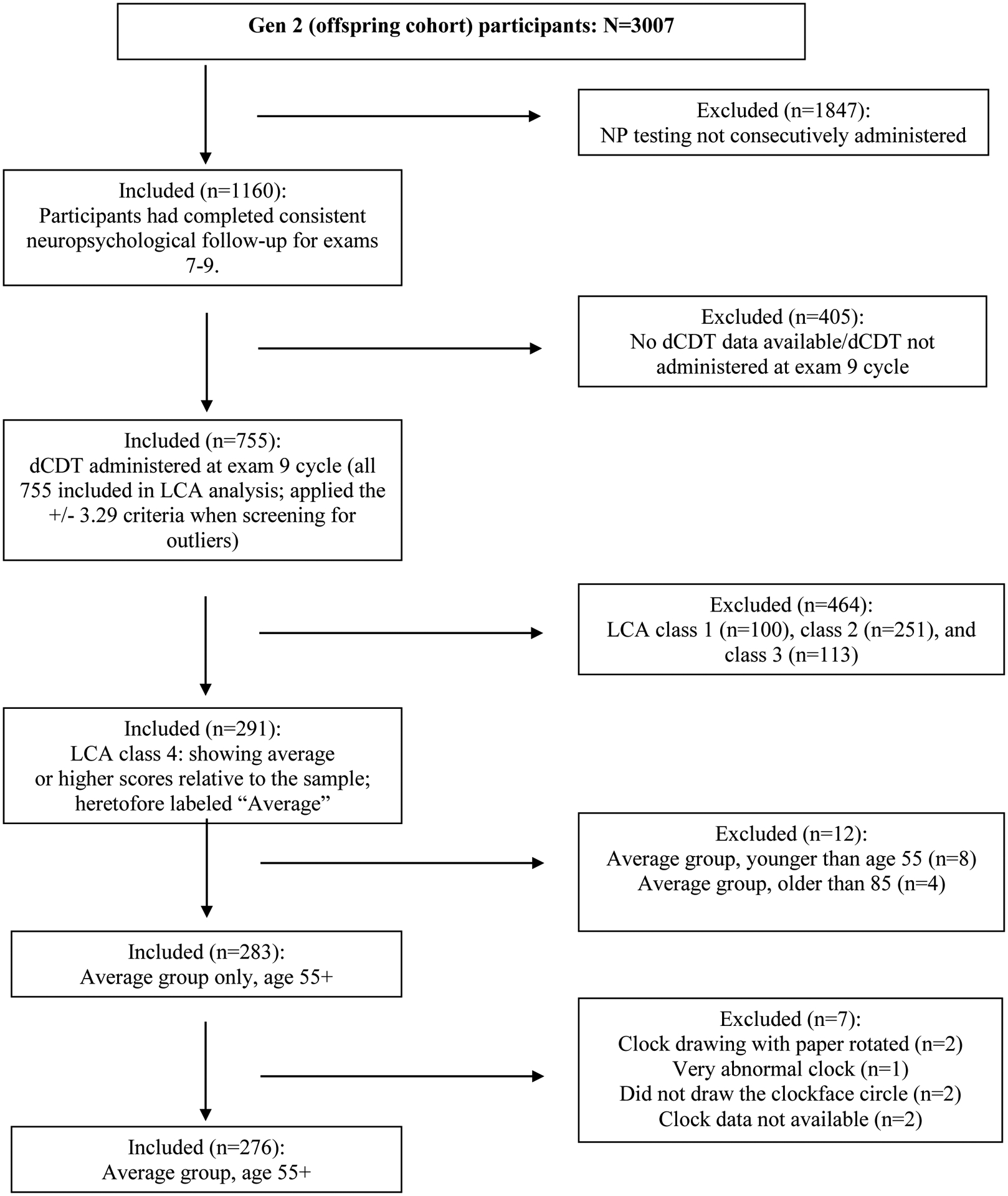
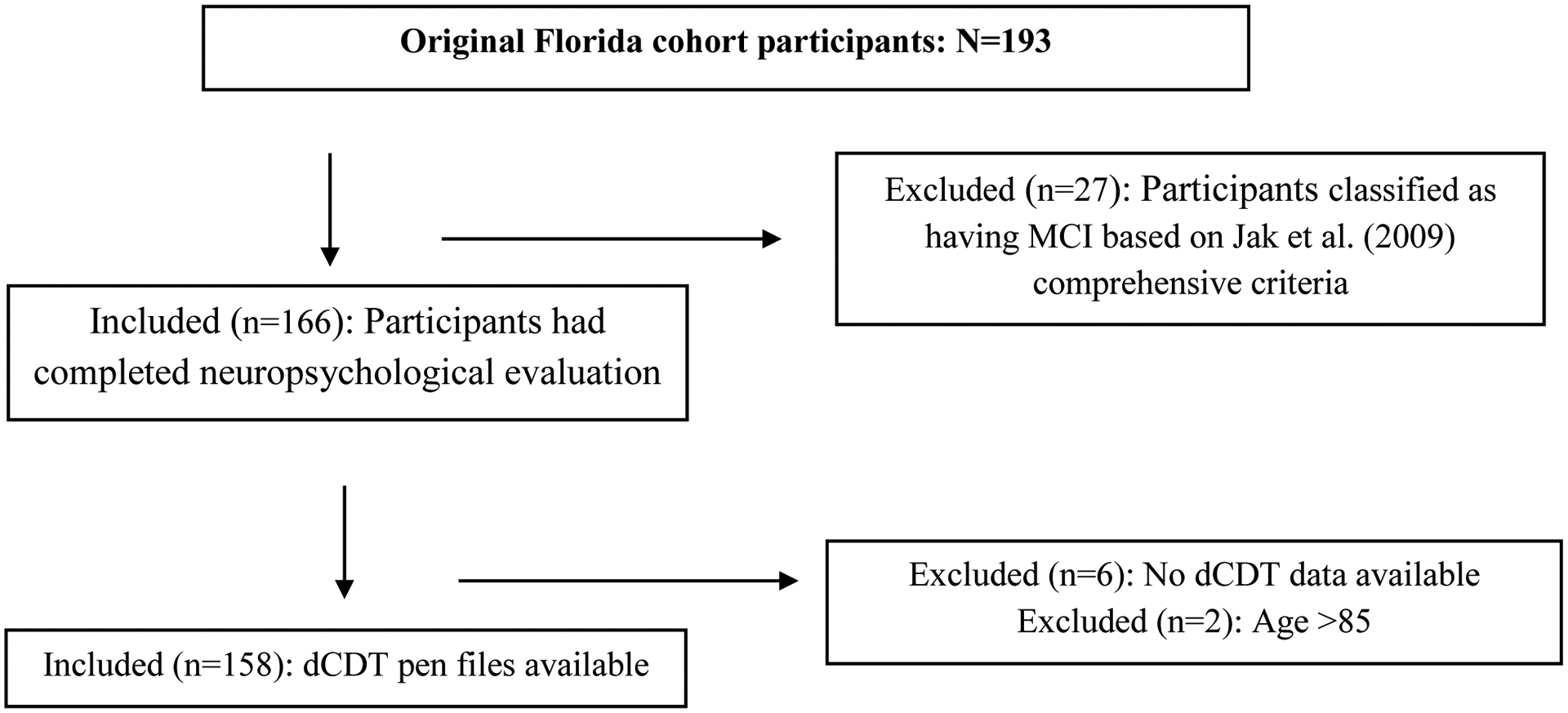
Methods: From two research cohorts of cognitively-well participants age 55 plus who completed digital clock drawing to command and copy conditions (n = 430), we examined variables operationalizing clock face construction, digit placement, clock hand construction, and a variety of time-based, latency measures. Data are stratified by age, education, handedness, and number anchoring.
Results: Normative data are provided in supplementary tables. Typical errors reported in clock research with dementia were largely absent. Adults age 55 plus produce symmetric clock faces with one stroke, with minimal overshoot and digit misplacement, and hands with expected hour hand to minute hand ratio. Data suggest digitally acquired graphomotor and latency differences based on handedness, age, education, and anchoring.
Conclusion: Data provide useful benchmarks from which to assess digital clock drawing performance in Alzheimer's disease and related dementias.
Keywords: Older adult; aging; attention; clock drawing test; cognition; dementia; digital technology; executive function; laterality; middle aged; neuropsychological tests; reference standards; short-term memory.
Conflict of interest statement
Figures
References
-
- Emrani S, Lamar M, Price CC, Wasserman V, Matusz E, Au R, Swenson R, Nagele R, Heilman KM, Libon DJ (2020) Alzheimer’s/Vascular Spectrum Dementia: Classification in Addition to Diagnosis. J Alzheimers Dis 73, 63–71. - PubMed
-
- Cahn-Weiner DA, Williams K, Grace J, Tremont G, Westervelt H, Stern RA (2003) Discrimination of dementia with lewy bodies from Alzheimer disease and Parkinson disease using the clock drawing test. Cogn Behav Neurol 16, 85–92. - PubMed
-
- Cosentino S, Jefferson A, Chute DL, Kaplan E, Libon DJ (2004) Clock drawing errors in dementia: neuropsychological and neuroanatomical considerations. Cogn Behav Neurol 17, 74–84. - PubMed
-
- Herrmann N, Kidron D, Shulman KI, Kaplan E, Binns M, Leach L, Freedman M (1998) Clock tests in depression, Alzheimer’s disease, and elderly controls. Int J Psychiatry Med 28, 437–447. - PubMed
Publication types
MeSH terms
Grants and funding
- R21 EB027344/EB/NIBIB NIH HHS/United States
- R01 AG016495/AG/NIA NIH HHS/United States
- HHSN268201500001C/HL/NHLBI NIH HHS/United States
- R01 AG049810/AG/NIA NIH HHS/United States
- R01 AG008122/AG/NIA NIH HHS/United States
- N01 HC025195/HL/NHLBI NIH HHS/United States
- HHSN268201500001I/HL/NHLBI NIH HHS/United States
- R01 AG033040/AG/NIA NIH HHS/United States
- K07 AG066813/AG/NIA NIH HHS/United States
- R01 NR014181/NR/NINR NIH HHS/United States
- K23 NS060660/NS/NINDS NIH HHS/United States
- RF1 AG062109/AG/NIA NIH HHS/United States
- R56 AG062109/AG/NIA NIH HHS/United States
- R01 AG055337/AG/NIA NIH HHS/United States
- R01 NS082386/NS/NINDS NIH HHS/United States
- RF1 AG054156/AG/NIA NIH HHS/United States
LinkOut - more resources
Full Text Sources
