


Stay at Home! Governance Quality and Effectiveness of Lockdown
- PMID: 34219863
- PMCID: PMC8238379
- DOI: 10.1007/s11205-021-02742-3
Stay at Home! Governance Quality and Effectiveness of Lockdown
Abstract
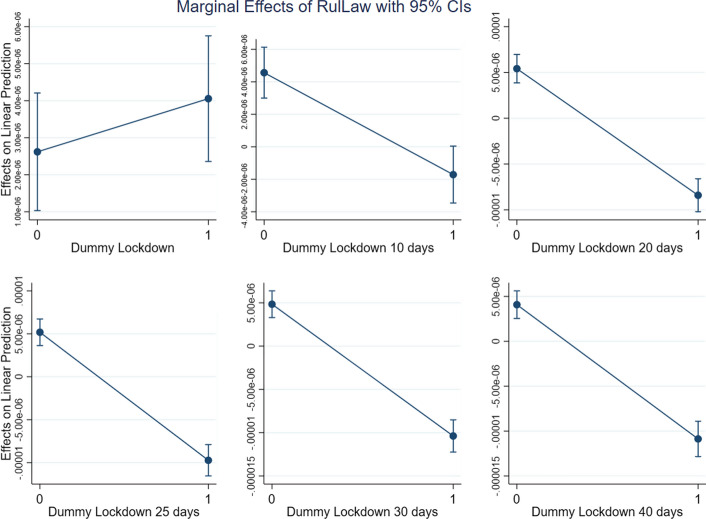
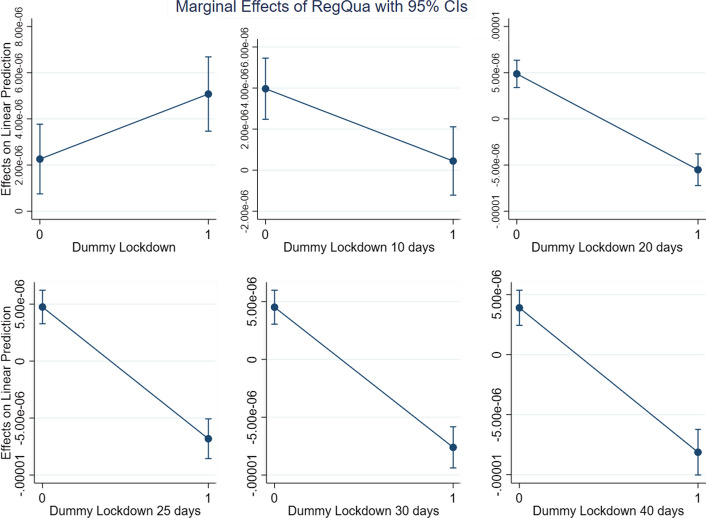
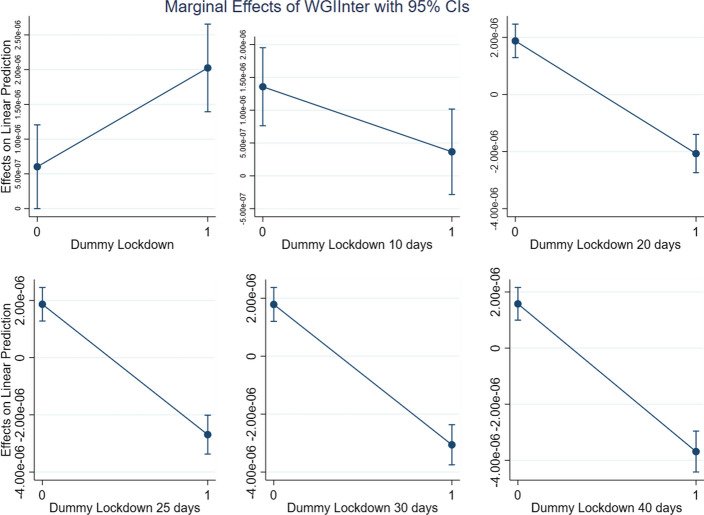
In order to control the spread of the COVID-19 pandemic, during the first wave of the pandemic numerous countries decided to adopt lockdown policies. It had been a considerable time since such measures were last introduced, and the first time that they were implemented on such a global scale in a contemporary, information intensive society. The effectiveness of such measures may depend on how citizens perceive the capacity of government to set up and implement sound policies. Indeed, lockdown and confinement policies in general are binding measures that people are not used to, and which raise serious concerns among the population. For this reason governance quality could affect the perception of the benefits related to the government's choice to impose lockdown, making citizens more inclined to accept it and restrict their movements. In the present paper we empirically investigate the relation between the efficacy of lockdown and governance quality (measured through World Governance Indicators). Our results suggest that countries with higher levels of government effectiveness, rule of law and regulatory quality reach better results in adopting lockdown measures.
Supplementary information: The online version contains supplementary material available at 10.1007/s11205-021-02742-3.
Keywords: COVID-19; Effects of governance; Lockdown; Non-pharmaceutical intervention.
© The Author(s) 2021.
Figures
References
-
- Alabede JO, Zainal Affrin Z. Individual taxpayers’ attitude and compliance behaviour in Nigeria: The moderating role of financial condition and risk preference. Journal of Accounting and Taxation. 2011;3(5):91–104.
-
- Alfano V, Ercolano S. Bonding and Bridging Social Capital and Lockdown. An Analysis of the Italian Regions. Rivista Economica Del Mezzogiorno. 2020;3:437–454.
-
- Alfano V, Sgobbi M. A peste, fame et bello libera nos, Domine. Journal of Family History. 2021 doi: 10.1177/03631990211000615. - DOI
-
- Aigner, D. J., & Balestra, M. (1988). Optimal experimental design for error components models. Econometrica, 56(4), 955–971.
LinkOut - more resources
Full Text Sources