


The Potential of Traditional Knowledge to Develop Effective Medicines for the Treatment of Leishmaniasis
- PMID: 34220515
- PMCID: PMC8248671
- DOI: 10.3389/fphar.2021.690432
The Potential of Traditional Knowledge to Develop Effective Medicines for the Treatment of Leishmaniasis
Abstract
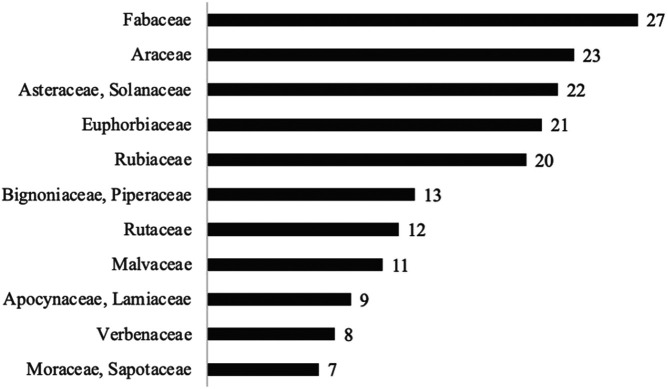
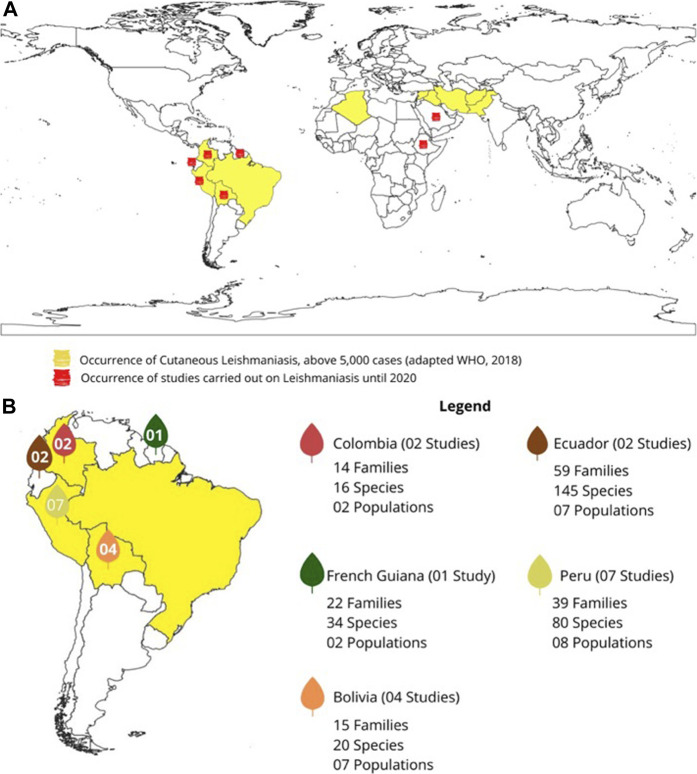
Leishmaniasis is a neglected tropical disease that affects people living in tropical and subtropical areas of the world. There are few therapeutic options for treating this infectious disease, and available drugs induce severe side effects in patients. Different communities have limited access to hospital facilities, as well as classical treatment of leishmaniasis; therefore, they use local natural products as alternative medicines to treat this infectious disease. The present work performed a bibliographic survey worldwide to record plants used by traditional communities to treat leishmaniasis, as well as the uses and peculiarities associated with each plant, which can guide future studies regarding the characterization of new drugs to treat leishmaniasis. A bibliographic survey performed in the PubMed and Scopus databases retrieved 294 articles related to traditional knowledge, medicinal plants and leishmaniasis; however, only 20 were selected based on the traditional use of plants to treat leishmaniasis. Considering such studies, 378 quotes referring to 292 plants (216 species and 76 genera) that have been used to treat leishmaniasis were recorded, which could be grouped into 89 different families. A broad discussion has been presented regarding the most frequent families, including Fabaceae (27 quotes), Araceae (23), Solanaceae and Asteraceae (22 each). Among the available data in the 378 quotes, it was observed that the parts of the plants most frequently used in local medicine were leaves (42.3% of recipes), applied topically (74.6%) and fresh poultices (17.2%). The contribution of Latin America to studies enrolling ethnopharmacological indications to treat leishmaniasis was evident. Of the 292 plants registered, 79 were tested against Leishmania sp. Future studies on leishmanicidal activity could be guided by the 292 plants presented in this study, mainly the five species Carica papaya L. (Caricaceae), Cedrela odorata L. (Meliaceae), Copaifera paupera (Herzog) Dwyer (Fabaceae), Musa × paradisiaca L. (Musaceae), and Nicotiana tabacum L. (Solanaceae), since they are the most frequently cited in articles and by traditional communities.
Keywords: ethnopharmacology; leishmaniasis; medicinal plants; natural drugs; neglected disease; traditional knowledge.
Copyright © 2021 Passero, Brunelli, Sauini, Amorim Pavani, Jesus and Rodrigues.
Conflict of interest statement
The authors declare that the research was conducted in the absence of any commercial or financial relationships that could be construed as a potential conflict of interest.
Figures
References
-
- Ahmad B., Islam A., Khan A., Khan M. A., Ul Haq I., Jafri L., et al. (2019). Comprehensive Investigations on Anti-leishmanial Potentials of Euphorbia Wallichii Root Extract and its Effects on Membrane Permeability and Apoptosis. Comp. Immunol. Microbiol. Infect. Dis. 64, 138–145. 10.1016/j.cimid.2019.03.007 - DOI - PubMed
-
- Arambewela L. S. R., Ranatunge T. (1991). Indole Alkaloids from Tabernaemontana Divaricata. Phytochemistry 30, 1740–1741. 10.1016/0031-9422(91)84254-P - DOI
Publication types
LinkOut - more resources
Full Text Sources
