The burden of heat-related mortality attributable to recent human-induced climate change
- PMID: 34221128
- PMCID: PMC7611104
- DOI: 10.1038/s41558-021-01058-x
The burden of heat-related mortality attributable to recent human-induced climate change
Abstract
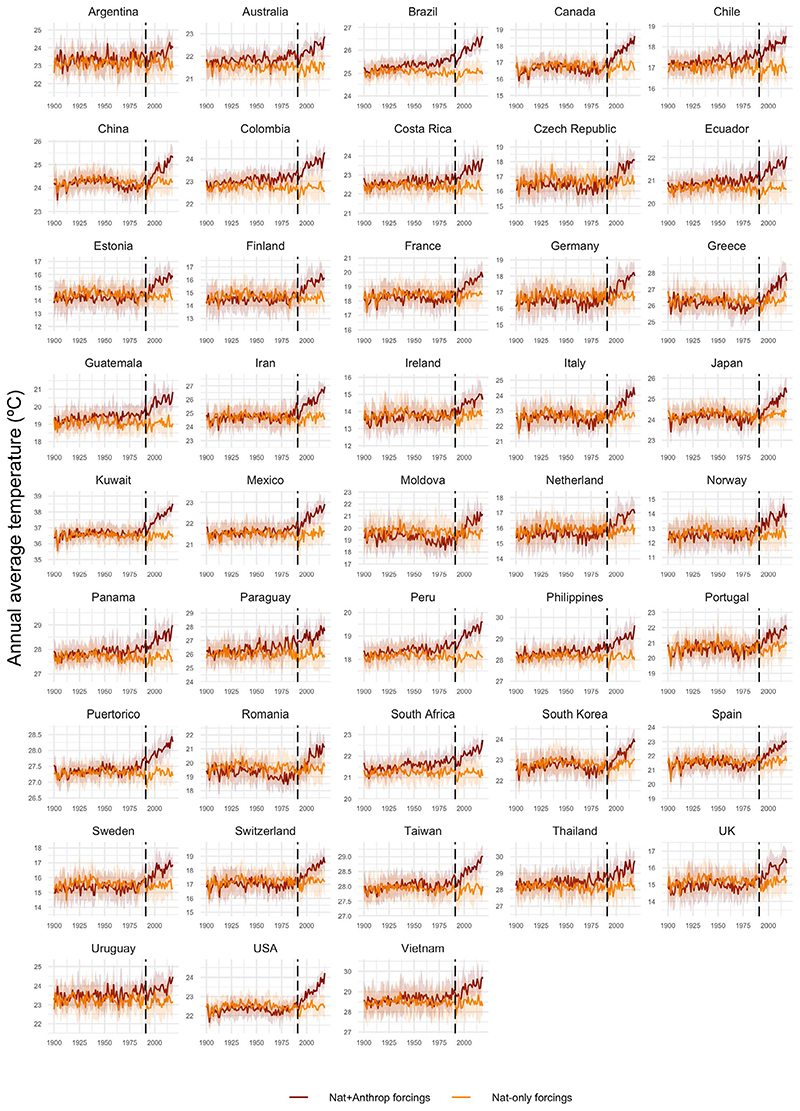
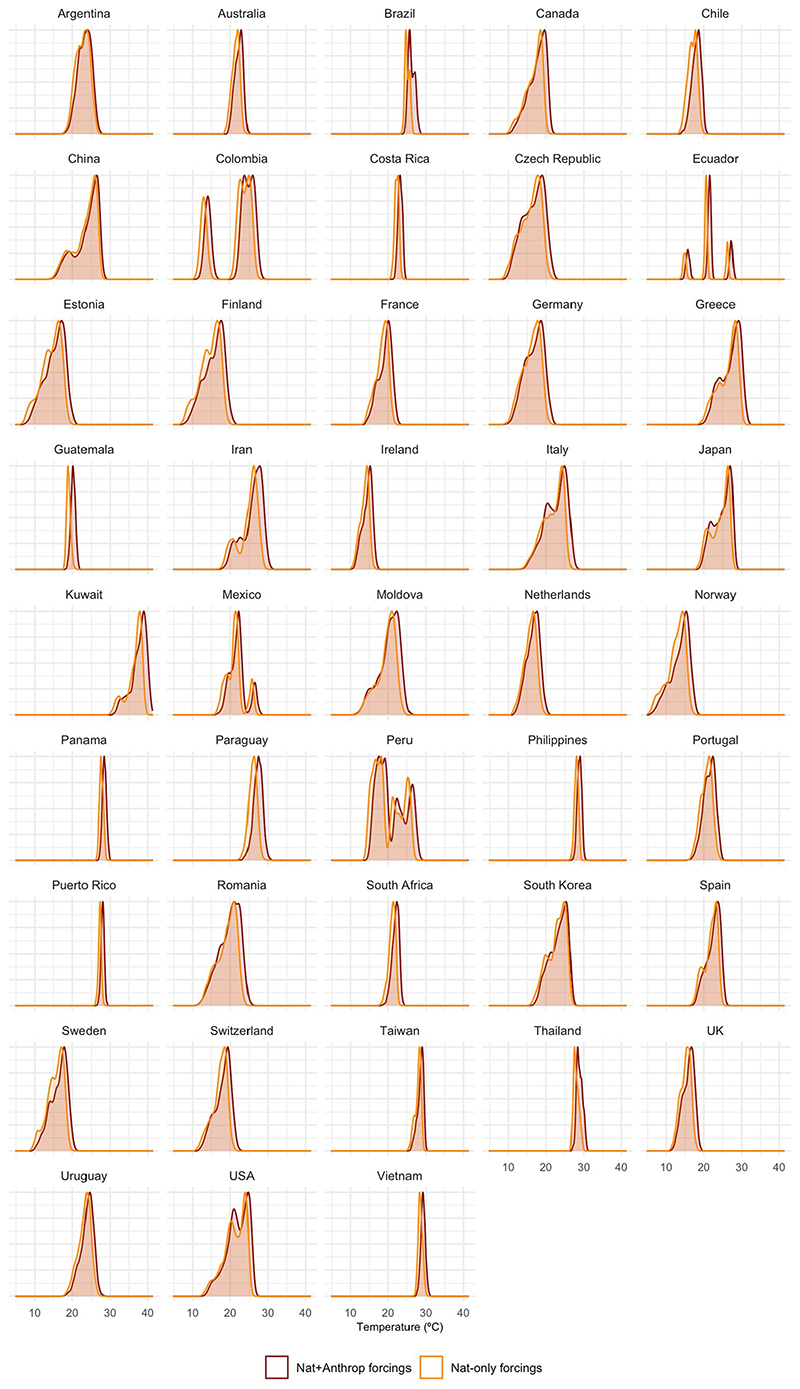
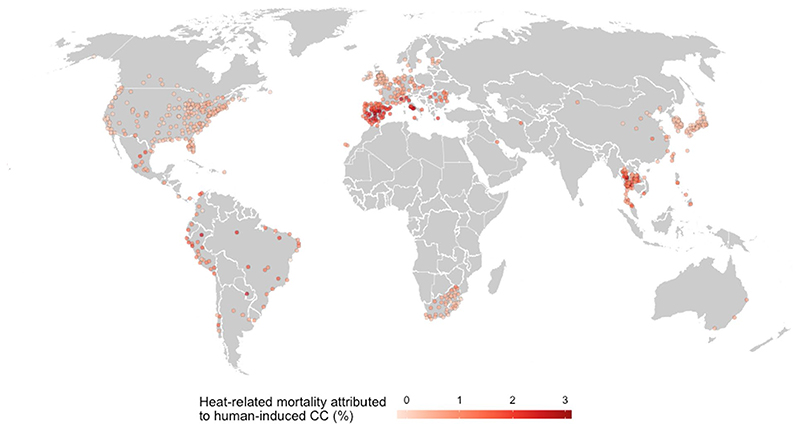
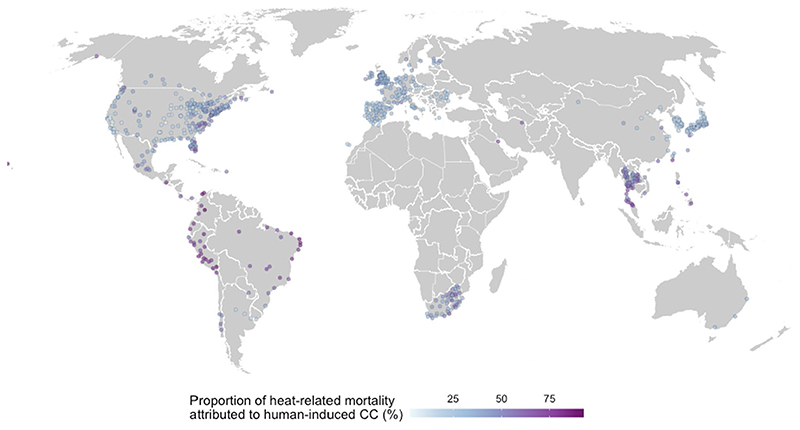
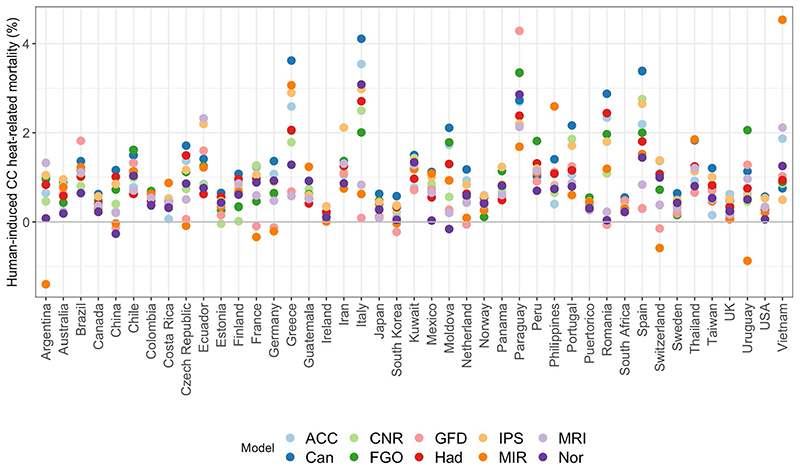
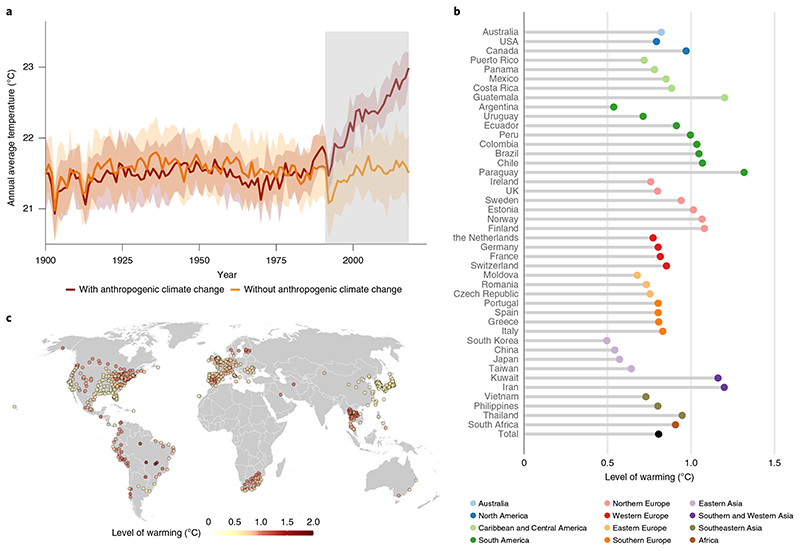
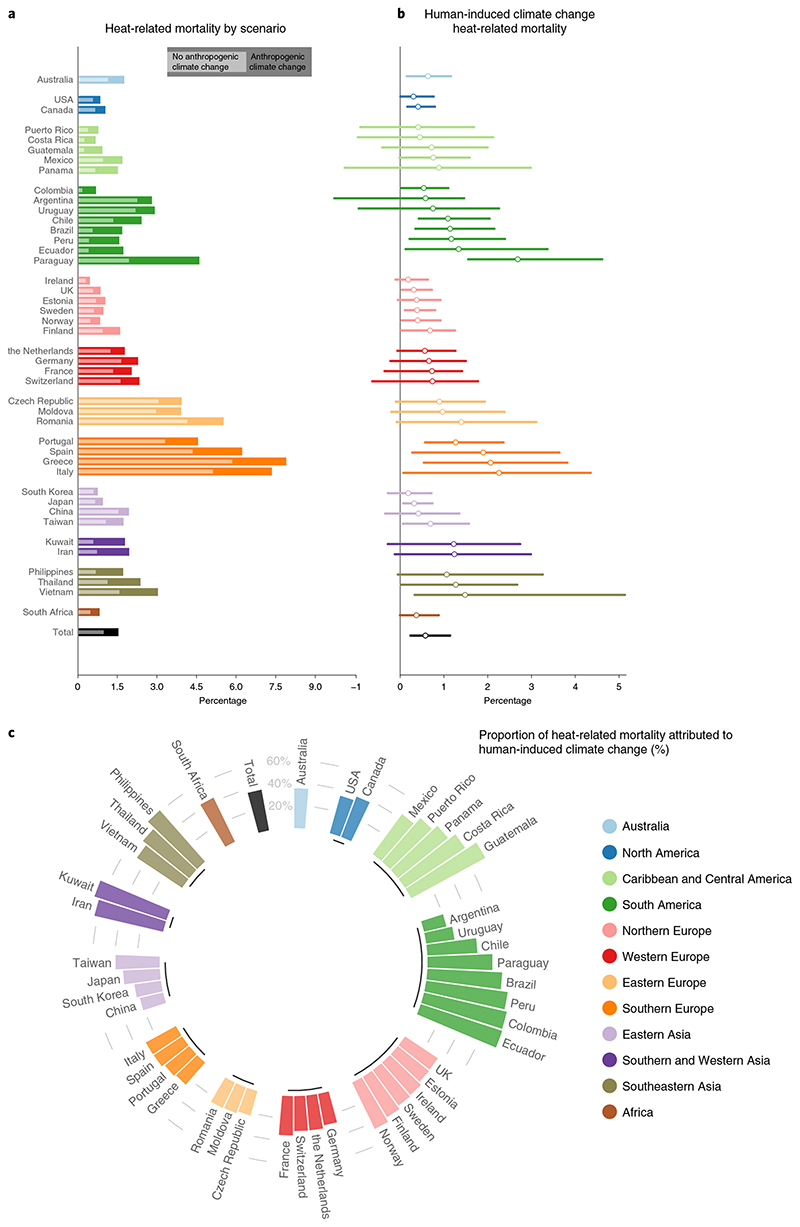
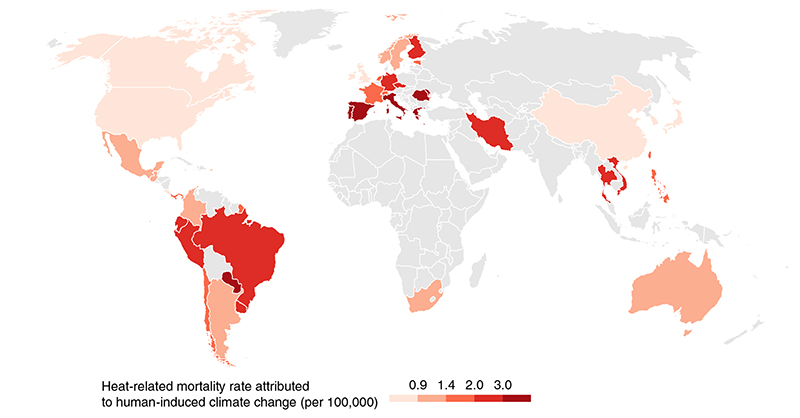
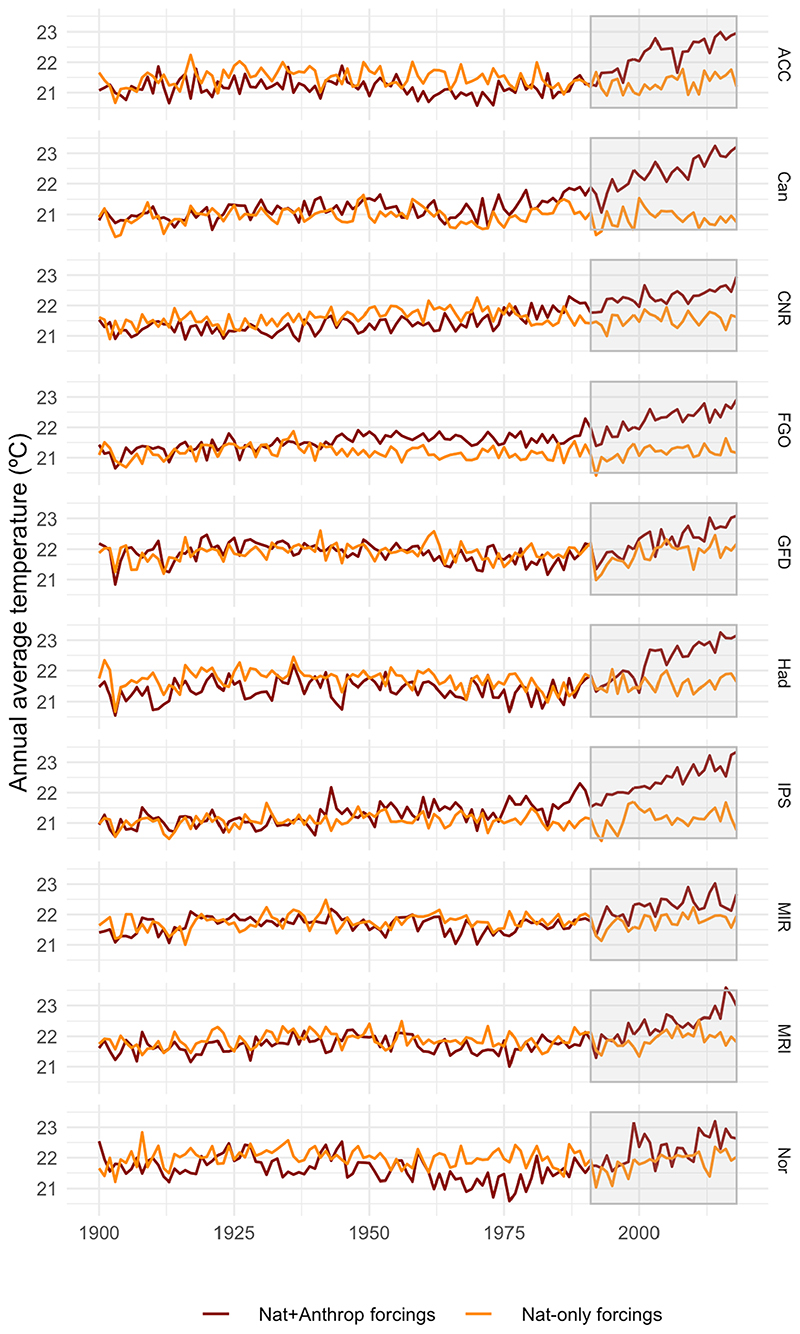
Climate change affects human health; however, there have been no large-scale, systematic efforts to quantify the heat-related human health impacts that have already occurred due to climate change. Here, we use empirical data from 732 locations in 43 countries to estimate the mortality burdens associated with the additional heat exposure that has resulted from recent human-induced warming, during the period 1991-2018. Across all study countries, we find that 37.0% (range 20.5-76.3%) of warm-season heat-related deaths can be attributed to anthropogenic climate change and that increased mortality is evident on every continent. Burdens varied geographically but were of the order of dozens to hundreds of deaths per year in many locations. Our findings support the urgent need for more ambitious mitigation and adaptation strategies to minimize the public health impacts of climate change.
Conflict of interest statement
Competing interests The authors declare no competing interests.
Figures
Similar articles
-
The 2023 Latin America report of the Lancet Countdown on health and climate change: the imperative for health-centred climate-resilient development.Lancet Reg Health Am. 2024 Apr 23;33:100746. doi: 10.1016/j.lana.2024.100746. eCollection 2024 May. Lancet Reg Health Am. 2024. PMID: 38800647 Free PMC article. Review.
-
Integrating Shared Socioeconomic Pathway-informed adaptation into temperature-related mortality projections under climate change.Environ Res. 2024 Jun 15;251(Pt 2):118731. doi: 10.1016/j.envres.2024.118731. Epub 2024 Mar 16. Environ Res. 2024. PMID: 38492839
-
Projecting future climate change impacts on heat-related mortality in large urban areas in China.Environ Res. 2018 May;163:171-185. doi: 10.1016/j.envres.2018.01.047. Epub 2018 Feb 22. Environ Res. 2018. PMID: 29448153
-
Air-quality-related health impacts from climate change and from adaptation of cooling demand for buildings in the eastern United States: An interdisciplinary modeling study.PLoS Med. 2018 Jul 3;15(7):e1002599. doi: 10.1371/journal.pmed.1002599. eCollection 2018 Jul. PLoS Med. 2018. PMID: 29969461 Free PMC article.
-
The Minderoo-Monaco Commission on Plastics and Human Health.Ann Glob Health. 2023 Mar 21;89(1):23. doi: 10.5334/aogh.4056. eCollection 2023. Ann Glob Health. 2023. PMID: 36969097 Free PMC article. Review.
Cited by
-
Annals of Education: Teaching Climate Change and Global Public Health.Int J Environ Res Public Health. 2023 Dec 27;21(1):41. doi: 10.3390/ijerph21010041. Int J Environ Res Public Health. 2023. PMID: 38248506 Free PMC article.
-
Classic and exertional heatstroke.Nat Rev Dis Primers. 2022 Feb 3;8(1):8. doi: 10.1038/s41572-021-00334-6. Nat Rev Dis Primers. 2022. PMID: 35115565 Review.
-
How Can We Act to Mitigate the Global Syndemic of Obesity, Undernutrition, and Climate Change?Curr Obes Rep. 2022 Sep;11(3):61-69. doi: 10.1007/s13679-021-00464-8. Curr Obes Rep. 2022. PMID: 35138591 Free PMC article. Review.
-
Signaling through the dystrophin glycoprotein complex affects the stress-dependent transcriptome in Drosophila.Dis Model Mech. 2023 Jan 1;16(1):dmm049862. doi: 10.1242/dmm.049862. Epub 2023 Jan 31. Dis Model Mech. 2023. PMID: 36594281 Free PMC article.
-
Heatwaves: does global research reflect the growing threat in the light of climate change?Global Health. 2023 Aug 11;19(1):56. doi: 10.1186/s12992-023-00955-4. Global Health. 2023. PMID: 37568208 Free PMC article.
References
-
- IPCCMasson-Delmotte V, et al., editors. Special Report on Global Warming of 1.5 °C. WMO; 2018.
-
- Hsiang S, et al. Estimating economic damage from climate change in the United States. Science. 2017;356:1362–1369. - PubMed
-
- Pachauri RK, Meyer LA, IPCC Core Writing Team . Climate Change 2014: Synthesis Report. IPCC; 2014.