


The effect of collagen hydrogels on chondrocyte behaviors through restricting the contraction of cell/hydrogel constructs
- PMID: 34221449
- PMCID: PMC8245754
- DOI: 10.1093/rb/rbab030
The effect of collagen hydrogels on chondrocyte behaviors through restricting the contraction of cell/hydrogel constructs
Abstract
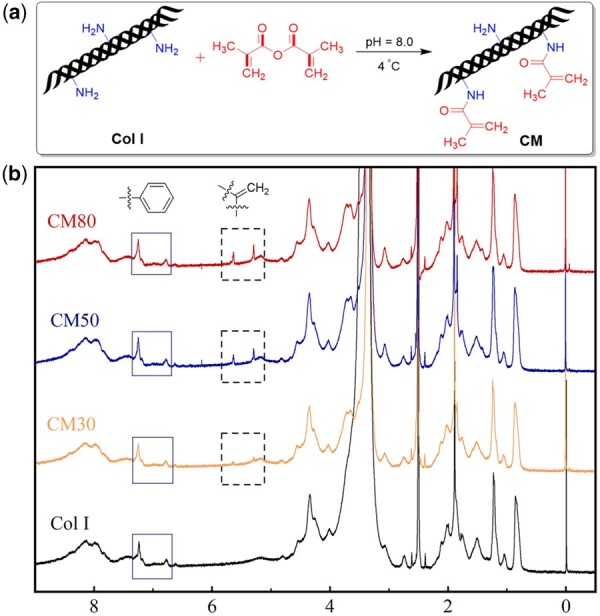
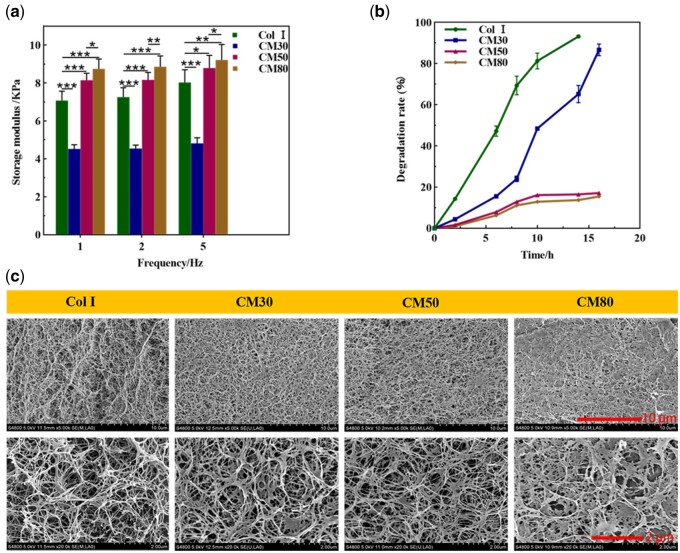
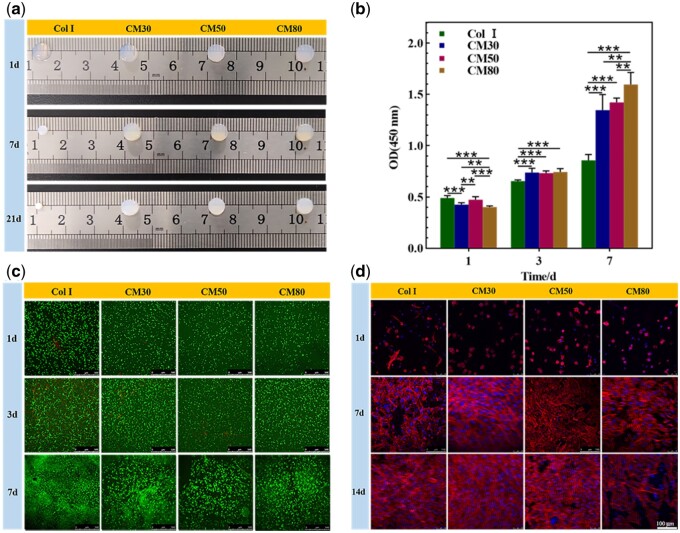
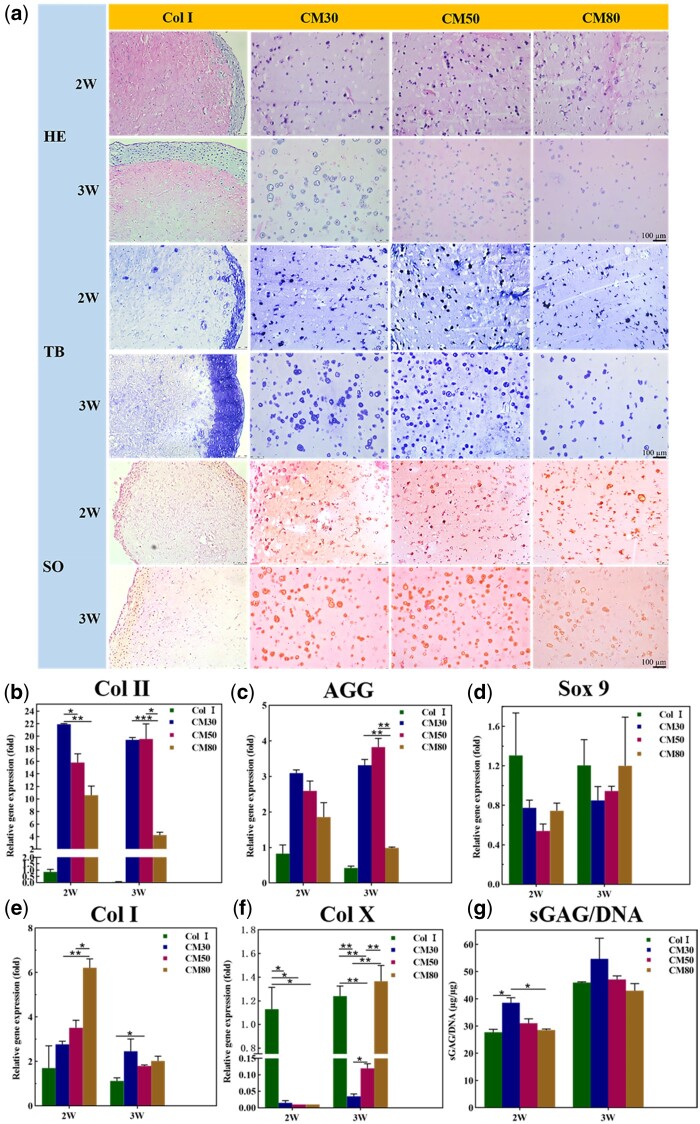
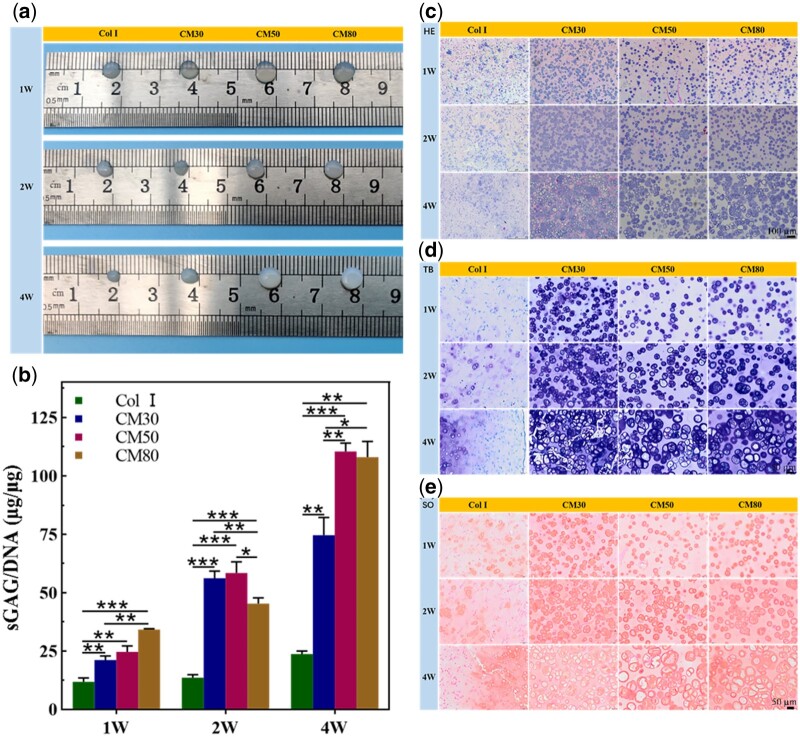
Collagen is a promising material for tissue engineering, but the poor mechanical properties of collagen hydrogels, which tend to cause contraction under the action of cellular activity, make its application challengeable. In this study, the amino group of type I collagen (Col I) was modified with methacrylic anhydride (MA) and the photo-crosslinkable methacrylate anhydride modified type I collagen (CM) with three different degrees of substitution (DS) was prepared. The physical properties of CM and Col I hydrogels were tested, including micromorphology, mechanical properties and degradation properties. The results showed that the storage modulus and degradation rate of hydrogels could be adjusted by changing the DS of CM. In vitro, chondrocytes were seeded into these four groups of hydrogels and subjected to fluorescein diacetate/propidium iodide (FDA/PI) staining, cell counting kit-8 (CCK-8) test, histological staining and cartilage-related gene expression analysis. In vivo, these hydrogels encapsulating chondrocytes were implanted subcutaneously into nude mice, then histological staining and sulfated glycosaminoglycan (sGAG)/DNA assays were performed. The results demonstrated that contraction of hydrogels affected behaviors of chondrocytes, and CM hydrogels with suitable DS could resist contraction of hydrogels and promote the secretion of cartilage-specific matrix in vitro and in vivo.
Keywords: chondrocyte; contraction; photo-crosslinkable hydrogel; type I collagen.
© The Author(s) 2021. Published by Oxford University Press.
Figures
References
-
- Athanasiou KA, Darling EM, Hu JC.. Articular cartilage tissue engineering. E Biomed J Regen Med 2010;1:99–114.
-
- Temenoff JS, Mikos AG.. Review: tissue engineering for regeneration of articular cartilage. Biomaterials 2000;21:431–40. - PubMed
LinkOut - more resources
Full Text Sources
Research Materials
Miscellaneous
