


The Ca2+-activated chloride channel ANO1/TMEM16A: An emerging therapeutic target for epithelium-originated diseases?
- PMID: 34221860
- PMCID: PMC8245819
- DOI: 10.1016/j.apsb.2020.12.003
The Ca2+-activated chloride channel ANO1/TMEM16A: An emerging therapeutic target for epithelium-originated diseases?
Abstract
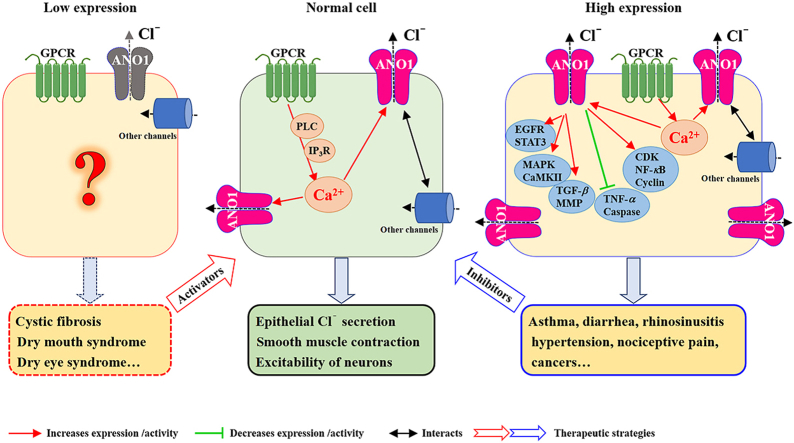
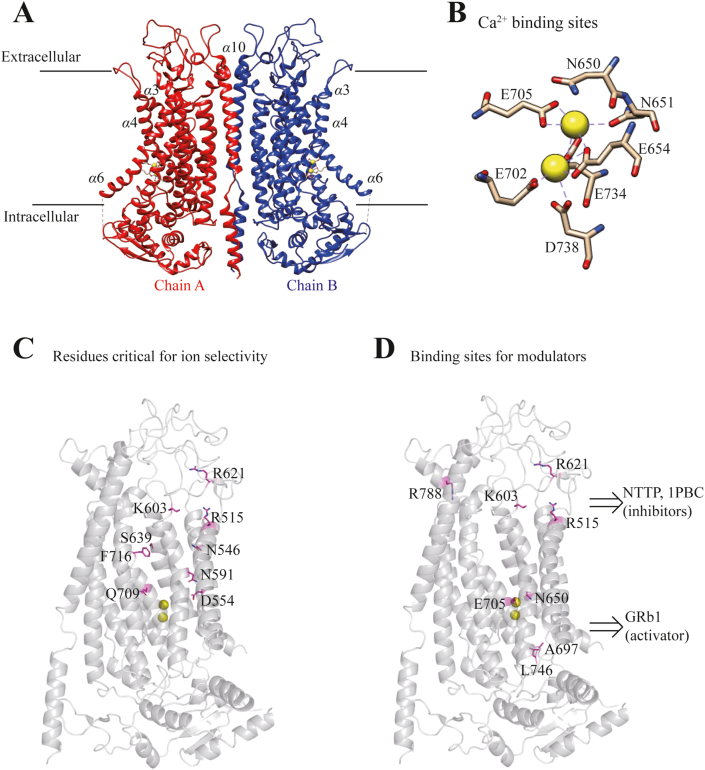
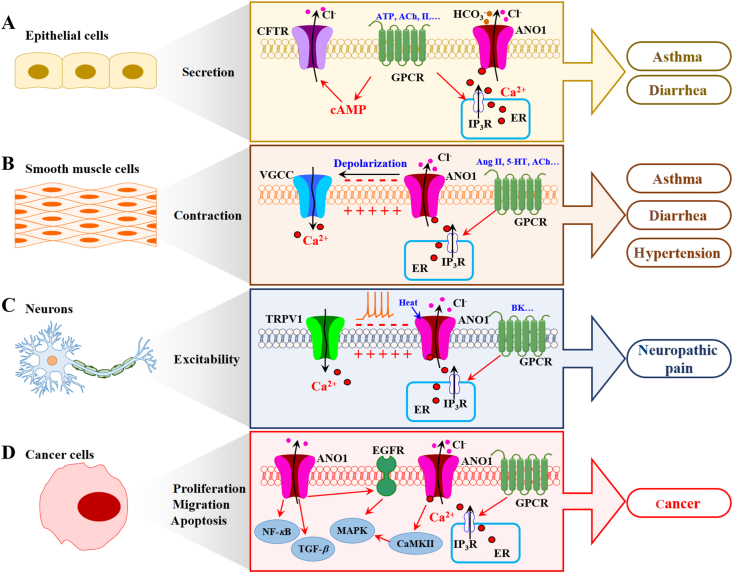
Anoctamin 1 (ANO1) or TMEM16A gene encodes a member of Ca2+ activated Cl- channels (CaCCs) that are critical for physiological functions, such as epithelial secretion, smooth muscle contraction and sensory signal transduction. The attraction and interest in ANO1/TMEM16A arise from a decade long investigations that abnormal expression or dysfunction of ANO1 is involved in many pathological phenotypes and diseases, including asthma, neuropathic pain, hypertension and cancer. However, the lack of specific modulators of ANO1 has impeded the efforts to validate ANO1 as a therapeutic target. This review focuses on the recent progress made in understanding of the pathophysiological functions of CaCC ANO1 and the current modulators used as pharmacological tools, hopefully illustrating a broad spectrum of ANO1 channelopathy and a path forward for this target validation.
Keywords: ANO1; ANO1, anoctamin-1; ASM, airway smooth muscle; Ang II, angiotensin II; BBB, blood–brain barrier; CAMK, Ca2+/calmodulin-dependent protein kinase; CF, cystic fibrosis; CFTR, cystic fibrosis transmembrane conductance regulator; Ca2+-activated Cl– channels (CaCCs); CaCCinh-A01; CaCCs, Ca2+ activated chloride channels; Cancer; Cystic fibrosis; DRG, dorsal root ganglion; Drug target; EGFR, epidermal growth factor receptor; ENaC, epithelial sodium channels; ER, endoplasmic reticulum; ESCC, esophageal squamous cell carcinoma; FRT, fisher rat thyroid; GI, gastrointestinal; GIST, gastrointestinal stromal tumor; GPCR, G-protein coupled receptor; HNSCC, head and neck squamous cell carcinoma; HTS, high-throughput screening; ICC, interstitial cells of Cajal; IPAH, idiopathic pulmonary arterial hypertension; MAPK, mitogen-activated protein kinase; NF-κB, nuclear factor κB; PAH, pulmonary arterial hypertension; PAR2, protease activated receptor 2; PASMC, pulmonary artery smooth muscle cells; PIP2, phosphatidylinositol 4,5-bisphosphate; PKD, polycystic kidney disease; T16Ainh-A01; TGF-β, transforming growth factor-β; TMEM16A; VGCC, voltage gated calcium channel; VRAC, volume regulated anion channel; VSMC, vascular smooth muscle cells; YFP, yellow fluorescent protein.
© 2021 Chinese Pharmaceutical Association and Institute of Materia Medica, Chinese Academy of Medical Sciences. Production and hosting by Elsevier B.V.
Conflict of interest statement
The authors declare that there is no conflict of interest.
Figures
References
-
- Hartzell C., Putzier I., Arreola J. Calcium-activated chloride channels. Annu Rev Physiol. 2005;67:719–758. - PubMed
-
- Ji Q., Guo S., Wang X., Pang C., Zhan Y., Chen Y. Recent advances in TMEM16A: structure, function, and disease. J Cell Physiol. 2019;234:7856–7873. - PubMed
-
- Yang Y.D., Cho H., Koo J.Y., Tak M.H., Cho Y., Shim W.S. TMEM16A confers receptor-activated calcium-dependent chloride conductance. Nature. 2008;455:1210–1215. - PubMed
-
- Caputo A., Caci E., Ferrera L., Pedemonte N., Barsanti C., Sondo E. TMEM16A, a membrane protein associated with calcium-dependent chloride channel activity. Science. 2008;322:590–594. - PubMed
Publication types
LinkOut - more resources
Full Text Sources
Research Materials
Miscellaneous
