


A Prognostic Model for Brain Glioma Patients Based on 9 Signature Glycolytic Genes
- PMID: 34222480
- PMCID: PMC8225435
- DOI: 10.1155/2021/6680066
A Prognostic Model for Brain Glioma Patients Based on 9 Signature Glycolytic Genes
Retraction in
-
Retracted: A Prognostic Model for Brain Glioma Patients Based on 9 Signature Glycolytic Genes.Biomed Res Int. 2024 Mar 20;2024:9854370. doi: 10.1155/2024/9854370. eCollection 2024. Biomed Res Int. 2024. PMID: 38550201 Free PMC article.
Abstract
Objective: To screen glycolytic genes linked to the glioma prognosis and construct the prognostic model.
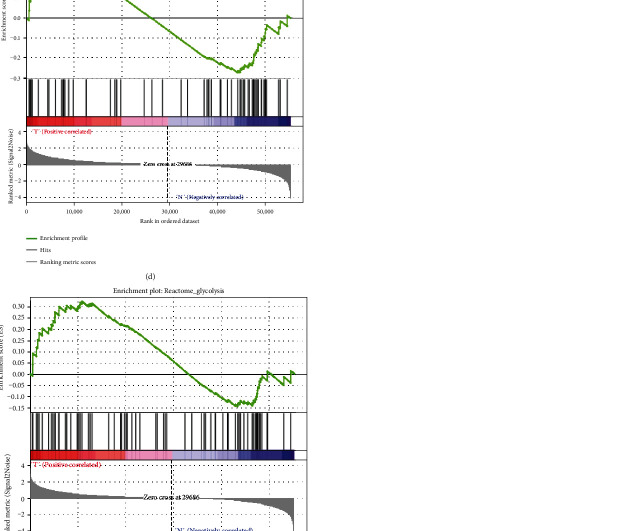
Methods: The relevant data of glioma were downloaded from TCGA and GTEx databases. GSEA of glycolysis-related pathways was carried out, and enriched differential genes were extracted. Screening out prognostic-related genes with conspicuous significance and construction of the prognostic model were conducted by multivariate Cox regression analysis and Lasso regression analysis. The model was evaluated, and cBioPortal was used to analyze the mutation of the model gene. The expression of the model gene in tumor and normal colon tissue was analyzed. The model was used to evaluate the prognosis of patients in different groups to verify the applicability of the model.
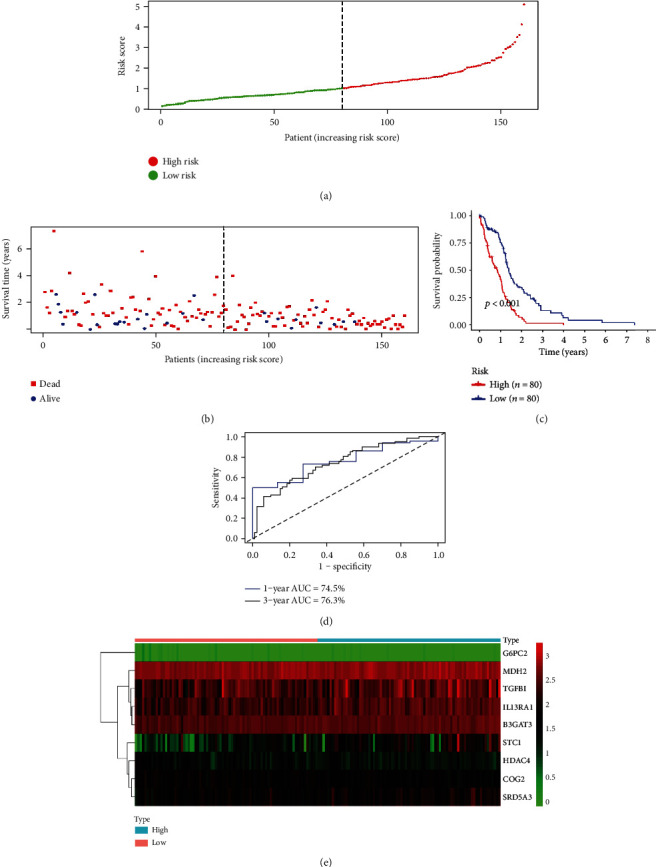
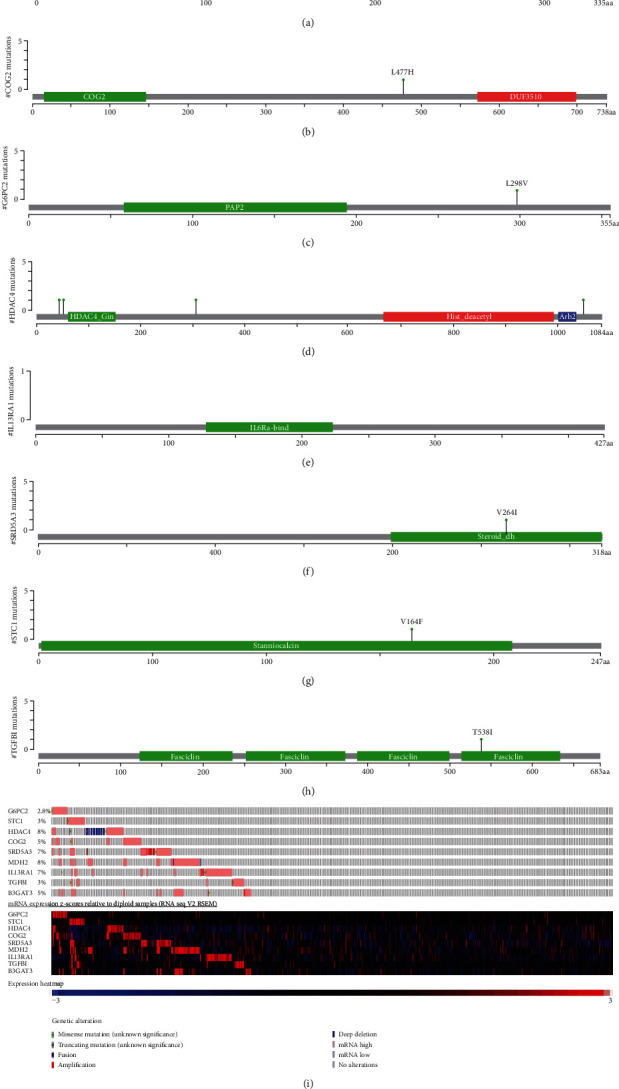
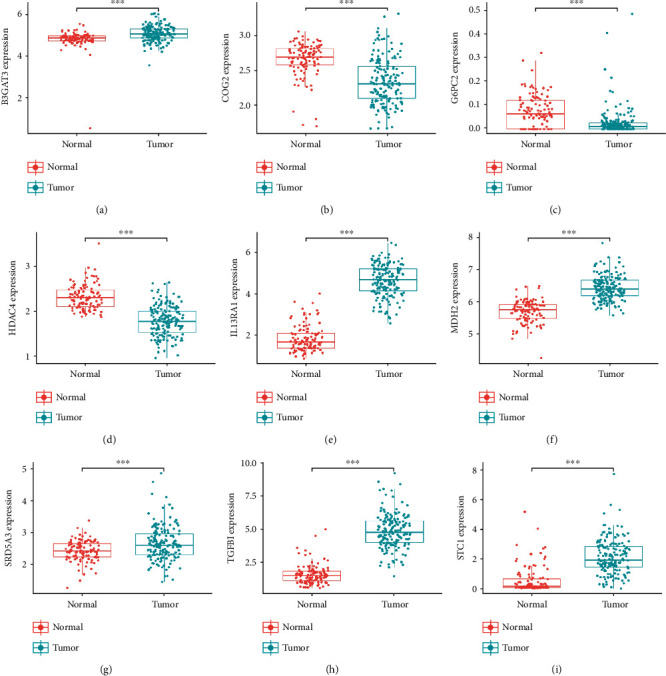
Results: 339 differentially glycolytic-related genes were enriched in REACTOME_GLYCOLYSIS, GLYCOLYTIC_PROCESS, HALLMARK_GLYCOLYSIS, and other pathways. We obtained 9 key prognostic genes and constructed the prognostic evaluation model. The 3-year AUC values of the ROC curve display model are greater than 0.75, which indicates that the accuracy of the model is good. The relation of age and risk score to prognosis is shown by univariate and multivariate Cox analysis. The expression of SRD5A3, MDH2, and B3GAT3 genes was significantly upregulated in the tumor tissues, while the HDAC4 and G6PC2 genes were downregulated. The mutation rate of MDH2 and HDAC4 genes was the highest. This model could effectively distinguish the risk of poor prognosis of patients in any age stage.
Conclusion: The prognostic assessment models based on glycolysis-related nine-gene signature could accurately predict the prognosis of patients with GBM.
Copyright © 2021 Xiao Bingxiang et al.
Conflict of interest statement
There are no conflicts of interest in this study.
Figures


References
-
- Albuquerque L. A., Almeida J. P., de Macêdo Filho L. J., Joaquim A. F., Duffau H. Extent of resection in diffuse low-grade gliomas and the role of tumor molecular signature-a systematic review of the literature. Neurosurgical Review. 2021;44(3):1371–1389. doi: 10.1007/s10143-020-01362-8. - DOI - PubMed
Publication types
MeSH terms
Substances
LinkOut - more resources
Full Text Sources
Medical
Miscellaneous
