


Educational theory and its application to advanced life support courses: a narrative review
- PMID: 34223327
- PMCID: PMC8244342
- DOI: 10.1016/j.resplu.2020.100053
Educational theory and its application to advanced life support courses: a narrative review
Abstract
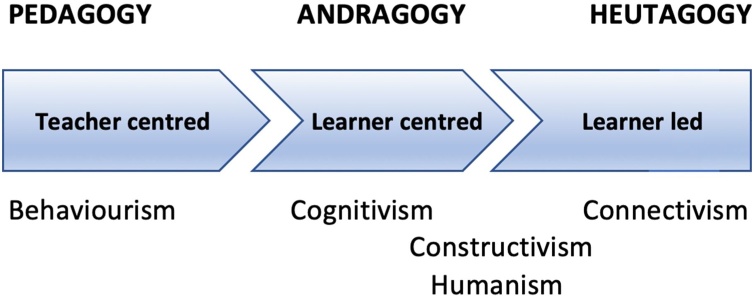
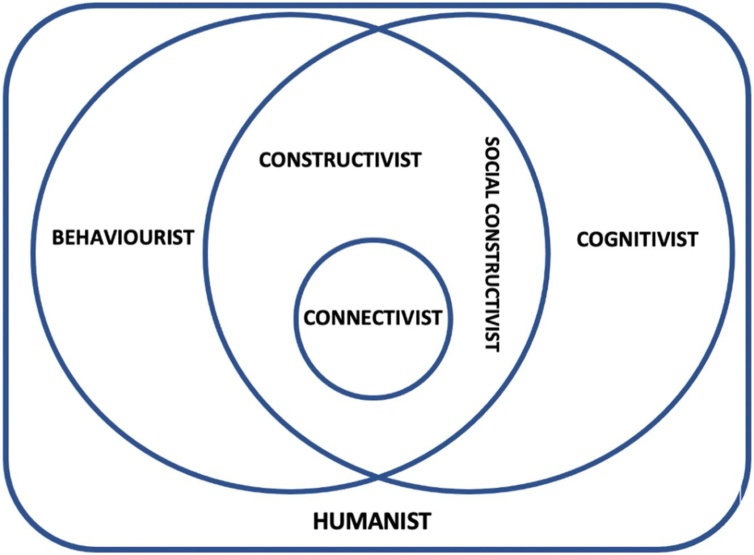
The knowledge, skills and attitudes taught on Advanced Life Support (ALS) courses are an important learning requirement for healthcare professionals who are involved with the care of acutely unwell patients. It is essential that the course design and delivery is appropriately planned to ensure that it optimises the learning opportunities for all learners. This paper offers a narrative review of how the application of educational theory has positively influenced the evolution of ALS courses since their inception in the late twentieth century. By embracing and understanding the relevant educational theories, the ALS course design has transformed from a predominantly lecture-based and behaviourist approach, to a more participative and social constructivist approach to learning. In addition, the advent of smarter technology and the challenges posed by the COVID-19 pandemic have facilitated a more connectivist approach to learning. It can therefore be demonstrated that the ALS course is influenced by a combination of theoretical approaches and provides a diverse framework of teaching and learning strategies that cater for many individual learning styles. Any further evolution and development of the course should be based upon contemporary educational theory to ensure that it remains fit for purpose.
Keywords: Advanced life support; Education; educational theory.
© 2020 The Author(s).
Figures
References
-
- Khalil M.K., Elkhider I.A. Applying learning theories and instructional design models for effective instruction. Adv Physiol Educ. 2016;40(2):147–156. - PubMed
-
- Rees C.E., Monrouxe L.V. Theory in medical education research: how do we get there? Med Educ. 2010;44(4):334–339. - PubMed
-
- Baskett P. Progress of the advanced life support courses in Europe and beyond. Resuscitation. 2004;62(3):311–313. - PubMed
Publication types
LinkOut - more resources
Full Text Sources
Miscellaneous
