


A review of ECMO for cardiac arrest
- PMID: 34223349
- PMCID: PMC8244483
- DOI: 10.1016/j.resplu.2021.100083
A review of ECMO for cardiac arrest
Abstract
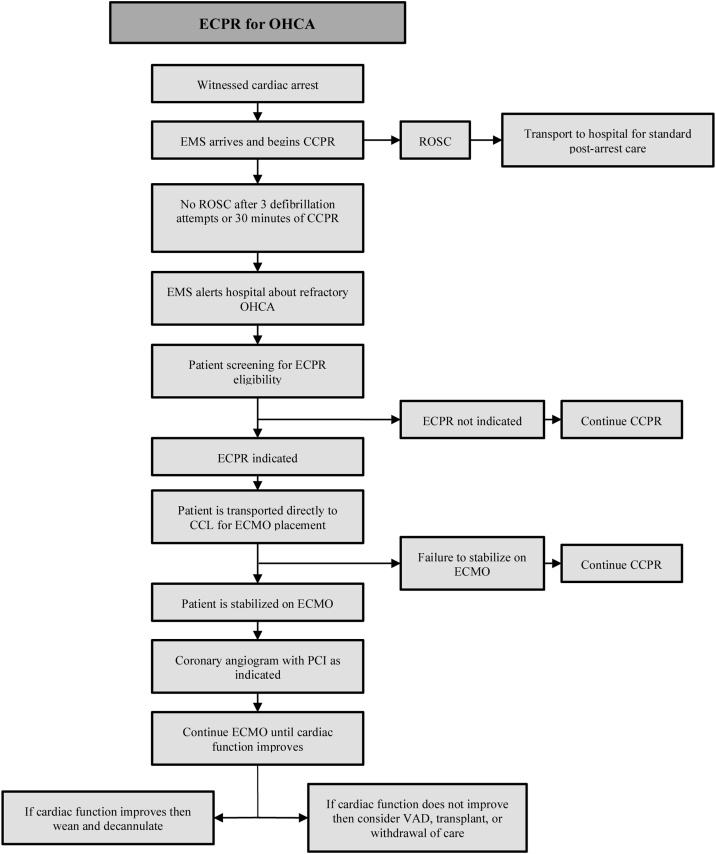
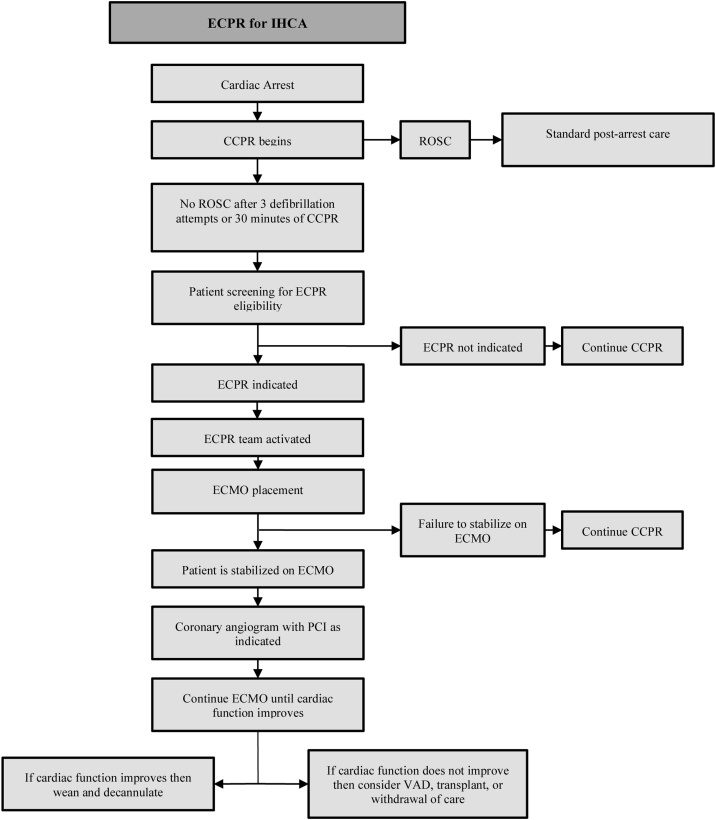
Cardiac arrest is an important public health concern, affecting an estimated 356,500 people in the out-of-hospital setting and 209,000 people in the in-hospital setting each year. The causes of cardiac arrest include acute coronary syndromes, pulmonary embolism, dyskalemia, respiratory failure, hypovolemia, sepsis, and poisoning among many others. In order to tackle the enormous issue of high mortality among sufferers of cardiac arrest, ongoing research has been seeking improved treatment protocols and novel therapies. One of the mechanical devices that has been increasingly utilized for cardiac arrest is venoarterial extracorporeal membrane oxygenation (VA-ECMO). Presently there is only one published randomized controlled trial examining the use of VA-ECMO as part of cardiopulmonary resuscitation (CPR), a process referred to as extracorporeal cardiopulmonary resuscitation (ECPR). Recently there has been significant progress in providing ECPR for refractory cardiac arrest patients. This narrative review seeks to outline the use of ECPR for both in-hospital and out-of-hospital cardiac arrest, as well as provide information on the expected outcomes associated with its use.
Keywords: COVID-19; Cardiac arrest; ECMO; ECPR; Extracorporeal cardiopulmonary resuscitation; Extracorporeal membrane oxygenation.
© 2021 The Author(s).
Figures
References
-
- Cummins R.O., Chamberlain D.A., Abramson N.S. Recommended guidelines for uniform reporting of data from out-of-hospital cardiac arrest: the utstein style. A statement for health professionals from a task force of the American heart association, the European resuscitation council, the heart and stroke foundation of Canada, and the Australian resuscitation council. Circulation (New York, N.Y.). 1991;84(2):960–975. doi: 10.1161/01.cir.84.2.960. https://search.datacite.org/works/10.1161/01.cir.84.2.960 - DOI - PubMed
-
- Benjamin E.J., Blaha M.J., Chiuve S.E. Heart disease and stroke Statistics—2017 update: a report from the American heart association. Circulation (New York, N.Y.). 2017;135(10):e146–e603. doi: 10.1161/cir.0000000000000485. https://search.datacite.org/works/10.1161/cir.0000000000000485 - DOI - PMC - PubMed
-
- Singer DJ, Weingart S, Strayer RJ. Resuscitation and Stabilization. In: Oropello JM, Pastores SM, Kvetan V. Critical Care. McGraw-Hill; Accessed June 07, 2020. https://accessmedicine-mhmedical-com.ezproxy2.library.arizona.edu/conten....
-
- Panchal A., Berg K., Hirsch K. 2019 American heart association focused update on advanced cardiovascular life support: use of advanced airways, vasopressors, and extracorporeal cardiopulmonary resuscitation during cardiac arrest: an update to the american heart association guidelines for cardiopulmonary resuscitation and emergency cardiovascular care. Circulation. 2019;140(24):e881–e894. doi: 10.1161/CIR.0000000000000732. https://search.proquest.com/docview/2314568917 - DOI - PubMed
Publication types
LinkOut - more resources
Full Text Sources
