


Isothermal recombinase polymerase amplification-lateral flow detection of SARS-CoV-2, the etiological agent of COVID-19
- PMID: 34224752
- PMCID: PMC8249690
- DOI: 10.1016/j.jviromet.2021.114227
Isothermal recombinase polymerase amplification-lateral flow detection of SARS-CoV-2, the etiological agent of COVID-19
Abstract
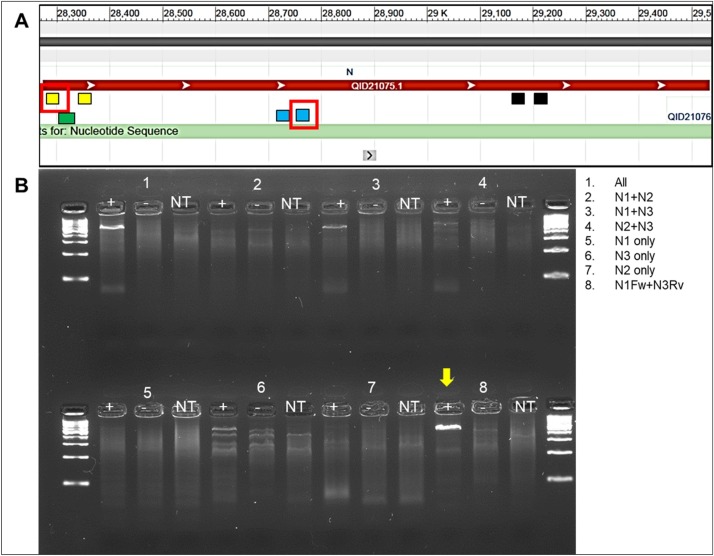
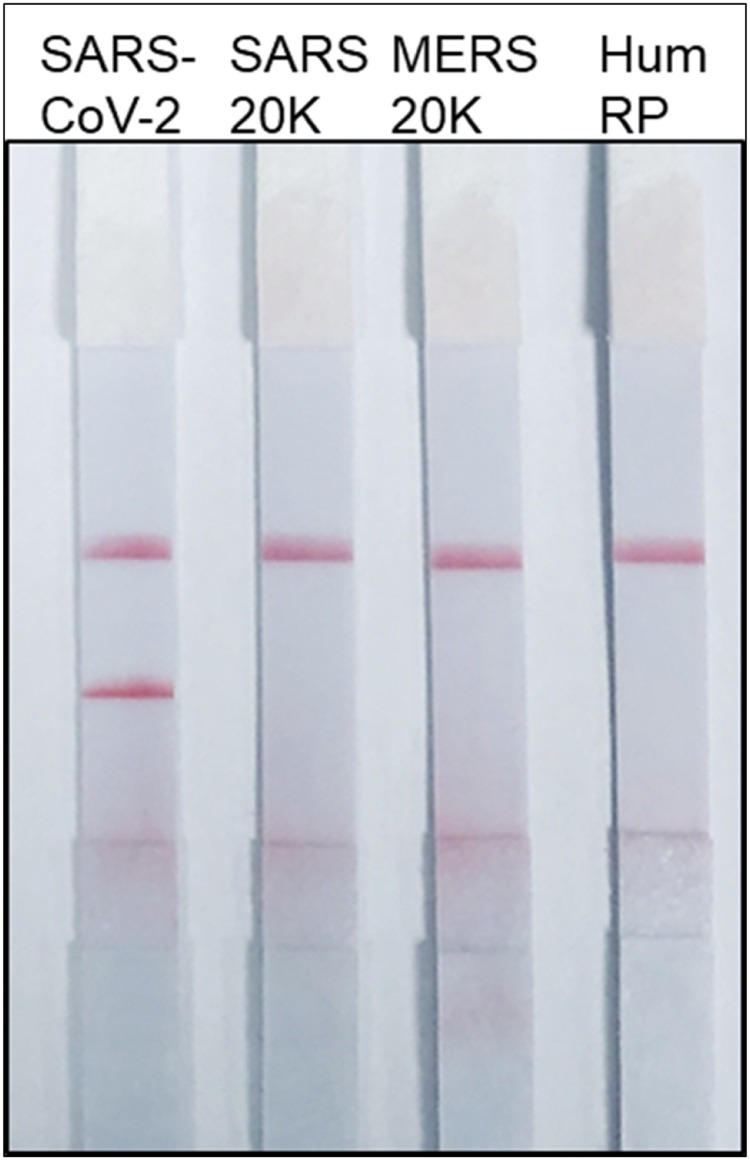
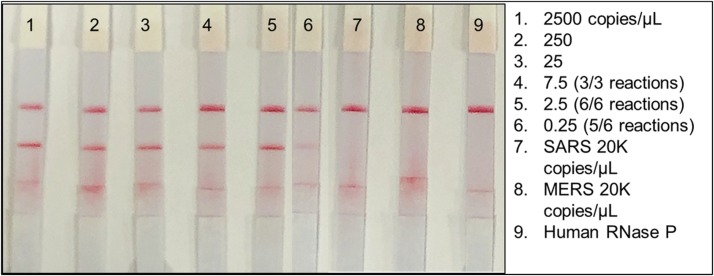
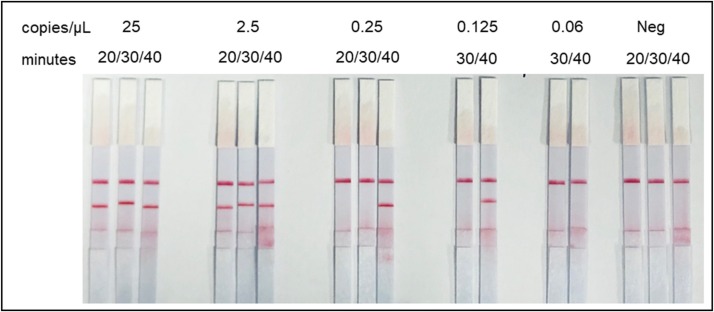
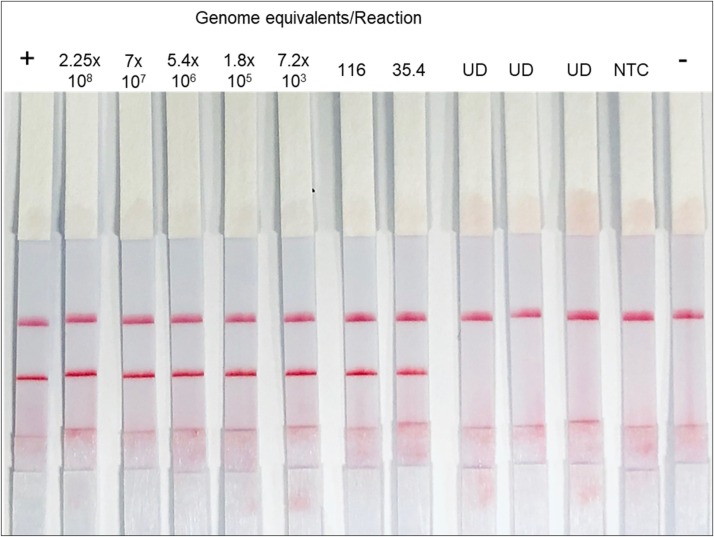
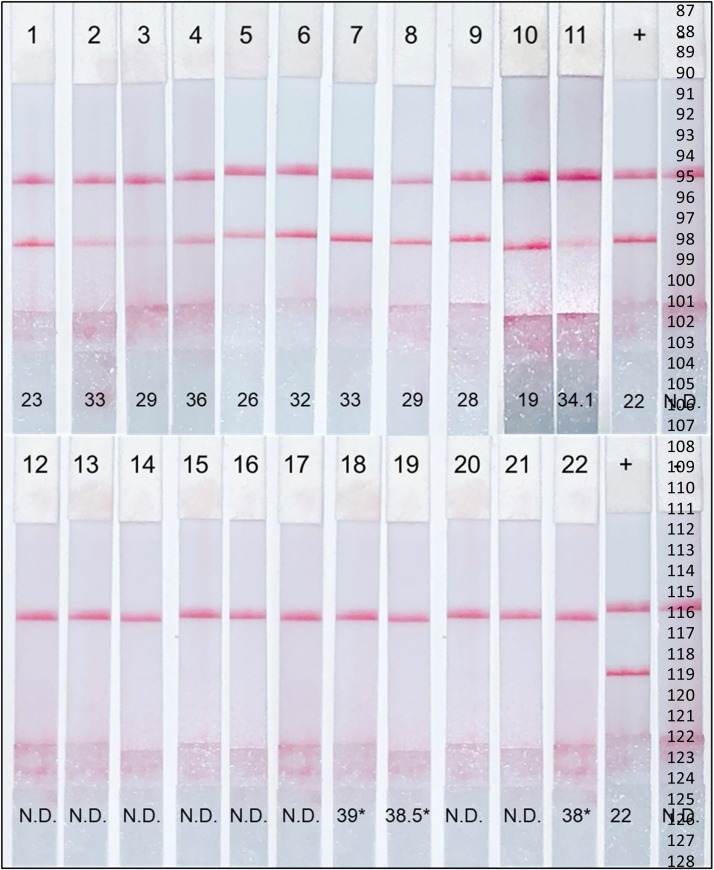
The rapid detection of novel pathogens including SARS-CoV-2 necessitates the development of easy-to-use diagnostic tests that can be readily adapted and utilized in both clinical laboratories and field settings. Delay in diagnosis has facilitated the rapid spread of this novel virus throughout the world resulting in global mortality that will surpass 2.5 million people. Development of point-of-care diagnostic assays that can be performed in rural or decentralized health care centers to expand testing capacity is needed. We developed a qualitative test based on recombinase-polymerase-amplification coupled with lateral flow reading (RPA-LF) for rapid detection of SARS-CoV-2. The RPA-LF detected SARS-CoV-2 with a limit of detection of 35.4 viral cDNA nucleocapsid (N) gene copies/μL. Additionally, the RPA-LF was able to detect 0.25-2.5 copies/μL of SARS-CoV-2 N gene containing plasmid. We evaluated 37 nasopharyngeal samples using CDC's N3, N1 and N2 RT-real-time PCR assays for SARS-CoV-2 as reference test. We found a 100 % concordance between RPA-LF and RT-qPCR reference test as determined by 18/18 positive and 19/19 negative samples. All positive samples had Ct values between 19-37 by RT-qPCR. The RPA-LF primers and probe did not cross react with other relevant betacoronaviruses such as SARS and MERS. This is the first isothermal amplification test paired with lateral flow developed for qualitative detection of COVID-19 allowing rapid viral detection and with prospective applicability in resource limited and decentralized laboratories.
Keywords: Coronavirus; Diagnostics; Lateral flow; Point-of-care; RPA; SARS-CoV-2.
Published by Elsevier B.V.
Conflict of interest statement
The authors declare that they have no known competing financial interests or personal relationships that could have appeared to influence the work reported in this paper.
Figures
References
-
- Castellanos-Gonzalez A., Saldarriaga O.A., Tartaglino L., Gacek R., Temple E., Sparks H., et al. A novel molecular test to diagnose canine visceral leishmaniasis at the point of care. Am. J. Trop. Med. Hyg. 2015;93(5):970–975. doi: 10.4269/ajtmh.15-0145. Epub 2015/08/03. PubMed PMID: 26240156; PubMed Central PMCID: PMC4703275. - DOI - PMC - PubMed
-
- Control CoD . 2020. Research Use Only 2019-Novel Coronavirus (2019-nCoV) Real-time RT-PCR Primers and Probes.https://www.cdc.gov/coronavirus/2019-ncov/downloads/rt-pcr-panel-primer-... [cited 2020]. Available from:
-
- Dinnes J., Deeks J.J., Adriano A., Berhane S., Davenport C., Dittrich S., et al. Rapid, point-of-care antigen and molecular-based tests for diagnosis of SARS-CoV-2 infection. Cochrane Database Syst. Rev. 2020;8 doi: 10.1002/14651858.CD013705. Epub 2020/08/26. PubMed PMID: 32845525; PubMed Central PMCID: PMC8078202. - DOI - PMC - PubMed
-
- Fowler V.L., Armson B., Gonzales J.L., Wise E.L., Howson E.L.A., Vincent-Mistiaen Z., et al. A highly effective reverse-transcription loop-mediated isothermal amplification (RT-LAMP) assay for the rapid detection of SARS-CoV-2 infection. J. Infect. 2021;82(1):117–125. doi: 10.1016/j.jinf.2020.10.039. Epub 2020/11/30. PubMed PMID: 33271166; PubMed Central PMCID: PMC7703389. - DOI - PMC - PubMed
MeSH terms
Substances
LinkOut - more resources
Full Text Sources
Medical
Miscellaneous
