


Refining determinants of associations of visit-to-visit blood pressure variability with cardiovascular risk: results from the Action to Control Cardiovascular Risk in Diabetes Trial
- PMID: 34232160
- PMCID: PMC8500916
- DOI: 10.1097/HJH.0000000000002931
Refining determinants of associations of visit-to-visit blood pressure variability with cardiovascular risk: results from the Action to Control Cardiovascular Risk in Diabetes Trial
Abstract
Objectives: As there is uncertainty about the extent to which baseline blood pressure level or cardiovascular risk modifies the relationship between blood pressure variability (BPv) and cardiovascular disease, we comprehensively examined the role of BPv in cardiovascular disease risk in the Action to Control Cardiovascular Risk in Diabetes (ACCORD) Trial.
Methods: Using data from ACCORD, we examined the relationship of BPv with development of the primary CVD outcome, major coronary heart disease (CHD), and total stroke using time-dependent Cox proportional hazards models.
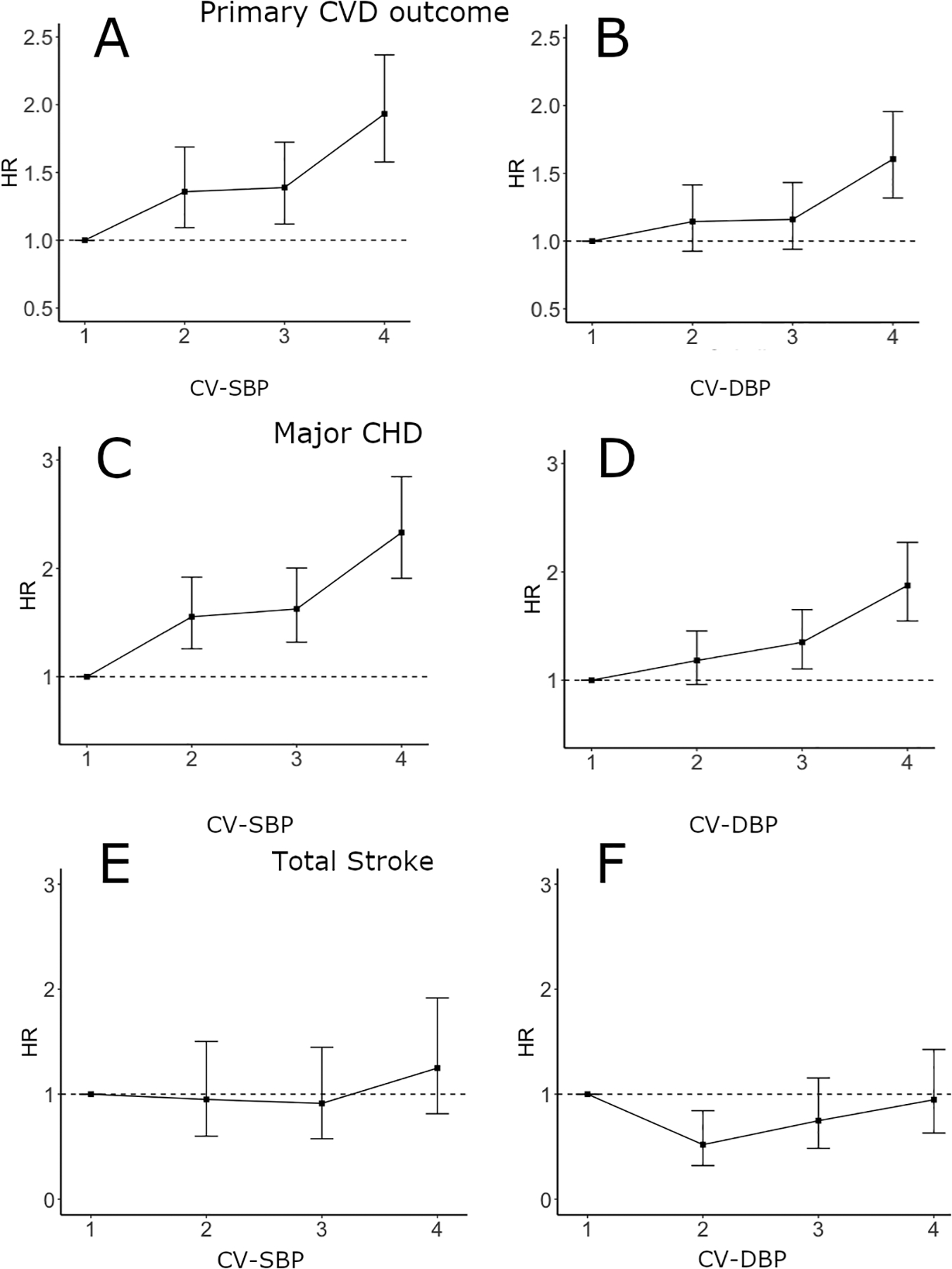
Results: BPv was associated with the primary CVD outcome and major CHD but not stroke. The positive association with the primary CVD outcome and major CHD was more pronounced in low and high strata of baseline SBP (<120 and >140 mmHg) and DBP (<70 and >80 mmHg). The effect of BPv on CVD and CHD was more pronounced in those with both prior CVD history and low blood pressure. Dips, not elevations, in blood pressure appeared to drive these associations. The relationships were generally not attenuated by adjustment for mean blood pressure, medication adherence, or baseline comorbidities. A sensitivity analysis using CVD events from the long-term posttrial follow-up (ACCORDION) was consistent with the results from ACCORD.
Conclusion: In ACCORD, the effect of BPv on adverse cardiovascular (but not cerebrovascular) outcomes is modified by baseline blood pressure and prior CVD. Recognizing these more nuanced relationships may help improve risk stratification and blood pressure management decisions as well as provide insight into potential underlying mechanisms.
Copyright © 2021 Wolters Kluwer Health, Inc. All rights reserved.
Conflict of interest statement
Conflicts of interest
The authors report no relevant financial conflicts of interest.
Figures
References
Publication types
MeSH terms
Grants and funding
LinkOut - more resources
Full Text Sources
Medical
Research Materials
