


Exposure to Nicotine Vapor Produced by an Electronic Nicotine Delivery System Causes Short-Term Increases in Impulsive Choice in Adult Male Rats
- PMID: 34232312
- PMCID: PMC8842403
- DOI: 10.1093/ntr/ntab141
Exposure to Nicotine Vapor Produced by an Electronic Nicotine Delivery System Causes Short-Term Increases in Impulsive Choice in Adult Male Rats
Abstract
Introduction: Traditional cigarette use influences cost-benefit decision making by promoting impulsive choice. However, the impact of nicotine exposure via electronic nicotine delivery systems on impulsivity remains unclear. Hence, the present study examined the short- and long-term effects of nicotine vapor on impulsive choice.
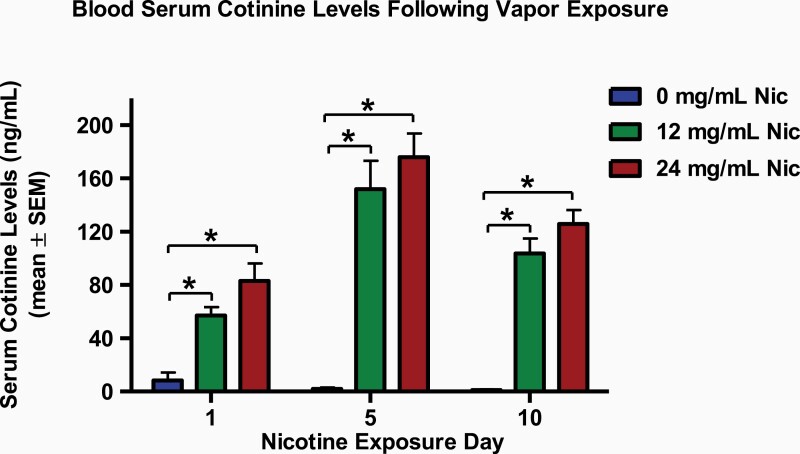
Methods: Twenty-four adult male rats were trained in the delay discounting task to choose between small immediate food rewards and large delayed food rewards. After 24 days of training in the task rats were exposed to vapor containing either 0, 12, or 24 mg/mL of nicotine for 10 days. To validate inhalation of nicotine vapor serum cotinine levels were analyzed on exposure days 1, 5, and 10 using enzyme-linked immunosorbent assay. Following vapor exposure, rats were retrained in the discounting task until rats displayed stable responding and the effects of nicotine vapor on choice preference were assessed.
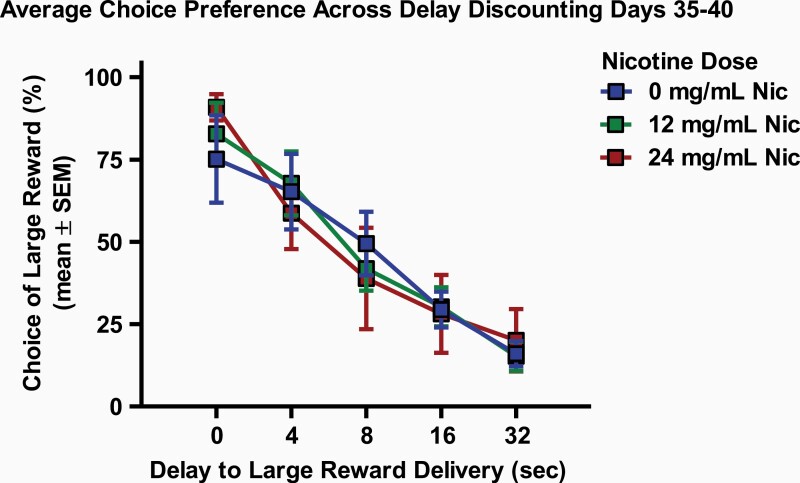
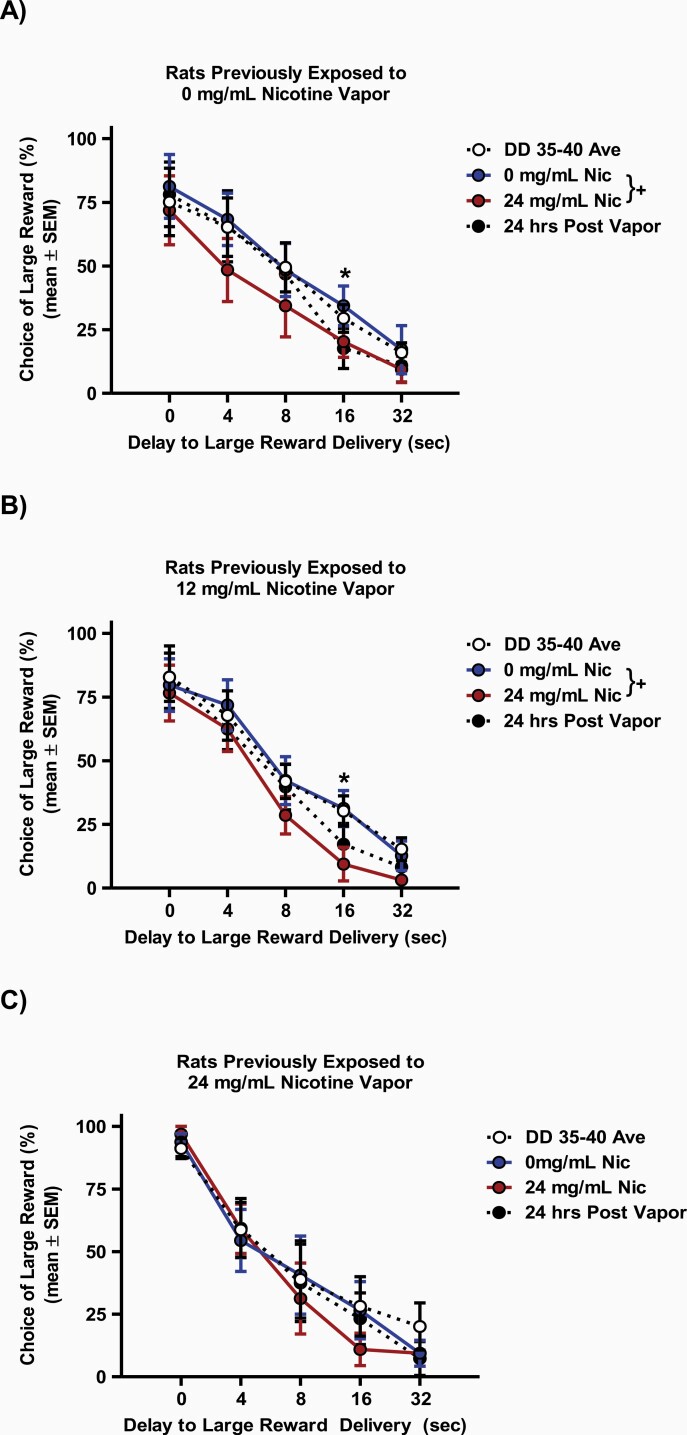
Results: Rats exposed to 12 and 24 mg/mL nicotine vapor displayed higher serum cotinine levels than control rats exposed to 0 mg/mL vapor. There were no differences in impulsive choice between any vapor exposure groups when tested 15 days after exposure, across 6 days of stable responding, suggesting that nicotine vapor does not have long lasting effects on impulsive choice. Interestingly, a subsequent nicotine vapor challenge revealed short-term increases in impulsive choice immediately following a single exposure to 24 mg/mL nicotine vapor, relative to choice preference immediately following exposure to 0 mg/mL vapor.
Conclusions: These results suggest that exposure to nicotine vapor causes immediate, short-term increases in impulsive choice.
Implications: E-cigarette use is increasing at an alarming rate, particularly among adolescents and young adults. This is concerning given the lack of research into the effects of nicotine vapor exposure on the brain and behavior. The present study describes a viable rodent model of human e-cigarette use and suggests that exposure to nicotine vapor produces short-term increases in impulsive choice.
© The Author(s) 2021. Published by Oxford University Press on behalf of the Society for Research on Nicotine and Tobacco. All rights reserved. For permissions, please e-mail: journals.permissions@oup.com.
Figures
References
-
- Aşçioglu M, Dolu N, Gölgeli A, Süer C, Ozesmi C. Effects of cigarette smoking on cognitive processing. Int J Neurosci. 2004;114(3):381–390. - PubMed
-
- Dani JA, Harris RA. Nicotine addiction and comorbidity with alcohol abuse and mental illness. Nat Neurosci. 2005;8(11):1465–1470. - PubMed
-
- Mansvelder HD, McGehee DS. Cellular and synaptic mechanisms of nicotine addiction. J Neurobiol. 2002;53(4):606–617. - PubMed
Publication types
MeSH terms
Substances
Grants and funding
LinkOut - more resources
Full Text Sources
Medical
