Evolving outcomes of peritoneal dialysis: secular trends at a single large center over three decades
- PMID: 34233441
- PMCID: PMC8476299
- DOI: 10.23876/j.krcp.21.020
Evolving outcomes of peritoneal dialysis: secular trends at a single large center over three decades
Abstract
Background: Peritoneal dialysis (PD) is improving as a renal replacement therapy for end-stage renal disease (ESRD) patients. We analyzed the main outcomes of PD over the last three decades at a single large-scale PD center with an established high-quality care system.
Methods: As a retrospective cohort study, we included participants (n = 1,203) who began PD between 1990 and 2019. Major PD-related outcomes were compared among the three 10-year cohorts.
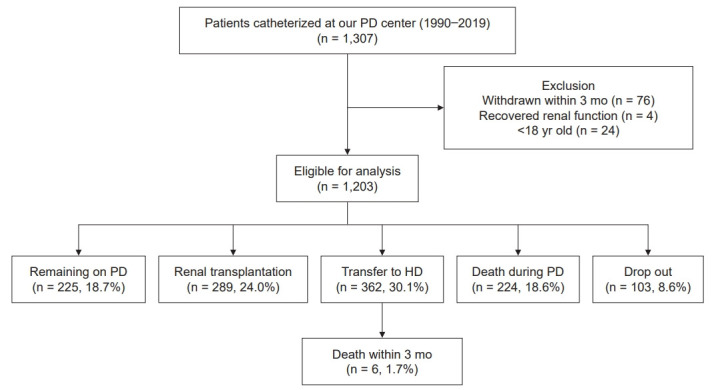
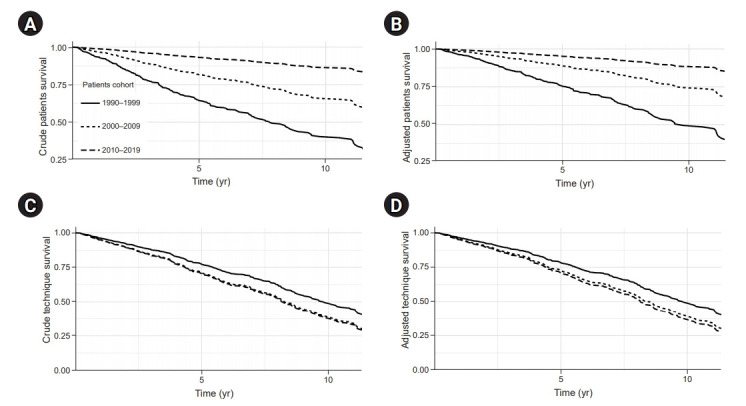
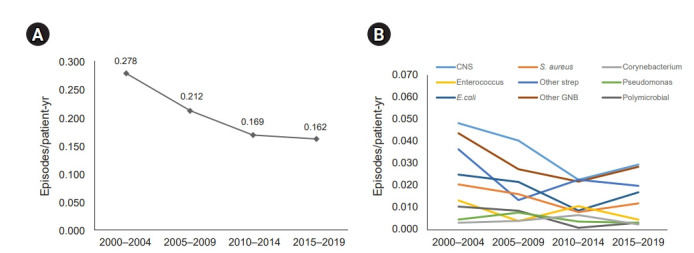
Results: The 1,203 participants were 58.3% male with a mean age of 47.9 ± 13.8 years. The median PD treatment duration was 45 months (interquartile range, 19-77 months); 362 patients (30.1%) transferred to hemodialysis, 289 (24.0%) received kidney transplants, and 224 (18.6%) died. Overall, the 5- and 8-year adjust patient survival rates were 64% and 49%, respectively. Common causes of death included infection (n = 55), cardiac (n = 38), and cerebrovascular (n = 17) events. The 5- and 8-year technique survival rates were 77% and 62%, respectively, with common causes of technique failure being infection (42.3%) and solute/water clearance problems (22.7%). The 5-year patient survival significantly improved over time (64% for the 1990-1999 cohort vs. 93% for the 2010-2019 cohort). The peritonitis rate also substantially decreased over time, from 0.278 episodes/patient-year (2000-2004) to 0.162 episodes/patient-year (2015-2019).
Conclusion: PD is an effective treatment option for ESRD patients. There was a substantial improvement in the patient survival and peritonitis rates over time. Establishing adequate infrastructure and an effective system for high-quality PD therapy may be warranted to improve PD outcomes.
Keywords: Peritoneal dialysis; Peritonitis; Survival; Technique failure.
Conflict of interest statement
Kook-Hwan Oh reports grants from Fresenius Medical Care, Korea and Baxter, Korea. The other authors have no conflicts of interest to declare.
Figures
References
-
- Bello AK, Levin A, Lunney M, et al. Status of care for end stage kidney disease in countries and regions worldwide: international cross sectional survey. BMJ. 2019;367:l5873. - PubMed
-
- Korevaar JC, Feith GW, Dekker FW, et al. Effect of starting with hemodialysis compared with peritoneal dialysis in patients new on dialysis treatment: a randomized controlled trial. Kidney Int. 2003;64:2222–2228. - PubMed
-
- Heaf JG, Løkkegaard H, Madsen M. Initial survival advantage of peritoneal dialysis relative to haemodialysis. Nephrol Dial Transplant. 2002;17:112–117. - PubMed
Grants and funding
LinkOut - more resources
Full Text Sources
Research Materials