


Partial laryngectomy for the management of laryngeal masses in six cats
- PMID: 34236002
- PMCID: PMC10812240
- DOI: 10.1177/1098612X211027488
Partial laryngectomy for the management of laryngeal masses in six cats
Abstract
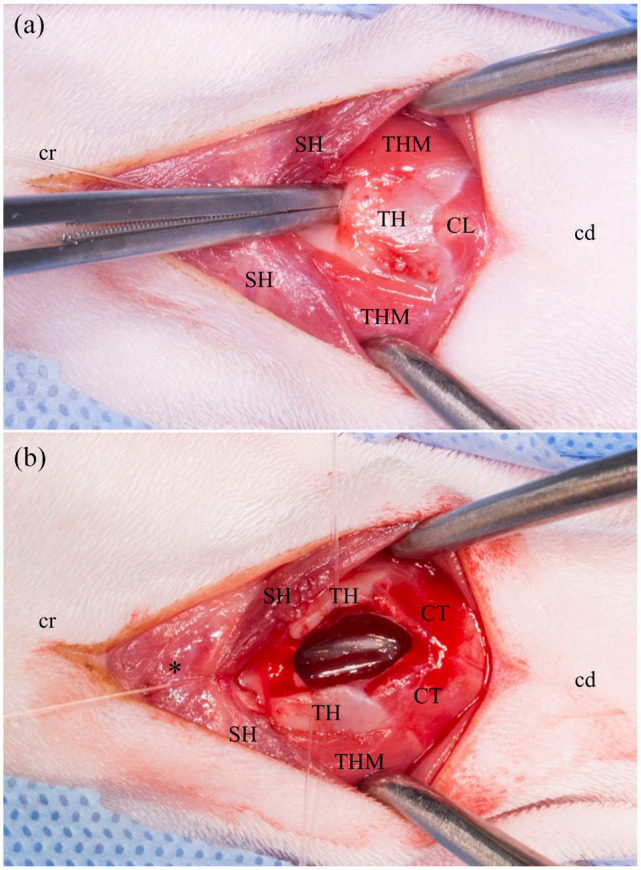
Objectives: Partial laryngectomy is an organ-sparing surgical procedure for the removal of laryngeal masses which has not been described in cats. The aim of this study was to report on the surgical procedure and the short- and long-term clinical outcomes of cats that underwent partial laryngectomy.
Methods: Medical records were retrospectively collected over a 4-year period in two institutions. The following data were retrieved: signalment, history, clinical signs, diagnostic test results, surgical procedure, postoperative management, complications and outcome.
Results: Six cats underwent partial laryngectomy. The most common clinical signs in cats with laryngeal masses were stridor (n = 4) and dyspnoea (n = 4). In all cats, a full-thickness portion of one or several laryngeal cartilages was resected, including thyroid cartilage alone (n = 2), thyroid cartilage and arytenoid (n = 2), and arytenoid cartilage and epiglottis (n = 2). The resected laryngeal masses were reported to be lymphoma (n = 3), carcinoma (n = 1), laryngeal cyst (n = 1) and inflammatory laryngeal disease (n = 1). All cats survived the surgical intervention of partial laryngectomy. Four cats showed varying degrees of respiratory distress in the short-term postoperative period. A temporary tracheostomy tube was placed in two cats. No other postoperative complications were noted in the short- or long-term. Four cats were still alive at the time of writing. These cats survived at least 252 days.
Conclusions and relevance: In a small number of cases, our results show that successful long-term outcomes after partial laryngectomy are achievable, with longer survival times than previously reported. Therefore, partial laryngectomy should be considered as a viable treatment option in cats with laryngeal masses.
Keywords: Partial laryngectomy; laryngeal disease; laryngeal mass; laryngeal neoplasia; larynx.
Conflict of interest statement
The authors declared no potential conflicts of interest with respect to the research, authorship, and/or publication of this article.
Figures



References
-
- Jakubiak MJ, Siedlecki CT, Zenger E, et al. Laryngeal, laryngotracheal, and tracheal masses in cats: 27 cases (1998–2003). J Am Anim Hosp Assoc 2005; 41: 310–316. - PubMed
-
- Tasker S, Foster DJ, Corcoran BM, et al. Obstructive inflammatory laryngeal disease in three cats. J Feline Med Surg 1999; 1: 53–59. - PubMed
-
- Carlisle CH, Biery DN, Thrall DE. Tracheal and laryngeal tumors in the dog and cat: literature review and 13 additional patients. Vet Radiol 1991; 32: 229–235.
-
- Vail DM, Thamm DH, Liptak JM. Withrow & MacEwen’s small animal clinical oncology. 6th ed. St Louis, MO: Elsevier, 2020.
-
- Saik JE, Toll SL, Diters RW, et al. Canine and feline laryngeal neoplasia: a 10-year survey. J Am Anim Hosp Assoc 1986; 22: 359–365.
MeSH terms
LinkOut - more resources
Full Text Sources
Miscellaneous
