Randomized Controlled Trial
. 2021 Jul 8;21(1):281.
doi: 10.1186/s12876-021-01856-9.

Daily, oral FMT for long-term maintenance therapy in ulcerative colitis: results of a single-center, prospective, randomized pilot study

Affiliations
Randomized Controlled Trial

Daily, oral FMT for long-term maintenance therapy in ulcerative colitis: results of a single-center, prospective, randomized pilot study

Jessica W Crothers et al. BMC Gastroenterol. .

Abstract

Background: Fecal microbiota transplantation (FMT) is a promising new strategy in the treatment of Inflammatory Bowel Disease, but long-term delivery systems are lacking. This randomized study was designed as a safety and feasibility study of long-term FMT in subjects with mild to moderate UC using frozen, encapsulated oral FMT (cFMT).

Methods: Subjects were randomized 1:1 to receive FMT induction by colonoscopy, followed by 12 weeks of daily oral administration of frozen encapsulated cFMT or sham therpay. Subjects were followed for 36 weeks and longitudenal clinical assessments included multiple subjective and objective markers of disease severity. Ribosomal 16S bacterial sequencing was used to assess donor-induced changes in the gut microbiota. Changes in T regulatory (Treg) and mucosal associated invariant T (MAIT) cell populations were evaluated by flow cytometry as an exploratory endpoint.

Results: Twelve subjects with active UC were randomized: 6 subjects completed the full 12-week course of FMT plus cFMT, and 6 subjects received sham treatment by colonic installation and longitudinal oral placebo capules. Chronic administration of cFMT was found to be safe and well-tolerated but home storage concerns exist. Protocol adherence was high, and none of the study subjects experienced FMT-associated treatment emergent adverse events. Two subjects that received cFMT achieved clinical remission versus none in the placebo group (95% CI = 0.38-infinity, p = 0.45). cFMT was associated with sustained donor-induced shifts in fecal microbial composition. Changes in MAIT cell cytokine production were observed in cFMT recipients and correlated with treatment response.

Conclusion: These pilot data suggest that daily encapsulated cFMT may extend the durability of index FMT-induced changes in gut bacterial community structure and that an association between MAIT cell cytokine production and clinical response to FMT may exist in UC populations. Oral frozen encapsulated cFMT is a promising FMT delivery system and may be preferred for longterm treatment strategies in UC and other chronic diseases but further evaluations will have to address home storage concerns. Larger trials should be done to explore the benefits of cFMT and to determine its long-term impacts on the colonic microbiome.

Trial registration: ClinicalTrials.gov (NCT02390726). Registered 17 March 2015, https://clinicaltrials.gov/ct2/show/NCT02390726?term=NCT02390726&draw=2&rank=1 .

Keywords: FMT; Fecal microbiota transplantation; IBD; Inflammatory bowel disease; MAIT cells; Microbiome; Microbiota; UC; Ulcerative colitis.


Conflict of interest statement

EJA, ZK and MS are cofounders of OpenBiome and Finch Therapeutics. ZK, MS, RJE, EV are employees of Finch Therapeutics. JWC and PLM consult for Finch Therapeutics. WFW, RJE, EV are employees of OpenBiome. GMM has research funding from Takeda Pharmaceuticals and is on the Scientific Advisory Board of Dignify Therapeutics.

Figures
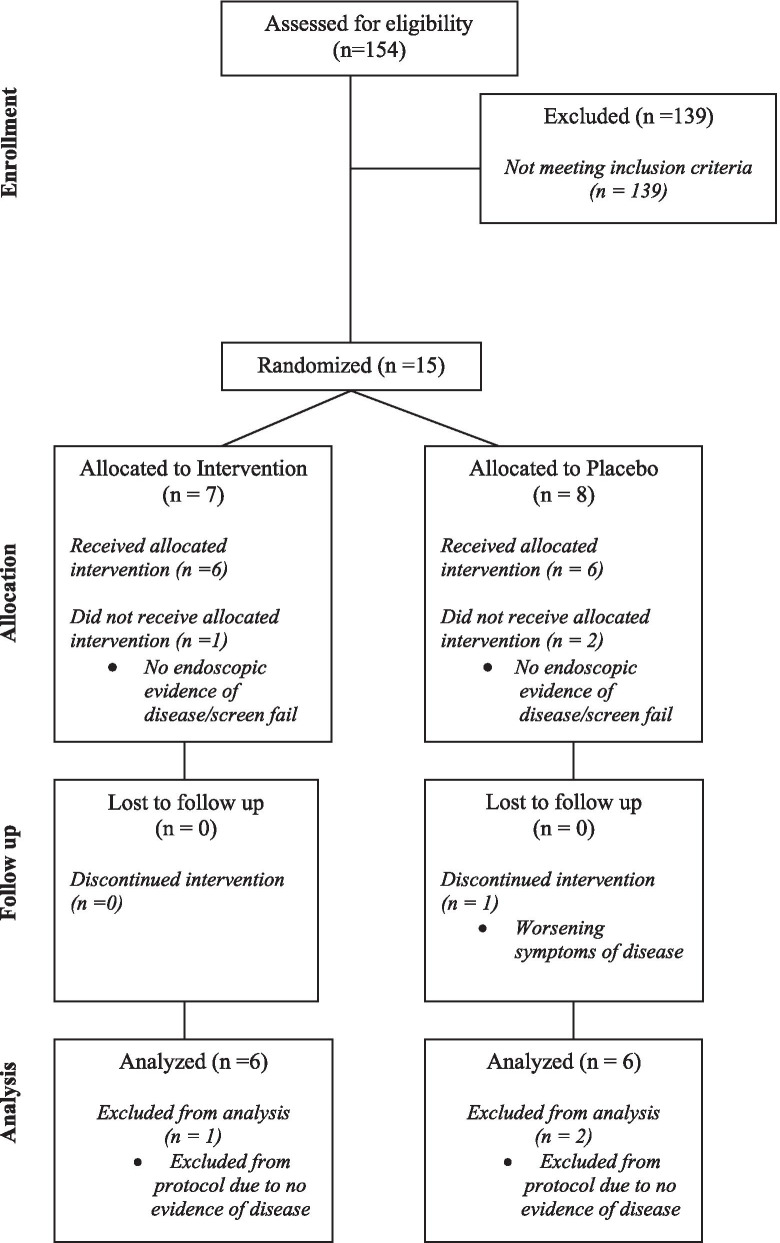
Fig. 1
Fig. 1
CONSORT diagram showing the flow of subjects through the study. Following randomization, but prior to administration of designated intervention, 1 subject in the treatment group and 2 subjects in the placebo group had no evidence of disease upon endoscopic evaluation and were excluded from the remainder of the study
Fig. 2
Fig. 2
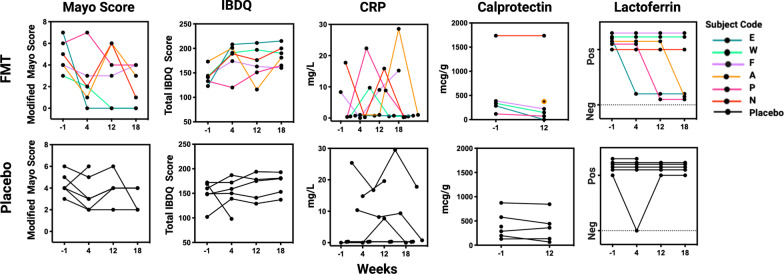
Longitudenal markers of clinical disease and inflammation. Each line represents a single subject over time. Modified Mayo Score includes subject-reported rectal bleeding, stool frequency, and physician global assessment. IBDQ, Inflammatory Bowel Disease Questionairre; CRP, serum C-Reactive Protein (mg/L); Calprotectin (mcg/g) and Lactoferrin (positive/negative) were measured in stool
Fig. 3
Fig. 3
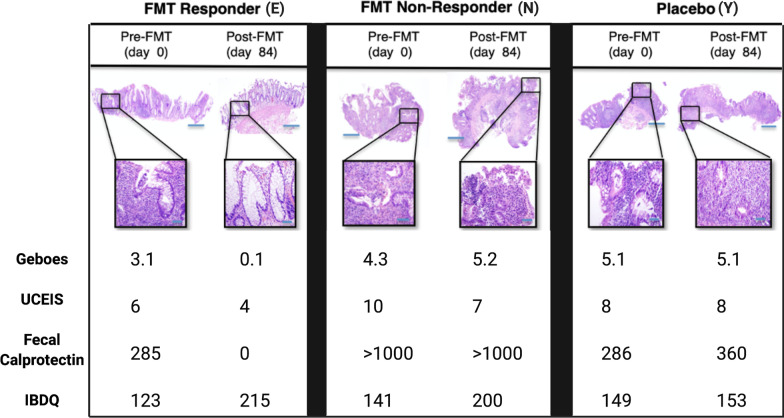
Histologic, endoscopic and clinical parameters of a representative FMT responder (E), non-responder (N), and placebo subject (Y) before and after treatment. Hematoxylin–eosin staining of intestinal mucosa highlight acute and chronic changes and are accompanied by Geboes score (0, structural change only; 1, chronic inflammation; 2, lamina propria neutrophils; 3, neutrophils in epithelium; 4, crypt destruction; and 5, erosions or ulcers), 2x, insets at 20x, scale bar, 50 µm; UCEIS, Ulcerative Colitis Endoscopic Index of Severity; fecal calprotectin (mcg/g), and IBDQ, inflammatory bowel disease questionnaire (scale ranging from 32 (worst) to 224 (best))
Fig. 4
Fig. 4
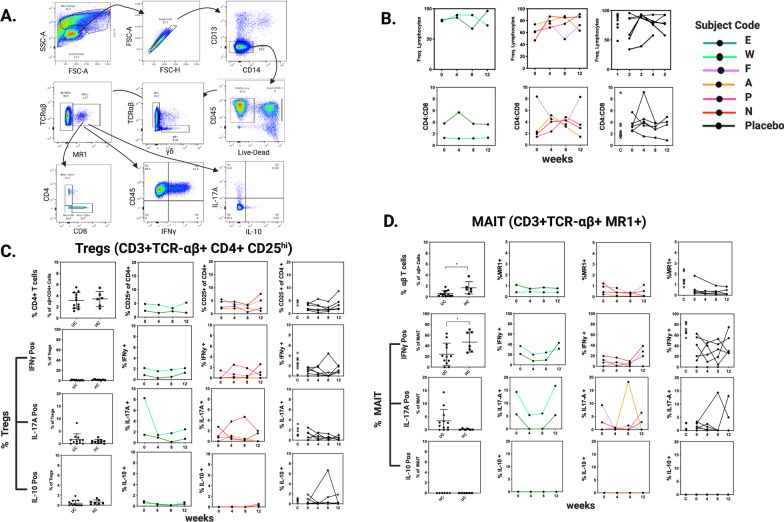
Longitudinal T cell profiling of subjects by flow cytometry and intracellular cytokine staining. a Representative gating scheme showing MAIT cell identification and their cytokine production; b Frequency of total lymphocytes within peripheral blood mononuclear cell isolations and their CD4:CD8 T cell ratios. c, d Comparison of T regulatory and MAIT cell frequencies between UC patients and healthy controls (HC) with longitudinal frequencies and INFγ+, IL-17A+, and IL-10+ proportions displayed by treatment group and clinical response (black, placebo; red, non-responser; green, responser). Each line is an individual subject. Controls are displayed with placebo results (C). Between-group comparisons were conducted using two-sample t tests and p values < 0.05 considered significant
Fig. 5
Fig. 5
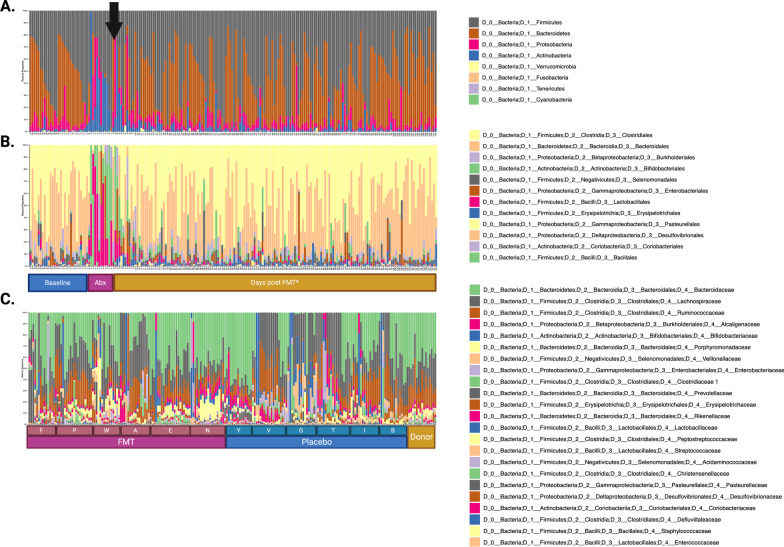
Relative abundance of fecal microbiota in subjects with ulcerative colitis (UC) before and after treatment at the phylum and genus levels. Different colors represent different bacterial species, each bar represents one patient sample. a, b. most abundant taxa by phylum and genus level, respectively. Arrow denotes day of FMT (*or placebo); c 23 most abundant taxa of donors and subject at species level, arranged by subject, treatment group, and day
Fig. 6
Fig. 6
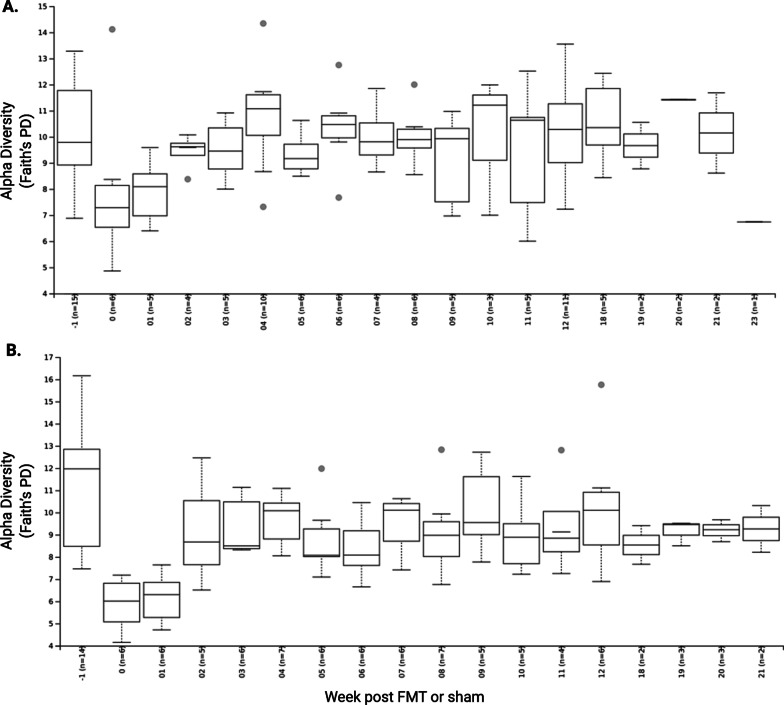
Alpha diversity measured by Shannon index. a alpha diversity in placebo subjects grouped by week; b alpha diversity in FMT subjects grouped by week. Comparisons between groups made by Student’s t-test and p values of < 0.05 were considered significant
Fig. 7
Fig. 7
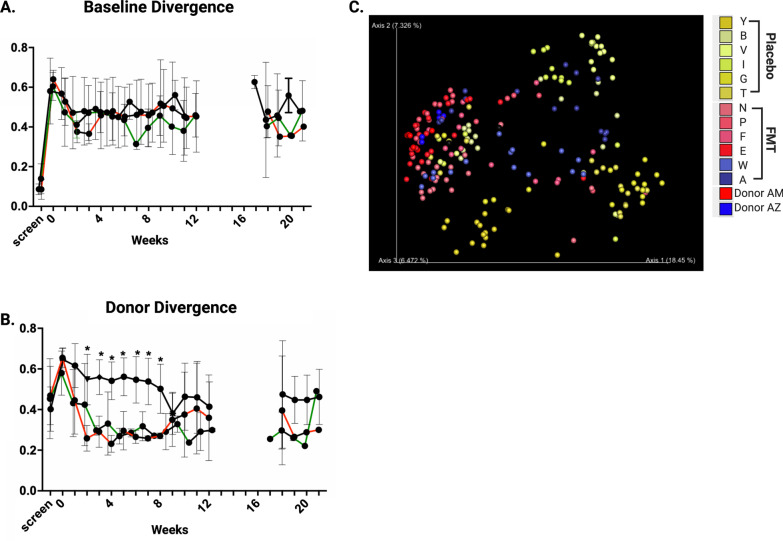
Beta diversity measured by Jenson-Shannon diversity. a Beta diversity comparing subjects to their own baseline overtime; b Beta diversity comparing subjects to donors. Aggregate data is presented by treatment and clinical response (black, placebo; red, non-responder; green, responder). Comparisons between groups made by Student’s t-test and p values of < 0.05 were considered significant; c Principle component analysis of donors and study subjects. Each dot represents one sample, and subjects are colored by the treatment group (yellow shades represent placebo, blue and red represent primary donor)

References

    1. Cammarota G, Ianiro G, Cianci R, Bibbò S, Gasbarrini A, Currò D. The involvement of gut microbiota in inflammatory bowel disease pathogenesis: potential for therapy. Pharmacol Therap. 2015;149:191–212. doi: 10.1016/j.pharmthera.2014.12.006. - DOI - PubMed
    1. Sartor RB. Microbial influences in inflammatory bowel diseases. Gastroenterology. 2008;134:577–594. doi: 10.1053/j.gastro.2007.11.059. - DOI - PubMed
    1. Ott SJ, Musfeldt M, Wenderoth DF, Hampe J, Brant O, Fölsch UR, Timmis KN, Schreiber S. Reduction in diversity of the colonic mucosa associated bacterial microflora in patients with active inflammatory bowel disease. Gut. 2004;53:685–693. doi: 10.1136/gut.2003.025403. - DOI - PMC - PubMed
    1. Frank DN, Amand ALS, Feldman RA, Boedeker EC, Harpaz N, Pace NR. Molecular-phylogenetic characterization of microbial community imbalances in human inflammatory bowel diseases. Proc Natl Acad Sci USA. 2007;104:13780–13785. doi: 10.1073/pnas.0706625104. - DOI - PMC - PubMed
    1. Yu H, MacIsaac D, Wong JJ, Sellers ZM, Wren AA, Bensen R, Kin C, Park KT. Market share and costs of biologic therapies for inflammatory bowel disease in the USA. Aliment Pharm Therap. 2017;47:364–370. doi: 10.1111/apt.14430. - DOI - PMC - PubMed

Publication types

Associated data