


Reducing Influenza Virus Transmission: The Potential Value of Antiviral Treatment
- PMID: 34245250
- PMCID: PMC8834654
- DOI: 10.1093/cid/ciab625
Reducing Influenza Virus Transmission: The Potential Value of Antiviral Treatment
Abstract
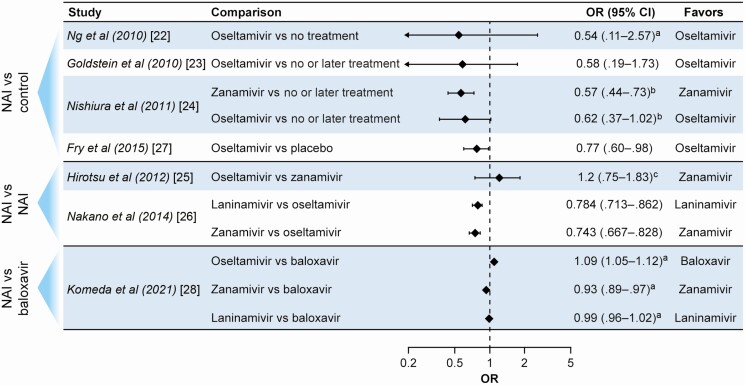
Prompt antiviral treatment has the potential to reduce influenza virus transmission to close contacts, but rigorous data on the magnitude of treatment effects on transmission are limited. Animal model data indicate that rapid reductions in viral replication after antiviral treatment reduce the risk of transmission. Observational and clinical trial data with oseltamivir and other neuraminidase inhibitors indicate that prompt treatment of household index patients seems to reduce the risk of illness in contacts, although the magnitude of the reported effects has varied widely across studies. In addition, the potential risk of transmitting drug-resistant variants exists with all approved classes of influenza antivirals. A controlled trial examining baloxavir treatment efficacy to reduce transmission, including the risk of transmitting virus with reduced baloxavir susceptibility, is currently in progress. If reduced transmission risk is confirmed, modeling studies indicate that early treatment could have major epidemiologic benefits in seasonal and pandemic influenza.
Keywords: antiviral; baloxavir; influenza; oseltamivir; transmission.
© The Author(s) 2021. Published by Oxford University Press for the Infectious Diseases Society of America.
Figures
References
-
- Hayden FG, Palese P. Influenza virus. In: Richman DD, Whitley RJ, Hayden FG, eds. Clinical virology. 4th ed. Washington, DC: American Society for Microbiology, 2017:1009–58.
Publication types
MeSH terms
Substances
Grants and funding
LinkOut - more resources
Full Text Sources
Medical
