


Assessing Cardiovascular Risk in People Living with HIV: Current Tools and Limitations
- PMID: 34247329
- PMCID: PMC8733948
- DOI: 10.1007/s11904-021-00567-w
Assessing Cardiovascular Risk in People Living with HIV: Current Tools and Limitations
Abstract
Purpose of review: To provide the current state of the development and application of cardiovascular disease (CVD) prediction tools in people living with HIV (PLWH).
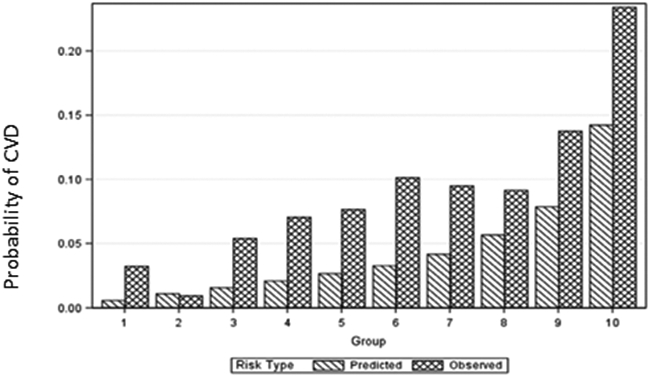
Recent findings: Several risk prediction models developed on the general population are available to predict CVD risk, the most notable being the US-based pooled cohort equations (PCE), the Framingham risk functions, and the Europe-based SCORE (Systematic COronary Risk Evaluation). In validation studies in cohorts of PLWH, these models generally underestimate CVD risk, especially in individuals who are younger, women, Black race, or predicted to be at low/intermediate risk. An HIV-specific CVD prediction model, the Data Collection on Adverse Events of Anti-HIV Drugs (D:A:D) model, is available, but its performance is modest, especially in US-based cohorts. Enhancing CVD prediction with novel biomarkers of inflammation or coronary artery calcification is of interest but has not yet been evaluated in PLWH. Finally, studies on CVD risk prediction are lacking in diverse PLWH globally. While available risk models for CVD prediction in PLWH remain suboptimal, clinicians should remain vigilant of higher CVD risk in this population and should use any of these risk scores for risk stratification to guide preventive interventions. Focus on established traditional risk factors such as smoking remains critical in PLWH. Risk prediction functions tailored to PLWH in diverse settings will enhance clinicians' ability to deliver optimal preventive care.
Keywords: ASCVD; Cardiovascular; Framingham; HIV; Prediction; Risk.
© 2021. The Author(s), under exclusive licence to Springer Science+Business Media, LLC, part of Springer Nature.
Figures
References
-
- Lerner AM, Eisinger RW, Fauci AS. Comorbidities in Persons With HIV: The Lingering Challenge. JAMA. 2019. - PubMed
-
- Schouten J, Wit FW, Stolte IG, et al. Cross-sectional comparison of the prevalence of age-associated comorbidities and their risk factors between HIV-infected and uninfected individuals: the AGEhIV Cohort Study. Clin Infect Dis. 2014. - PubMed
-
- Achhra AC, Mocroft A, Reiss P, et al. Short-term weight gain after antiretroviral therapy initiation and subsequent risk of cardiovascular disease and diabetes: the D:A:D study. HIV Med. 2016;17(4):255–268. - PubMed
Publication types
MeSH terms
Grants and funding
LinkOut - more resources
Full Text Sources
Medical
Research Materials
