


The epidemiology of social isolation and loneliness among older adults during the last years of life
- PMID: 34247388
- PMCID: PMC8595510
- DOI: 10.1111/jgs.17366
The epidemiology of social isolation and loneliness among older adults during the last years of life
Abstract
Background: Social isolation and loneliness are critical to the health of older adults, but they have not been well-described at the end of life.
Objectives: To determine the prevalence and correlates of social isolation and loneliness among older adults in the last years of life.
Design: Nationally representative, cross-sectional survey.
Setting: Health and Retirement Study, 2006-2016 data.
Participants: Adults age > 50 interviewed once in the last 4 years of life (n = 3613).
Measurements: We defined social isolation using a 15-item scale measuring household contacts, social network interaction, and community engagement, and frequent loneliness using the 3-item UCLA Loneliness Scale. We used multivariable logistic regression to determine their adjusted prevalence by time prior-to-death and by subgroups of interest.
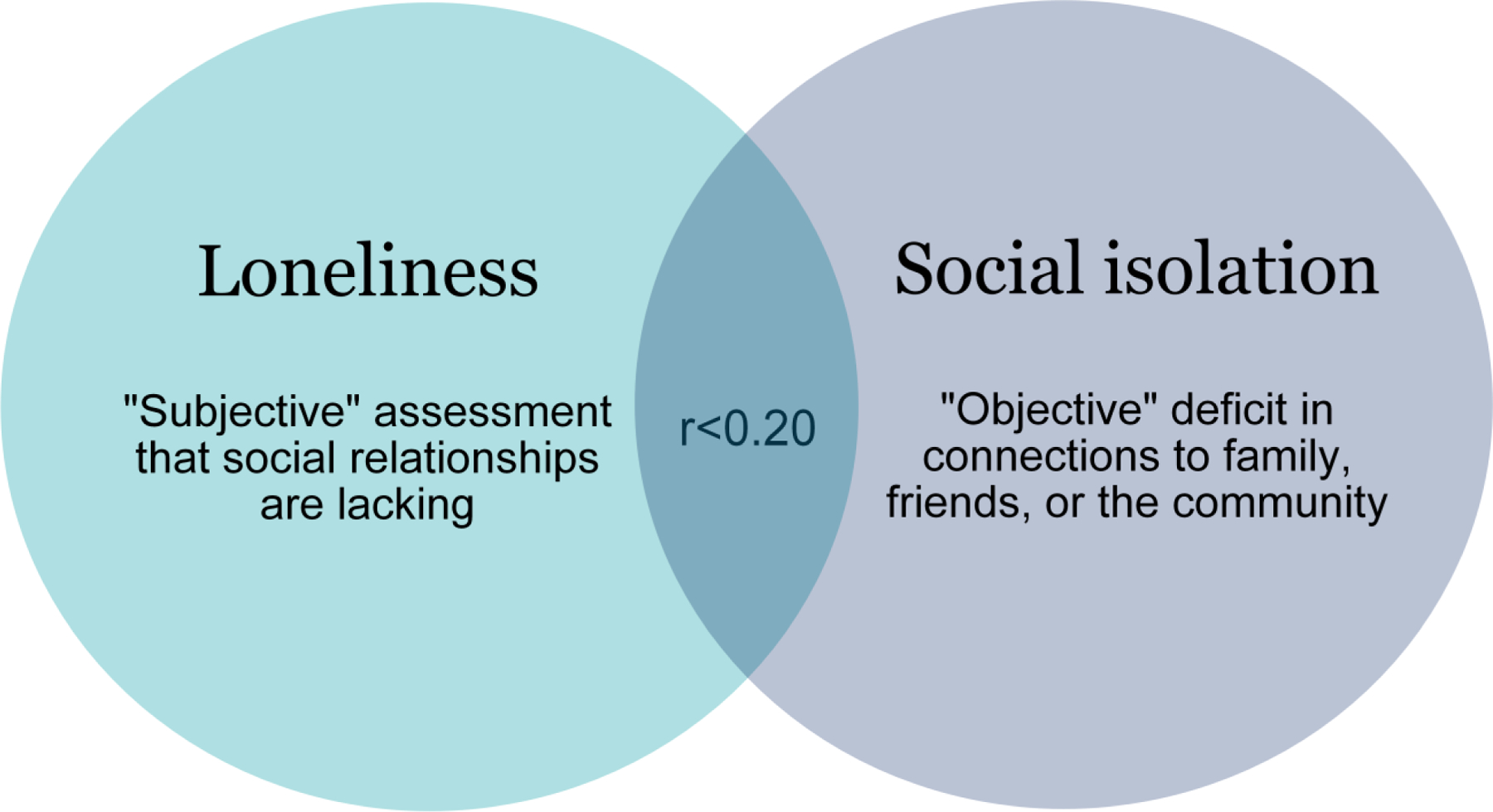
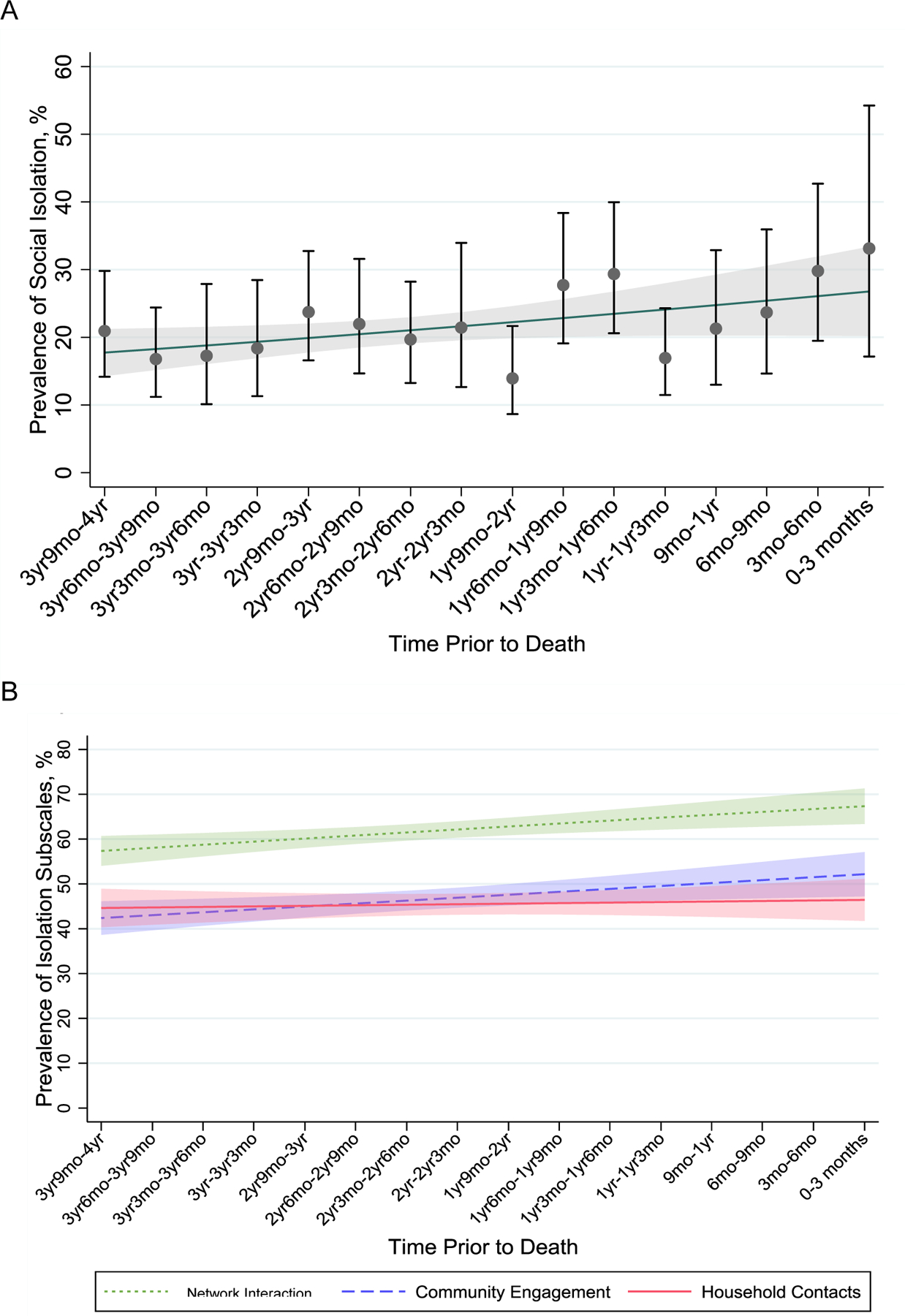
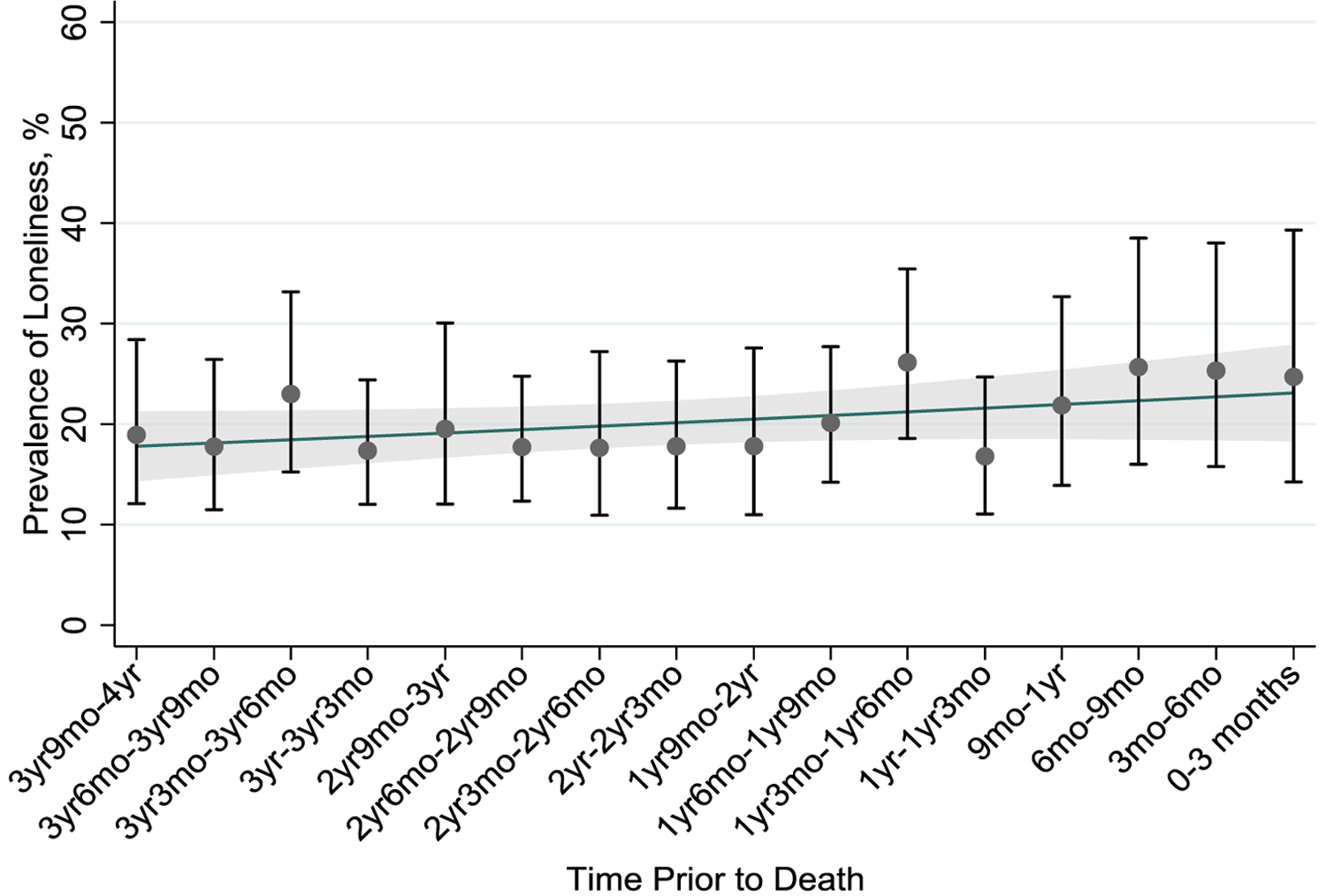
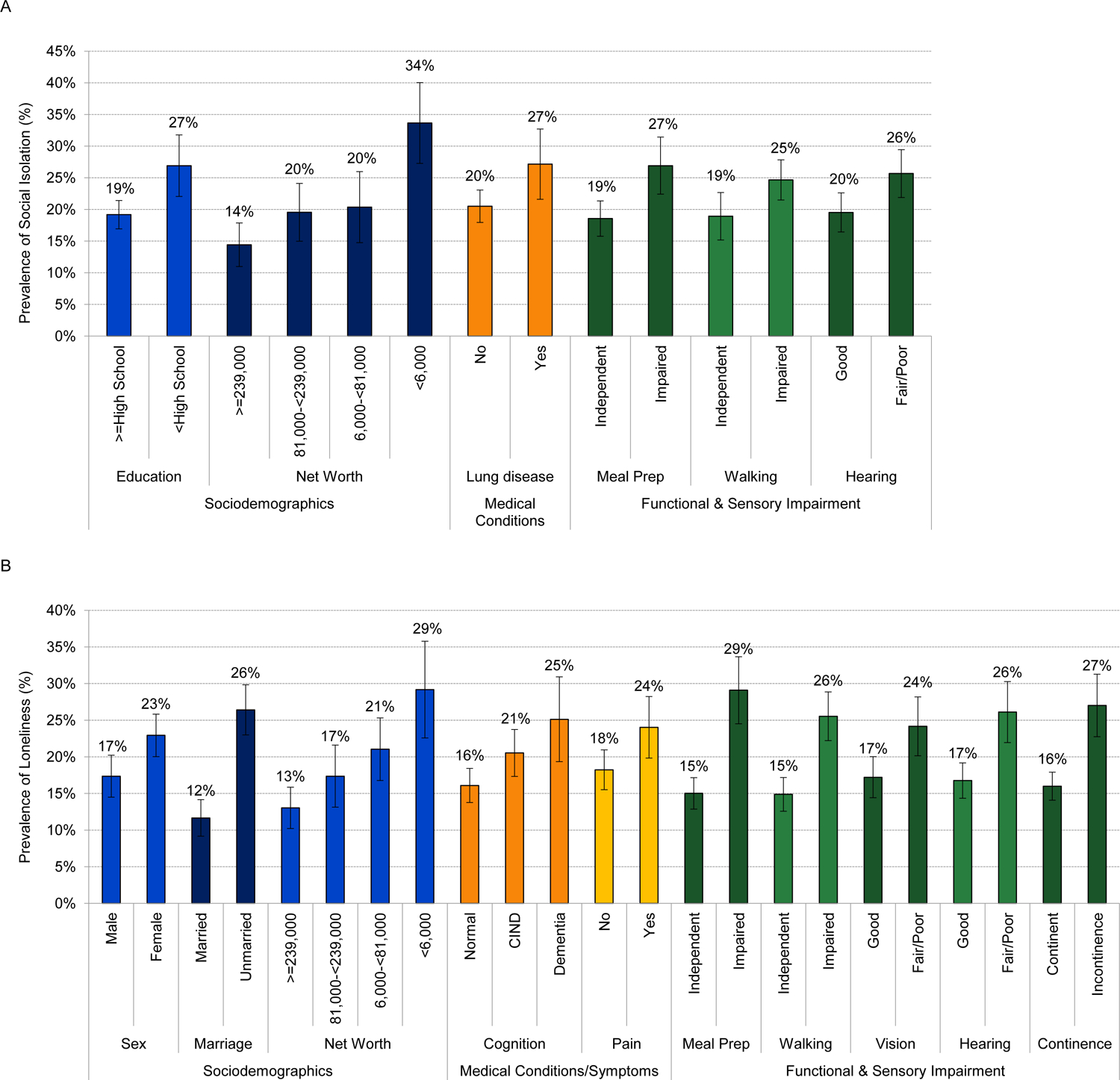
Results: Approximately 19% experienced social isolation, 18% loneliness, and 5% both in the last 4 years of life (correlation = 0.11). The adjusted prevalence of social isolation was higher for individuals nearer to death (4 years: 18% vs 0-3 months: 27%, p = 0.05) and there was no significant change in loneliness (4 years: 19% vs 0-3 months: 23%, p = 0.13). Risk factors for both isolation and loneliness included (p < 0.01): low net-worth (Isolation: 34% vs 14%; Loneliness: 29% vs 13%), hearing impairment (Isolation: 26% vs 20%; Loneliness: 26% vs 17%), and difficulty preparing meals (Isolation: 27% vs 19%; Loneliness: 29% vs 15%). Factors associated with loneliness, but not social isolation, included being female, pain, incontinence, and cognitive impairment.
Conclusions: Social isolation and loneliness are common at the end of life, affecting 1 in 4 older adults, but few experience both. Rates were higher for older adults who were poor and experienced functional or sensory impairments. Results can inform clinical efforts to identify and address end-of-life psychosocial suffering and health policies which prioritize social needs at the end of life.
Keywords: cognition; end of life; loneliness; palliative care; social isolation.
© 2021 The American Geriatrics Society.
Conflict of interest statement
Conflicts of Interest: All authors report no conflicts of interest.
Figures
Comment in
-
All you need is love: Yet another social determinant of health.J Am Geriatr Soc. 2021 Nov;69(11):3020-3022. doi: 10.1111/jgs.17421. Epub 2021 Sep 12. J Am Geriatr Soc. 2021. PMID: 34409585 Free PMC article. No abstract available.
References
-
- Steinhauser KE, Christakis NA, Clipp EC, McNeilly M, McIntyre L, Tulsky JA. Factors considered important at the end of life by patients, family, physicians, and other care providers. Jama. 2000;284: 2476–2482. - PubMed
-
- Holt-Lunstad J, Smith TB, Baker M, Harris T, Stephenson D. Loneliness and social isolation as risk factors for mortality: a meta-analytic review. Perspectives on Psychological Science. 2015;10: 227–237. - PubMed
-
- Perissinotto C, Holt-Lunstad J, Periyakoil VS, Covinsky K. A practical approach to assessing and mitigating loneliness and isolation in older adults. Journal of the American Geriatrics Society. 2019;67: 657–662. - PubMed
-
- NAS. Social Isolation and Loneliness in Older Adults: Opportunities for the Health Care System. In: Sciences NAo, ed., 2020. - PubMed
Publication types
MeSH terms
Grants and funding
LinkOut - more resources
Full Text Sources
Medical
