Efficacy of robotic exoskeleton for gait rehabilitation in patients with subacute stroke : a systematic review
- PMID: 34247470
- PMCID: PMC9980569
- DOI: 10.23736/S1973-9087.21.06846-5
Efficacy of robotic exoskeleton for gait rehabilitation in patients with subacute stroke : a systematic review
Abstract
Background: Stroke is the most common cause of disability in Western Countries. It can lead to loss of mobility, capability to walk and ultimately loss of independence in activities of daily living (ADL). Several rehabilitative approaches have been proposed in these years. Robot-assisted gait rehabilitation (RAGT) plays a crucial role to perform a repetitive, intensive, and task-oriented treatment in stroke survivors. However, there are still few data on its role in subacute stroke patients.
Aim: The aim of the present study was to assess the efficacy of RAGT for gait recovery in subacute stroke survivors.
Design: Systematic review with meta-analysis.
Setting: The setting of the study included Units of Rehabilitation.
Population: The analyzed population was represented by subacute stroke patients.
Methods: PubMed, Scopus, Web of Science, CENTRAL, and PEDro were systematically searched until January 18, 2021, to identify randomized controlled trials (RCTs) presenting: stroke survivors in subacute phase (≤6 months) as participants; exoskeleton robots devices as intervention; conventional rehabilitation as a comparator; gait assessment, through qualitative scales, quantitative gait scales or quantitative parameters, as outcome measures. We also performed a meta-analysis of the mean difference in the functional ambulation category (FAC) via the random effect method.
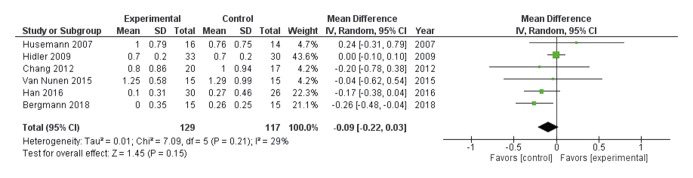
Results: Out of 3188 records, 14 RCTs were analyzed in this systematic review. The 14 studies have been published in the last 14 years (from 2006 to 2021) and included 576 stroke survivors, of which 306 received RAGT, and 270 underwent conventional rehabilitation. Lokomat robotic system was the most investigated robotic exoskeleton by the RCTs included (N.=9), albeit the meta-analysis demonstrated a non-significant difference of -0.09 in FAC (95% CI: -0.22.0.03) between Lokomat and conventional therapy. According to the PEDro scale, 11 (78.5%) were classified as good-quality studies, two as fair-quality studies (14.3%), and one as poor-quality study (7.1%).
Conclusions: Taken together, these findings showed that RAGT might have a potential role in gait recovery in subacute stroke survivors. However, further RCTs comparing the efficacy of RAGT with conventional physical therapy are still warranted in the neurorehabilitation field.
Clinical rehabilitation impact: This systematic review provides information on the efficacy of RAGT in allowing subacute stroke patients to perform high-intensity gait training with a lower physical burden on PRM professionals.
Conflict of interest statement
Figures

References
-
- Duncan PW, Zorowitz R, Bates B, Choi JY, Glasberg JJ, Graham GD, et al. Management of Adult Stroke Rehabilitation Care: a clinical practice guideline. Stroke 2005;36:e100–43. https://www.ncbi.nlm.nih.gov/entrez/query.fcgi?cmd=Retrieve&db=PubMed&l... 10.1161/01.STR.0000180861.54180.FF - DOI - PubMed
-
- Trompetto C, Marinelli L, Mori L, Cossu E, Zilioli R, Simonini M, et al. Postactivation depression changes after robotic-assisted gait training in hemiplegic stroke patients. Gait Posture 2013;38:729–33. https://www.ncbi.nlm.nih.gov/entrez/query.fcgi?cmd=Retrieve&db=PubMed&l... 10.1016/j.gaitpost.2013.03.011 - DOI - PubMed
-
- Chou MY, Nishita Y, Nakagawa T, Tange C, Tomida M, Shimokata H, et al. Role of gait speed and grip strength in predicting 10-year cognitive decline among community-dwelling older people. BMC Geriatr 2019;19:186. https://www.ncbi.nlm.nih.gov/entrez/query.fcgi?cmd=Retrieve&db=PubMed&l... 10.1186/s12877-019-1199-7 - DOI - PMC - PubMed
-
- Kramer SF, Hung SH, Brodtmann A. The Impact of Physical Activity Before and After Stroke on Stroke Risk and Recovery: a Narrative Review. Curr Neurol Neurosci Rep 2019;19:28. https://www.ncbi.nlm.nih.gov/entrez/query.fcgi?cmd=Retrieve&db=PubMed&l... 10.1007/s11910-019-0949-4 - DOI - PubMed
-
- Negrini F, Gasperini G, Guanziroli E, Vitale JA, Banfi G, Molteni F. Using an Accelerometer-Based Step Counter in Post-Stroke Patients: Validation of a Low-Cost Tool. Int J Environ Res Public Health 2020;17:E3177. https://www.ncbi.nlm.nih.gov/entrez/query.fcgi?cmd=Retrieve&db=PubMed&l... 10.3390/ijerph17093177 - DOI - PMC - PubMed
Publication types
MeSH terms
LinkOut - more resources
Full Text Sources
Medical