


The Efficacy of Acetominophen for Total Laparoscopic Hysterectomy
- PMID: 34248331
- PMCID: PMC8241284
- DOI: 10.4293/JSLS.2020.00104
The Efficacy of Acetominophen for Total Laparoscopic Hysterectomy
Abstract
Objective: Despite limited data, acetaminophen, along with other agents, is commonly included in enhanced recovery after surgery (ERAS) protocols following laparoscopic hysterectomy. We aimed to systematically review the efficacy of acetaminophen on the management of postoperative pain after laparoscopic hysterectomy.
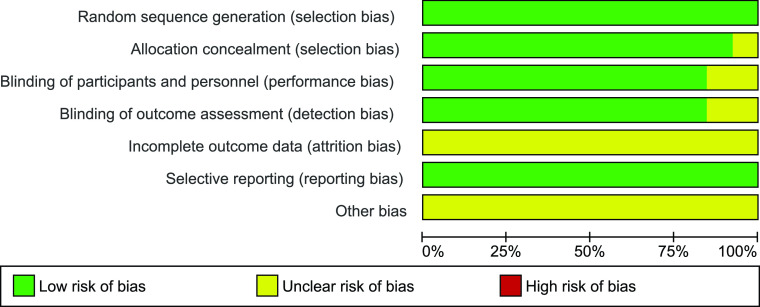
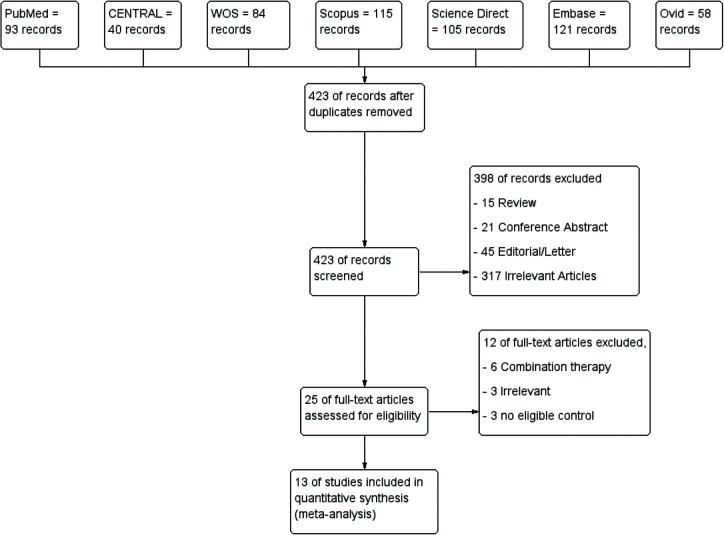
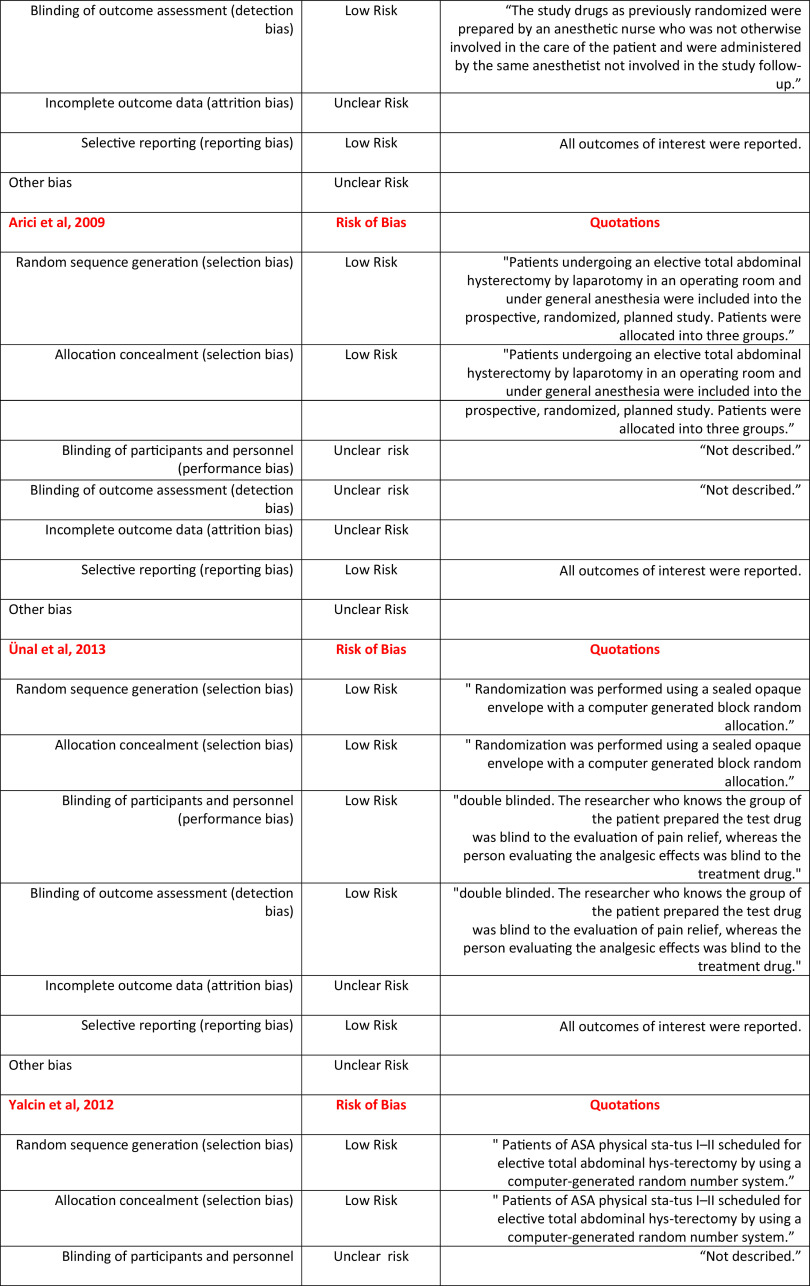
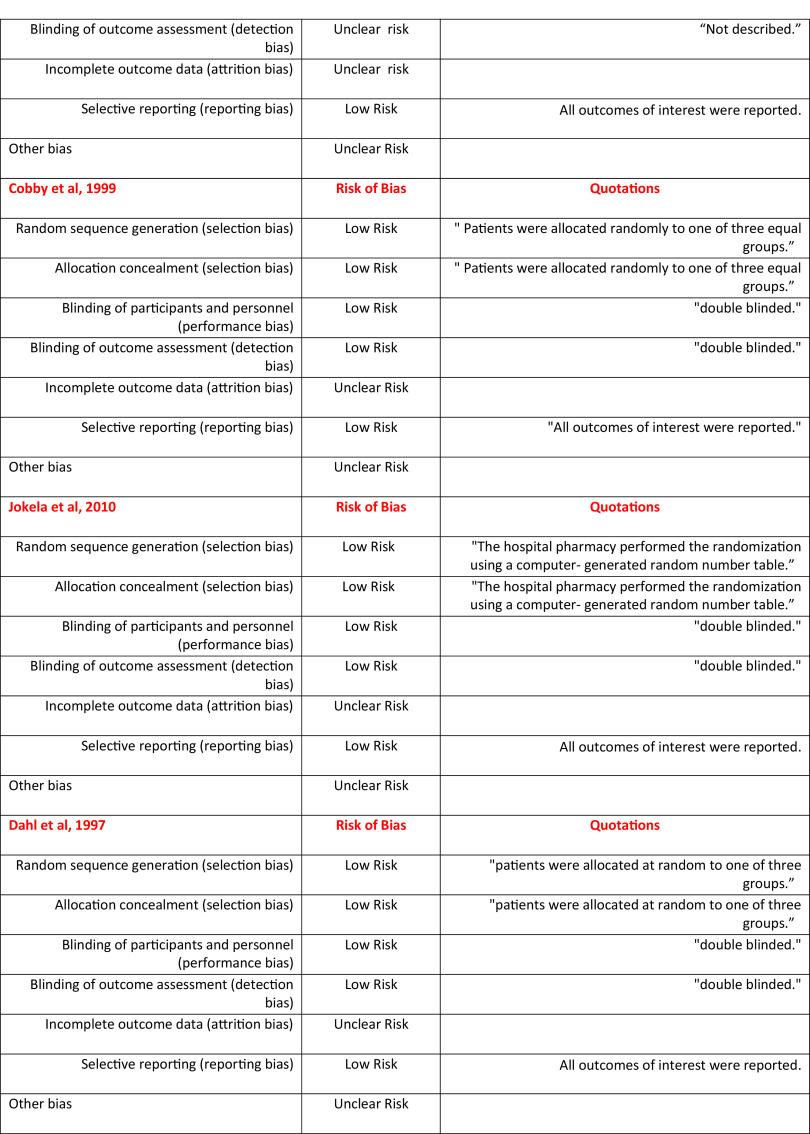
Methods: We searched PubMed, SCOPUS, Web of Science, and Cochrane Library databases for relevant clinical trials investigating the role of acetaminophen in the management of pain after laparoscopic hysterectomy. We performed the risk of bias according to Cochrane's risk of bias tool. We performed the analysis of homogeneous data under the fixed-effects model during the analysis of heterogeneous data under the random-effects model. The primary outcome was the assessment of pain score after 2, 6, 12, and 24 h.
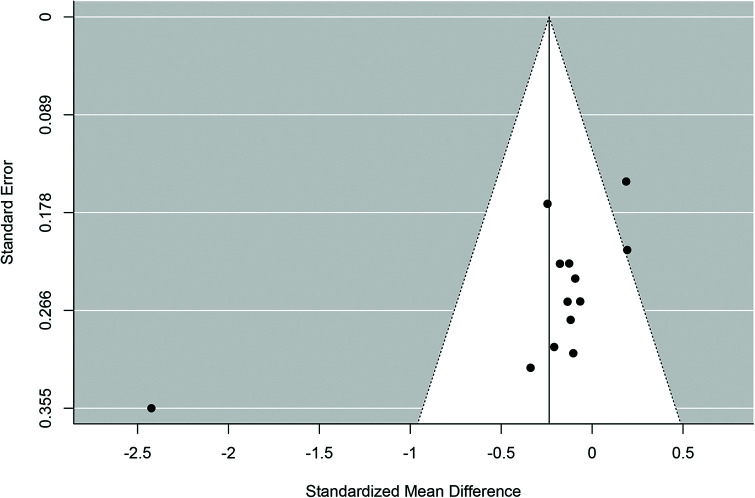
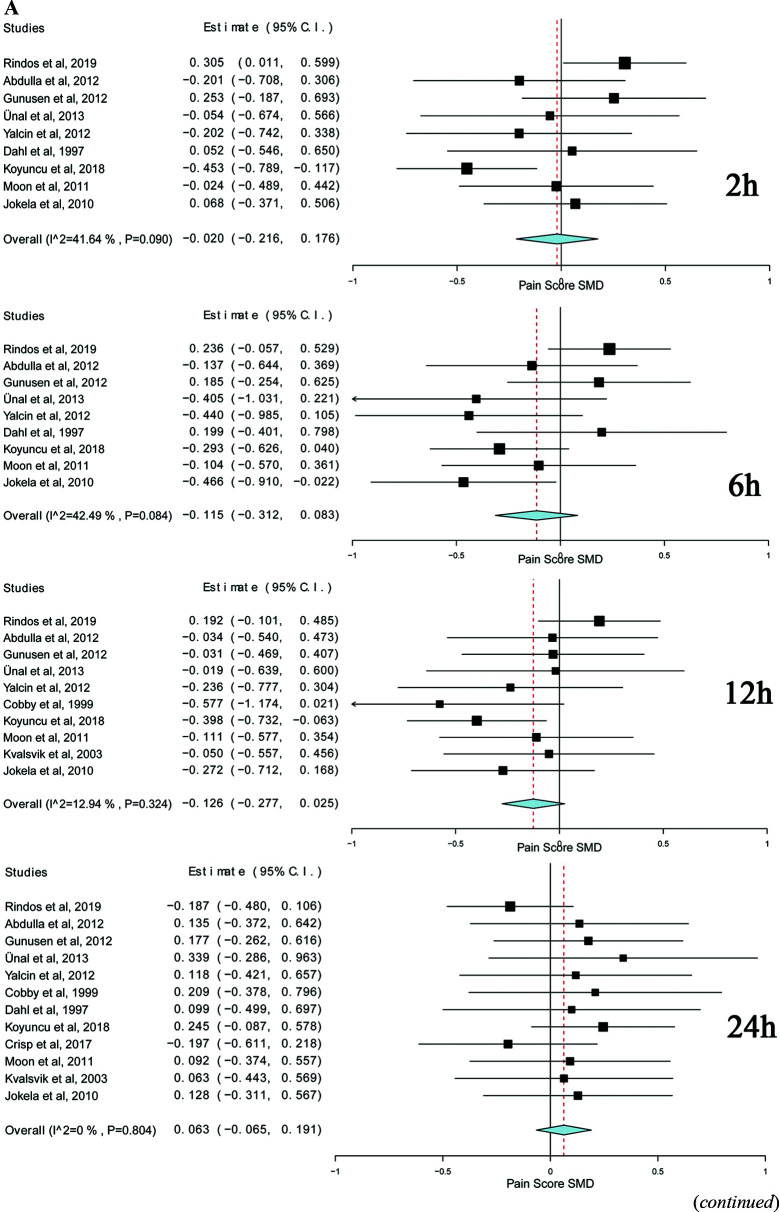
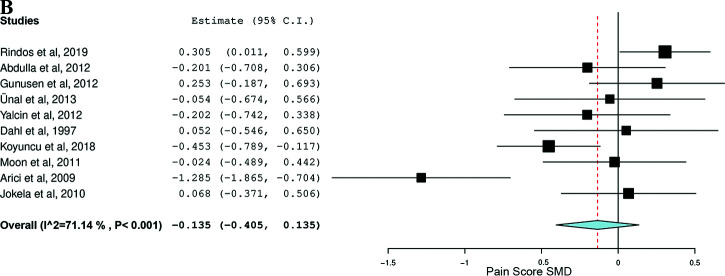
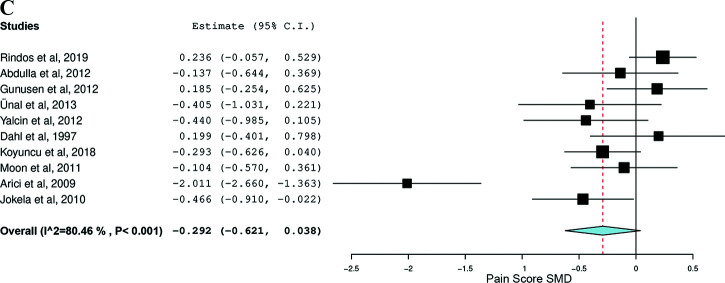
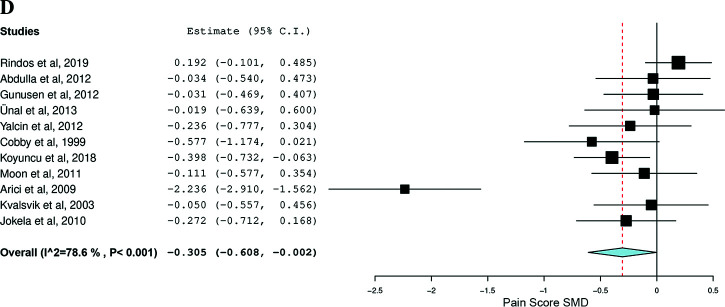
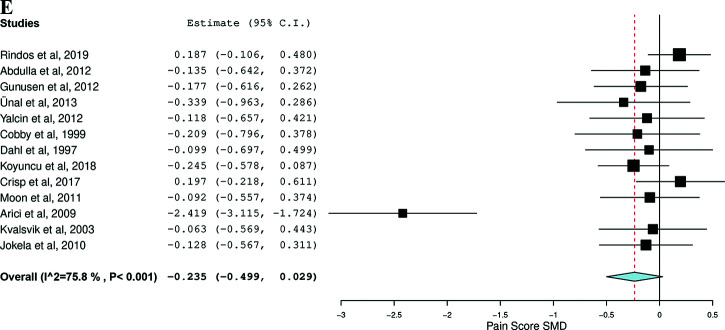
Results: A total of 495 patients in 13 trials were included in our meta-analysis. Acetaminophen was not superior at reducing postoperative pain scores. Further analysis at progressive temporal points revealed no further significance; effect size at after 2 h (SMD = -0.020, 95% CI (-0.216; 0.176)), 6 h (SMD = -0.115, 95% CI (-0.312; 0.083)), 12 h (SMD = -0.126, 95% CI (-0.277; 0.025)), or 24 h (SMD = 0.063, 95% CI (-0.065; 0.191)). Pooled analysis was heterogeneous (P < 0.1); therefore, we conducted a sensitivity analysis yielding homogeneous results. The drug did not reduce opioid need (MD = -0.16, 95% CI (-2.39, 2.06), P = 0.89).
Conclusion: We conclude that acetaminophen is not beneficial for reducing pain after laparoscopic hysterectomy. Other alternatives have better results. Caution should be given to the inclusion of acetaminophen in ERAS protocols designed for laparoscopic hysterectomy, especially as a single agent or to reduce opioid consumption.
Keywords: Acetaminophen; ERAS; Enhanced recovery after surgery; Hysterectomy; Pain.
© 2021 by SLS, Society of Laparoscopic & Robotic Surgeons.
Figures




References
-
- Data & Statistics, Reproductive Health, CDC.
-
- Torpy JM, Lynm C, Glass RM. Hysterectomy. J Am Med Assoc. 2004;291(12):1526. - PubMed
-
- Azari L, Santoso JT, Osborne SE. Optimal pain management in total abdominal hysterectomy. Obstet Gynecol Surv. 2013;68(3):215–227. - PubMed
-
- Conditions Treated: Hysterectomy. Stanford Health Care.
Publication types
MeSH terms
Substances
LinkOut - more resources
Full Text Sources
Medical