


Highly Sensitized Patients Are Well Served by Receiving a Compatible Organ Offer Based on Acceptable Mismatches
- PMID: 34248971
- PMCID: PMC8267476
- DOI: 10.3389/fimmu.2021.687254
Highly Sensitized Patients Are Well Served by Receiving a Compatible Organ Offer Based on Acceptable Mismatches
Abstract
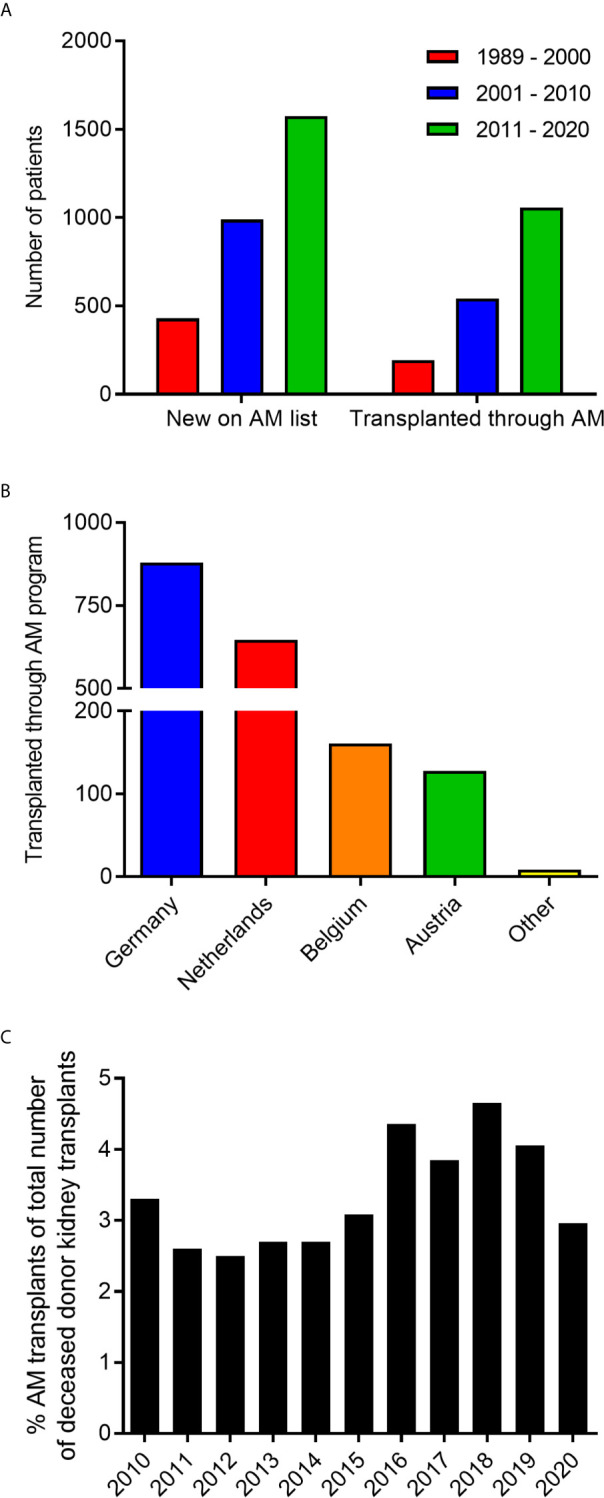
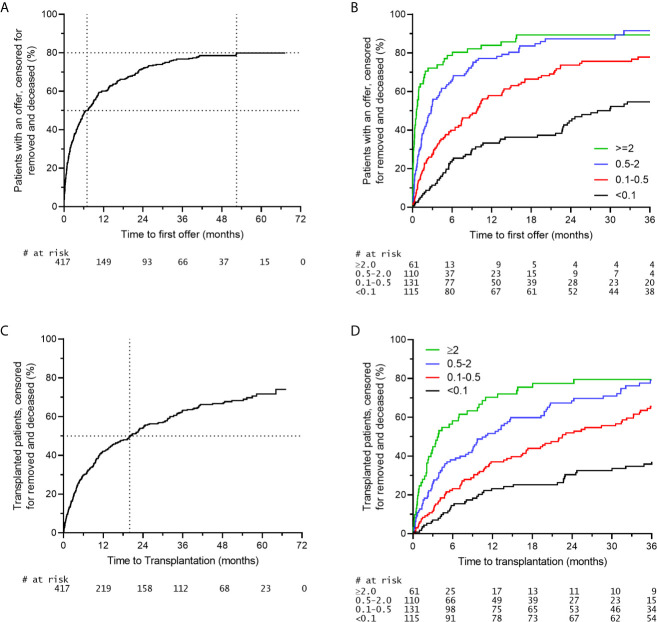
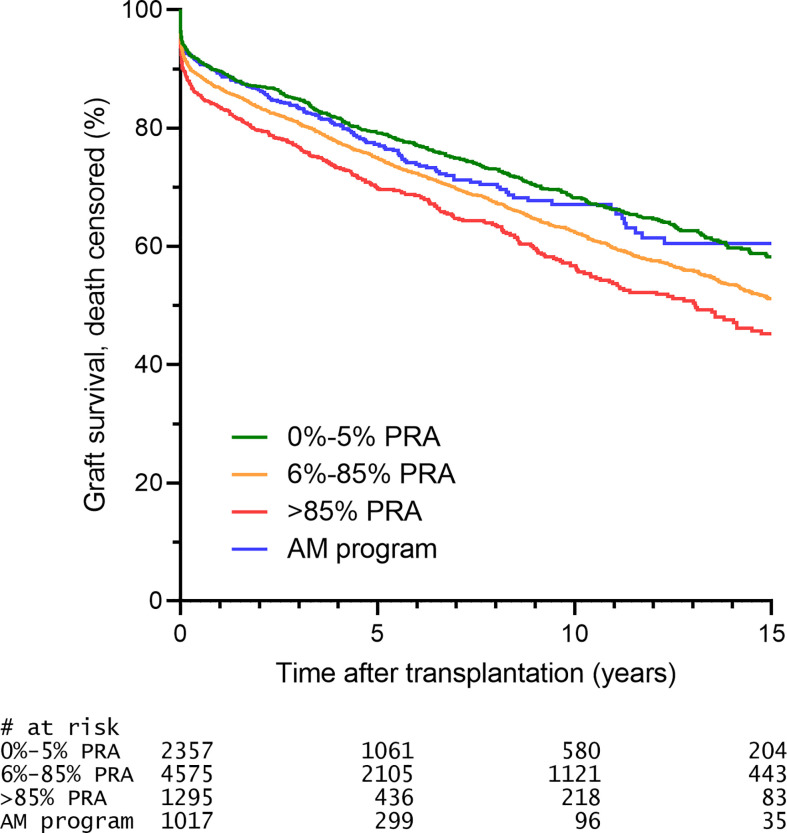
Highly sensitized kidney patients accrue on the transplant waiting list due to their broad immunization against non-self Human Leucocyte Antigens (HLA). Although challenging, the best option for highly sensitized patients is transplantation with a crossmatch negative donor without any additional therapeutic intervention. The Eurotransplant Acceptable Mismatch (AM) program was initiated more than 30 years ago with the intention to increase the chance for highly sensitized patients to be transplanted with such a compatible donor. The AM program allows for enhanced transplantation to this difficult to transplant patient group by allocating deceased donor kidneys on the basis of a match with the recipient's own HLA antigens in combination with predefined acceptable antigens. Acceptable antigens are those HLA antigens towards which the patients has never formed antibodies, as determined by extensive laboratory testing. By using this extended HLA phenotype for allocation and giving priority whenever a compatible donor organ becomes available, organ offers are made for roughly 80% of patients in this program. Up till now, more than 1700 highly sensitized patients have been transplanted through the AM program. Recent studies have shown that the concept of acceptable mismatches being truly immunologically acceptable holds true for both rejection rates and long-term graft survival. Patients that were transplanted through the AM program had a similar rejection incidence and long-term graft survival rates identical to non-sensitized patients transplanted through regular allocation. However, a subset of patients included in the AM program does not receive an organ offer within a reasonable time frame. As these are often patients with a rare HLA phenotype in comparison to the Eurotransplant donor population, extension of the donor pool for these specific patients through further European collaboration would significantly increase their chances of being transplanted. For those patients that will not benefit from such strategy, desensitization is the ultimate solution.
Keywords: HLA; acceptable antigen; desensitization; donor specific antibodies; donor specific antibody (DSA); histocompatibility; kidney transplanation; organ allocation.
Copyright © 2021 Heidt, Haasnoot, van der Linden-van Oevelen and Claas.
Conflict of interest statement
The authors declare that the research was conducted in the absence of any commercial or financial relationships that could be construed as a potential conflict of interest.
Figures
References
Publication types
MeSH terms
Substances
LinkOut - more resources
Full Text Sources
Medical
Research Materials
