Review
. 2021 May 3:27:1609802.
doi: 10.3389/pore.2021.1609802. eCollection 2021.

Hypoxia Signaling in Cancer: From Basics to Clinical Practice

Affiliations
Review

Hypoxia Signaling in Cancer: From Basics to Clinical Practice

Anna Sebestyén et al. Pathol Oncol Res. .

Abstract

Cancer hypoxia, recognized as one of the most important hallmarks of cancer, affects gene expression, metabolism and ultimately tumor biology-related processes. Major causes of cancer hypoxia are deficient or inappropriate vascularization and systemic hypoxia of the patient (frequently induced by anemia), leading to a unique form of genetic reprogramming by hypoxia induced transcription factors (HIF). However, constitutive activation of oncogene-driven signaling pathways may also activate hypoxia signaling independently of oxygen supply. The consequences of HIF activation in tumors are the angiogenic phenotype, a novel metabolic profile and the immunosuppressive microenvironment. Cancer hypoxia and the induced adaptation mechanisms are two of the major causes of therapy resistance. Accordingly, it seems inevitable to combine various therapeutic modalities of cancer patients by existing anti-hypoxic agents such as anti-angiogenics, anti-anemia therapies or specific signaling pathway inhibitors. It is evident that there is an unmet need in cancer patients to develop targeted therapies of hypoxia to improve efficacies of various anti-cancer therapeutic modalities. The case has been opened recently due to the approval of the first-in-class HIF2α inhibitor.

Keywords: angiogenesis; cancer; hypoxia; metabolism; therapy.


Conflict of interest statement

The authors declare that the research was conducted in the absence of any commercial or financial relationships that could be construed as a potential conflict of interest.

Figures
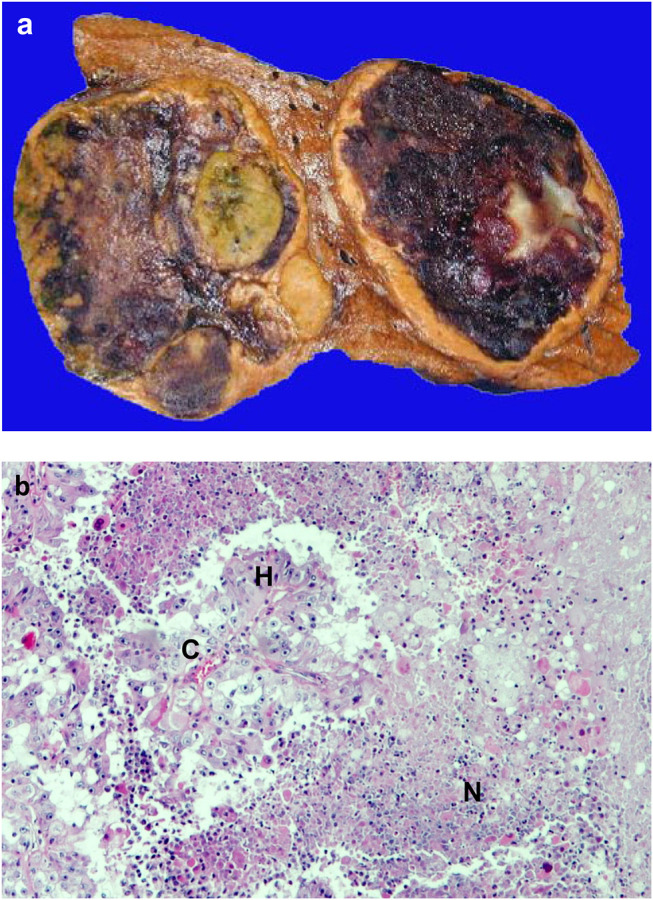
FIGURE 1
FIGURE 1
Necrosis in cancer. (A). Macroscopic picture of hemorrhagic necrosis in liver cancer; (B). Microscopic picture of necrosis in renal cell cancer (HE staining). C = capillary, H = hypoxic area, N = necrotic area.
FIGURE 2
FIGURE 2
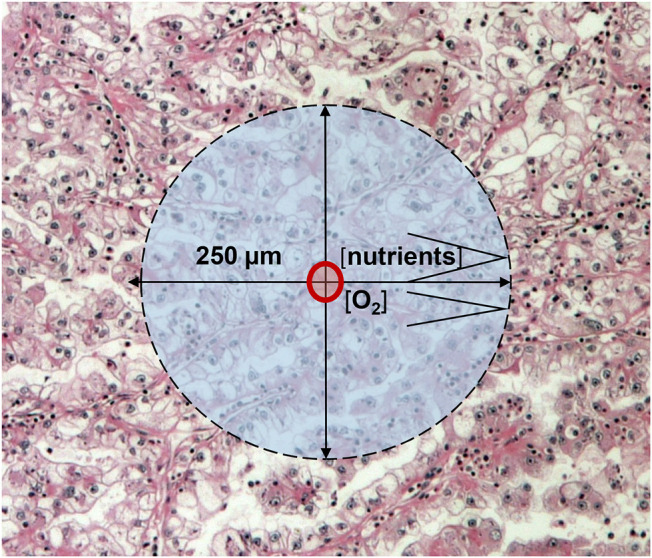
Schematic presentation of cancer growth beyond 1 mm3: oxygen and nutrient diffusion distances.
FIGURE 3
FIGURE 3
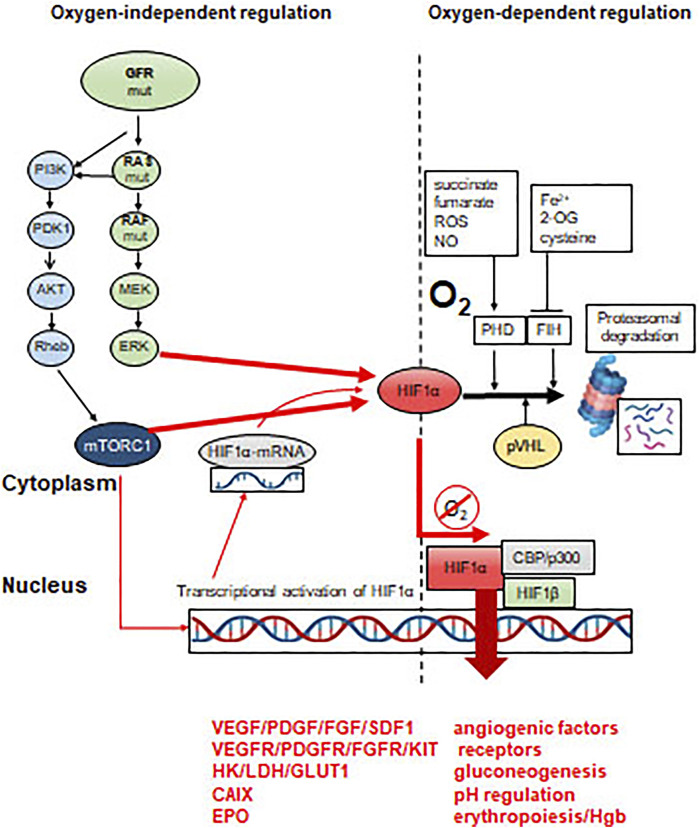
Molecular mechanisms of activation of HIFα transcription factors. HRE = hypoxia-responsive element in the promoter region of specific genes. Effect of constitutive oncogenic activation on HIFα. Proteasomal degradation is inhibited by mTOR or ERK activity, even in the presence of sufficient oxygen levels.
FIGURE 4
FIGURE 4
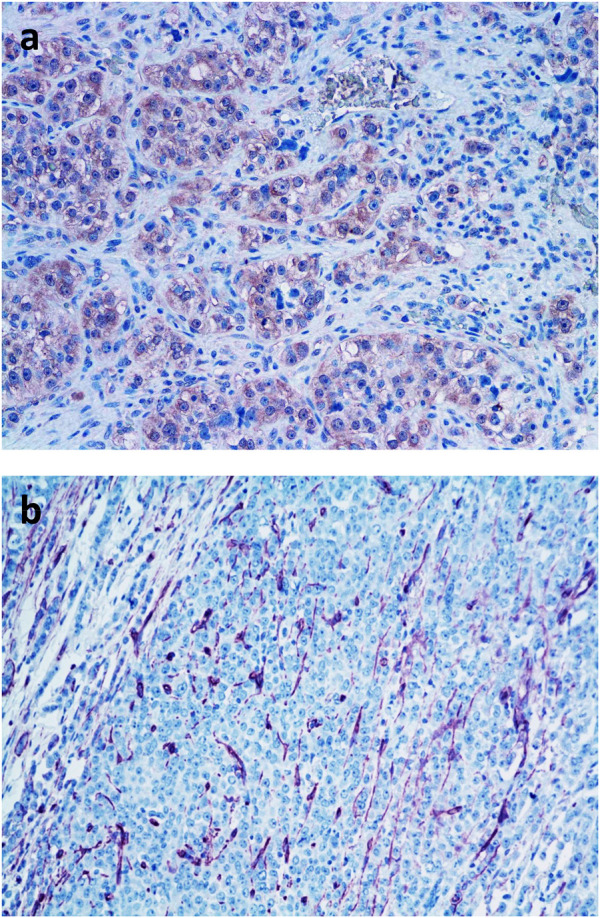
Demonstration of intratumoral microvasculature in breast cancer. (A). Detection of VEGF in tumor cells by immunohistochemistry (pink color); (B). Neo-angiogenesis in breast cancer tissue: demonstration of intratumoral blood vessels by immunohistochemical labeling of CD31 positive endothelial cells (pink color) BAR = 100 μm.
FIGURE 5
FIGURE 5
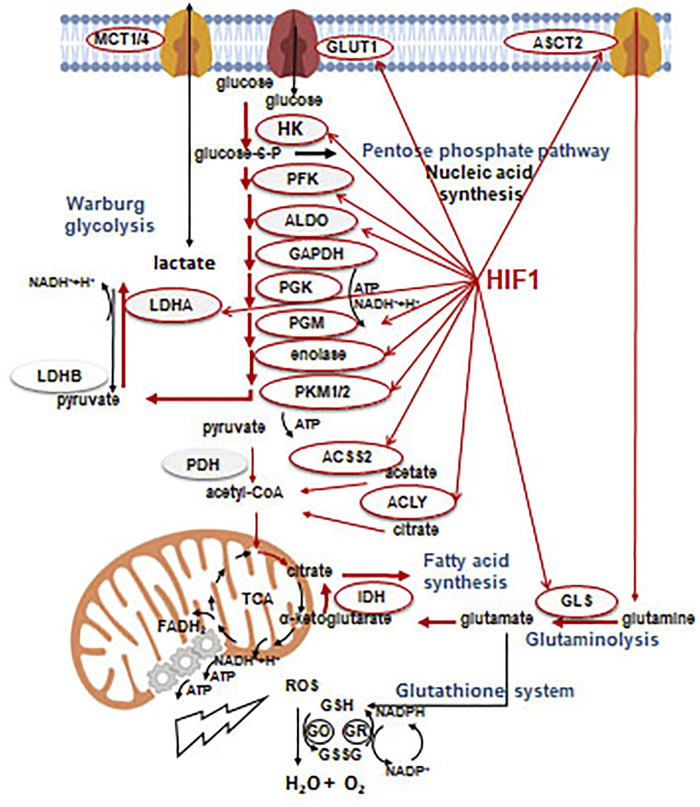
Effects of HIF1α on the metabolic rearrangement. Without going into details, enzymes and processes which can be controlled and/or associated with glycolytic phenotype during metabolic rearrangement by HIF1α (regulation). Beside the effects on HIF1α targets involved in metabolic, glycolytic rearrangement (narrow red arrow), the most frequent and significant metabolic shifts (thick red arrow) are also presented in the figure.
FIGURE 6
FIGURE 6
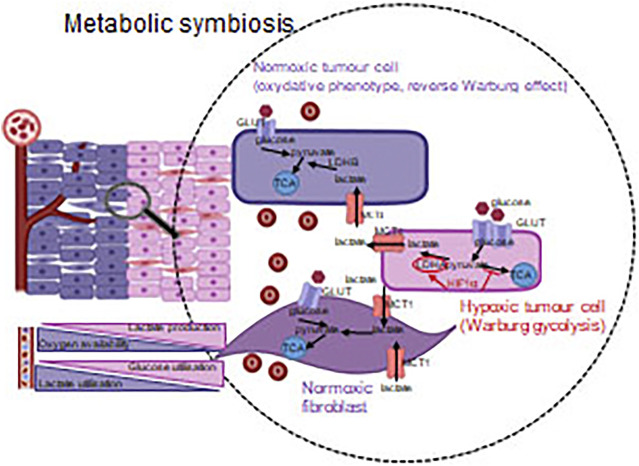
Metabolic symbiosis–optimizing the available energy sources. Tumorous and other non-tumorous cells derived from microenvironment utilize the nutrients in harmony with the oxygen concentration (via the regulating role of HIF1α). Accordingly, not only the glycolysis, but also the reverse Warburg effect–in a well-oxygenated environment–provide adaptation capacity/opportunity for cancerous cells.

References

    1. Muz B, de la Puente P, Azab F, Azab AK. The Role of Hypoxia in Cancer Progression, Angiogenesis, Metastasis, and Resistance to Therapy. Hp (2015) 3:83–92. 10.2147/HP.S93413 - DOI - PMC - PubMed
    1. Folkman J. Tumor Angiogenesis: Therapeutic Implications. N Engl J Med (1971) 285:1182–6. 10.1056/NEJM19711118285210810.1056/nejm197108122850711 - DOI - PubMed
    1. Heldin C-H, Rubin K, Pietras K, Östman A. High Interstitial Fluid Pressure - an Obstacle in Cancer Therapy. Nat Rev Cancer (2004) 4:806–13. 10.1038/nrc1456 - DOI - PubMed
    1. Siemann DW. The Unique Characteristics of Tumor Vasculature and Preclinical Evidence for its Selective Disruption by Tumor-Vascular Disrupting Agents. Cancer Treat Rev (2011) 37:63–74. 10.1016/j.ctrv.2010.05.001 - DOI - PMC - PubMed
    1. Lee P, Chandel NS, Simon MC. Cellular Adaptation to Hypoxia through Hypoxia Inducible Factors and beyond. Nat Rev Mol Cel Biol (2020) 21:268–83. 10.1038/s41580-020-0227-y - DOI - PMC - PubMed